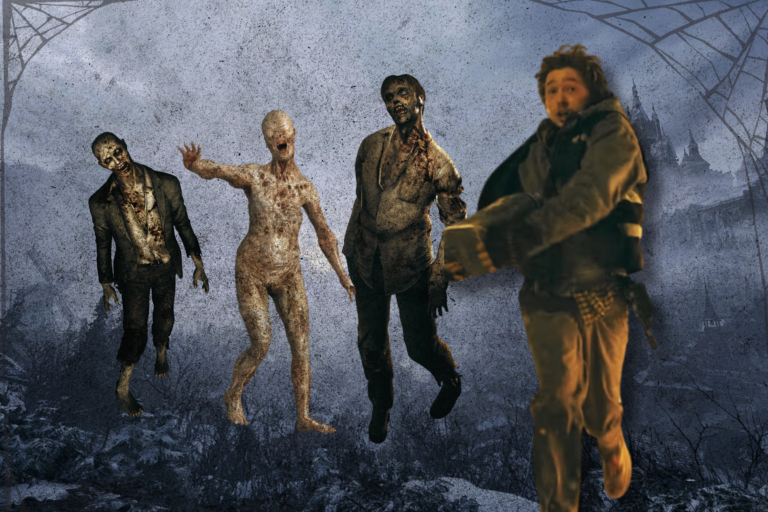
Zach Cregger‘s Resident Evil is ninety minutes of frights, frustrations, and deranged G-virus mutations, adapting the experience of playing Resident Evil games without regurgitating their classic stories.
For gamers dying to see Leon S. Kennedy and his pointless back flips, Cregger’s adaptation isn’t concerned with fanservice. Rather, Cregger serves fans by creating a fresh story within the game’s world. Resident Evil is set during the Raccoon City outbreak, following an original character Bryan, a medical courier, who must deliver a mysterious package to the Umbrella Corporation.
“What I’m trying to do is make a Resident Evil movie that really is a love letter to the experience of playing a Resident Evil game,” Cregger said in an interview with IGN.
Resident Evil is a love letter addressed to anyone who has picked up the games, whether they play on easy mode or hardcore.
Cregger’s unique approach to adapting video games is finally giving Capcom‘s thirty-year old franchise a faithful adaptation, breaking the curse set by its rotten predecessors, Paul W.S. Anderson‘s Resident Evil and Johannes Roberts‘ Resident Evil: Welcome to Raccoon City.
One of the failures of video game film adaptations is their struggle to capture the medium’s interactivity, the core element that transforms passive spectators into active players.
In Cregger’s adaptation of Resident Evil, he successfully produces an interaction between spectators and characters through first-person point of view shots, game mechanics, and a forward-driven narrative, capturing the feeling of playing a game without handing spectators a controller.
Most obviously, Cregger deploys first-person perspective mechanics to immerse spectators into the chaos of a zombie apocalypse. These shots are mounted to Bryan’s weapons as he dreadfully turns corners, unsure of what will attack him next, and as he shoots enemies, unsure whether he can make his bullets count.
This restrictive perspective lets spectators survive alongside Bryan as if he is their playable character, adapting the experience of players who constantly keep their weapons raised out of fear, as if their life is the one in danger. It’s an effective shot for the film adaptation because spectators are put face to face with the point of fear as they would when playing the games.
The weapons themselves also give the feeling of any other Resident Evil game.
Though Bryan begins with a small but mighty pistol to fend off zombies, he ends the night with a machine gun that blasts mutated creatures into bits, reflecting Resident Evil‘s weapon upgrade system as the game progresses in difficulty.
Bryan’s inability to properly aim even adapts a players’ embarrassment after misfiring a gun they don’t understand how to use. When he swears out of frustration, gamers can sympathize since most have aimlessly yelled at the screen during intense boss battles, like struggling to fight off Nemesis in Resident Evil 3.
As Bryan drives the story forward, even the enemies progress in difficulty. At first, Bryan faces simpler, more canonical zombies like the original Resident Evil‘s Cerberus dogs, and eventually, confronts unique G-Virus mutated creatures of Cregger’s own creation to scare even the most hardcore fans.
As much as the story pushes forward, there are obstacles in its way.
Although one-liners are integral to keeping Resident Evil‘s spirit alive, the film cannot take itself seriously at times. After delivering jokes that don’t bite, the tension is broken, and audiences are left with a rushed conclusion that feels more like a fail state “game over” screen than a proper ending to the best adaptation Resident Evil has ever received.
Altogether, Zach Cregger succeeds where most video game adaptations fail because Resident Evil replicates experience of playing the games rather than recreating the games themselves. Though fans are afraid adaptations can’t live up to their expectations, pressing play on this film guarantees gamers a night of undead madness akin to playing their most beloved games.
Tags
film adaptations, Film Review, horror, video games, zombies
All final editorial decisions are made by the Editor(s) in Chief and/or the Managing Editor. Authors should not be contacted, targeted, or harassed under any circumstances. If you have any grievances with this article, please direct your comments to eic@queensjournal.ca.