As odd as it may seem for October, this is the perfect time to plant a garden. For centuries, universities have been the gardens where ideas have been cultured. They have planted and grown ideas, both novel and borrowed from scholars from abroad, while helping to transmit knowledge from generation to generation.
As undergrads in the 1960s, we expected universities to explore controversial topics. Both students and faculty were expected to challenge assumptions and debate controversial concepts. In lecture rooms, seminars, public debates, publications, and informal conversations over coffee, universities were expected to fertilize minds through open, civil, unfettered discussion of society’s most problematic questions.
In recent years, some of my colleagues and I have observed a decrease in such discussions within Queen’s and universities in general. This became particularly visible after COVID-19 was declared as a pandemic.
I wrote an essay for a Queen’s publication analyzing Canada’s response to COVID-19 that was accepted to the point of being offered an honorarium. It was then subjected to a supplementary review that rejected it, which I believe was due to concern that Queen’s might be seen to be critical of official policy. Governments and public health officials made major financial and regulatory policies quickly and abandoned previously developed plans for major emergencies.
In decades past, universities would have been involved with rigorous debate. It seemed as if universities from the top administrators down to the faculty members, students, and support staff felt pressure not to question major government and public health assumptions and policies derived therefrom. Let me illustrate the loss of open discussion by a few examples.
In June 2021, Dr. Francis Christian, a surgeon, presented a statement questioning whether informed consent could be given for the injection of modified RNA into children whose risk of injury from the injection was higher than that of COVID-19.
In the 1960s, this might have generated lively opposing arguments in favour of the mod RNA vaccines. But instead, later that month, he was reportedly called into a meeting, suspended from all teaching responsibilities immediately, and fired from his positions at the University of Saskatchewan as of September 2021. There was no civil discussion; the authorities simply suspended and fired him.
A Calgary academic, Dr. Frances Widdowson, raised considerable controversy for challenging prevailing views of policy toward Indigenous reconciliation, Indigenous residential schools, and reports of graves on the Kamloops school site. Critics claim that her views are harmful while others claim that she asked questions that deserved to be addressed, but an established fact is that Widdowson has been barred from some university campuses.
The basis for these exclusions is less clear, but fear of injuries due to anticipated violence seems to be the principal reason. I appreciate the universities’ responsibility to protect their students and staff, but allowing those who commit violence to dictate the academic agenda is dangerous and unacceptable. Whether Widdowson is right or not is not the issue. My main issue is that her questions have not been allowed to be debated or dissected.
My concern about the paucity of open, critical examination of ideas extends far beyond COVID-19. Across Canada and other Western countries, we lost the opportunity to educate ourselves by de-emphasizing serious discussions around diversity, equity, and inclusion (DEI), gender dysphoria, Indigenous reconciliation, anti-Semitism, climate change, immigration, economic inequality, and numerous other subjects.
These, and many other similar cases of censorship, should catch the attention of everyone at Queen’s who is concerned about the mission of our universities.
Another significant consideration is the development of information technology over the last half-century. It is sobering to think that the World Wide Web came into being around 1989, and the first rudimentary search engine arrived a year later. Eventually, Google became the engine of choice for many and gave rise to the verb “google,” meaning to search.
With that development, factual information became available to the masses with a simple click or two. The development of AI has taken access to information a giant step forward. Provision of factual information is now available to the masses and is not as important as a characteristic of a university education as it once was.
As such, university graduates will increasingly be coveted for their ability to think critically and less for encyclopedic memories, meaning Queen’s will be valued for fostering critical thinking.
This is where open academic discourse comes into play. Like seeds in a garden, critical thought requires nutrition.
For universities, the nutrients are ideas, and the growing season is now. Now is the time to reclaim serious open academic discourse and for students to demand exposure to a breadth of discussions — discussions that challenge one to think critically. Now is the time for students to assess evidence, construct arguments, identify weaknesses in reasoning, and revise their beliefs when confronted with new information.
The time is right for Queen’s to recommit itself to the mission of free discourse. Open inquiry, intellectual courage, and respectful debate are not relics of ancient history. They are the foundation of higher education and the lifeblood of a healthy democracy. If universities cannot be places where difficult conversations occur, then where will those conversations happen? The answer matters not only for universities like Queen’s, but for the democracy of our country.
For open and rational discourse, freedom of speech is indispensable. But we don’t need speech that is hostile or disrespectful. Free academic debate will thrive best if it is civil and rational, if it is based on evidence and carefully developed arguments, and if it arrives at logical conclusions. We should vigorously debate ideas; we should not attack or insult the speaker.
This doesn’t mean that we have to handle opposing ideas with kid gloves. Quite the contrary; we should do our best to expose the fallacies of opposing arguments. We should present the best evidence against an illogical idea and recognize that some ideas do not stand-up to scrutiny under the brightest lights. But let’s never forget that we are debating messages, and our purpose is not to embarrass the messengers.
This does not require endorsing any particular viewpoint. Rather, it requires creating an environment where competing viewpoints can be articulated clearly and judged on their merits.
Here at Queen’s, there is an opportunity to lead by example. Queen’s has a long tradition of academic excellence, public service, and intellectual achievement. It should reaffirm its commitment to the principles that have historically defined great universities: freedom of inquiry, freedom of expression, and respect for evidence-based debate. We should take this opportunity to start acting and making a difference.
For the long term, make continuing improvements to a Queen’s education by emphasizing critical thought with less emphasis on factual material.
This academic year, by hosting events in which controversial topics are explored fully in a civil atmosphere where differing views are freely communicated.
Within weeks, by establishing a local chapter of Canadian Students for Free Speech.
Immediately, engage in discussions about censorship as well as the need for open discourse and free expression.
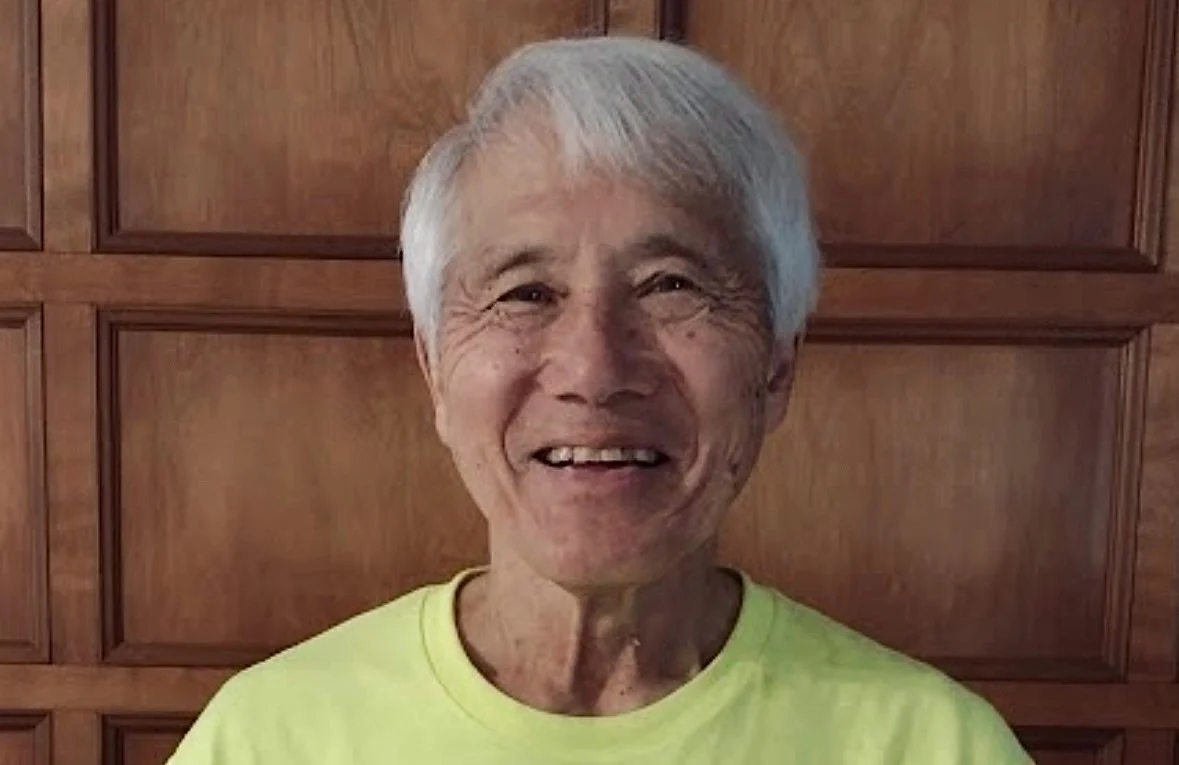
Kanji Nakatsu is a professor emeritus at Queen’s University and can be reached at nakatsuk@queensu.ca.
Tags
academic freedom, Censorship, free speech, Higher education
All final editorial decisions are made by the Editor(s) in Chief and/or the Managing Editor. Authors should not be contacted, targeted, or harassed under any circumstances. If you have any grievances with this article, please direct your comments to eic@queensjournal.ca.