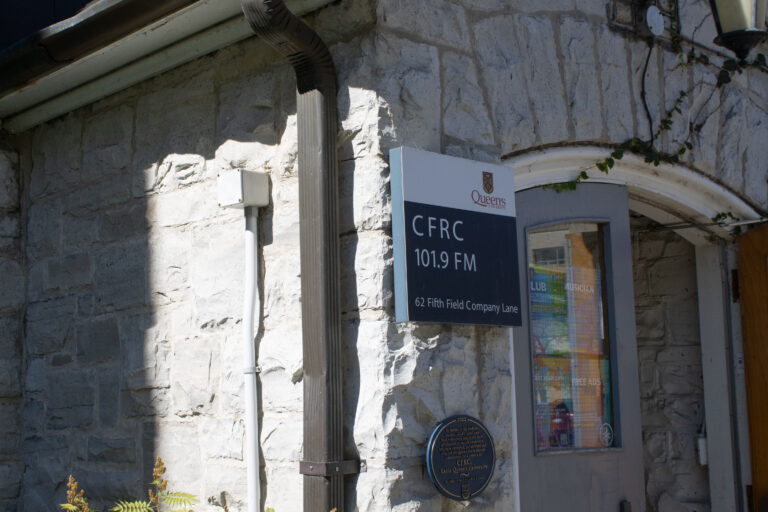
CFRC 101.9 FM has survived two world wars, the rise of television, the internet, and a global pandemic. Last fall, it just barely survived a student referendum.
Campus radio in Canada has been in crisis: the University of Ottawa’s CHUO 89.1 FM went off air permanently in March 2026 after losing the fight to keep its student fee levy while also facing an increase in rental costs for its studio, Memorial University of Newfoundland lost funding after the student union voted against it, and Fanshawe College’s station closed shortly after.
All three cases happened in a matter of months earlier this year.
The threat is being felt all over Canada. Optional student fees, rapidly falling radio engagement, and institutions unwilling to subsidize these stations are all contributing to increased pressure on campus radio stations.
Queen’s 104-year-old campus radio station, CFRC 101.9 FM, knows exactly how nerve-wracking this can feel. Last fall, the stations optional AMS student fee renewal passed with just over 52 per cent of the vote. This tight win secured the station the $8.22 optional student fee through fall 2028.
Dinah Jansen, CFRC’s executive director, was direct when asked about what a failed vote would have meant for the station.
“We would only have about six months in accessible cash flow,” she said in a statement provided to The Journal. “That would not be enough to get us through to a full year cycle when we would again be able to attempt to establish a new optional fee.”
The fee renewal bought time; however, the core issue remains the same.
Advertising and sponsorships only brought in 3.2 per cent of the station’s operational budget. Podcasting, despite being a growing network that includes Campus Beat and The Corridor on Apple and Spotify, is not much better.
“At this time, we don’t receive much revenue from podcasting,” Jansen wrote. “For the bottom line, we tend to break even when revenue is earned versus actual staff time to undertake the production work.”
In other words, what the station makes from podcast production is about equal to what it costs to produce, leaving no meaningful revenue.
More than half of all revenue comes from project-specific grants, the largest being the federal Local Journalism initiative which funds the station’s news team. However, the flexibility for the use of grant funds are extremely low, with most grants legally required to be used solely for the specific purpose outlined in the agreement.
“Grant revenue does not pay for operations including core staff, equipment, maintenance, royalties, insurance, and audit fees,” Jansen stated.
What is left is the student levy. However, this fee is optional, subject to referendum every three years, and is becoming increasingly difficult to pass.
“The threat of losing a student fee due to a failed referendum looms large for us,” Jansen stated. “Especially where students may not realize that voting yes for an optional fee at Queen’s does not obligate the student to actually opt in.”
CFRC is exploring all possible routes to ensure future survival. The station upgraded its studios and is now renting them out for revenue. It has launched paid skills workshops in DJing and audio production, which are free for students and fee-based for the surrounding Kingston community. They expanded their DJ services, offering two nightclub level DJ boards, and are building social media packages to attract new clients.
The station does has a unique aspect to it, which differentiates it from other campus radios that have already closed. Unlike CHUO or CHMR, CFRC operates as an entirely independent non-profit separate from Queen’s University or any student government, which gives them much more control over their spending and operational decisions.
Jansen is focused on preparing for the long term, rather than surviving month to month.
“Endowment funding has also arisen in our conversations,” she said, “but this is a much bigger endeavor as it would require a significant financial investment from the station, plus buy-in from donors able to make major gifts”.
This method would mean creating a large pool of money that is invested permanently. The station would then spend only the return on investment, while the principal generates income forever.
In the ’70s, students tuned into CFRC on portable radios to catch a late-night rock show from their houses and residences. Now, the station can be accessed from anywhere in the world yet is in more stressful times than ever.
Tags
campus radio, CFRC, Podcasts, radio, student fees
All final editorial decisions are made by the Editor(s) in Chief and/or the Managing Editor. Authors should not be contacted, targeted, or harassed under any circumstances. If you have any grievances with this article, please direct your comments to eic@queensjournal.ca.
Ahmed Absiye
Glad that I always opted out of this it seems like a poor use of money