Artificial intelligence (AI) might be the reason your new tech purchase is more expensive.
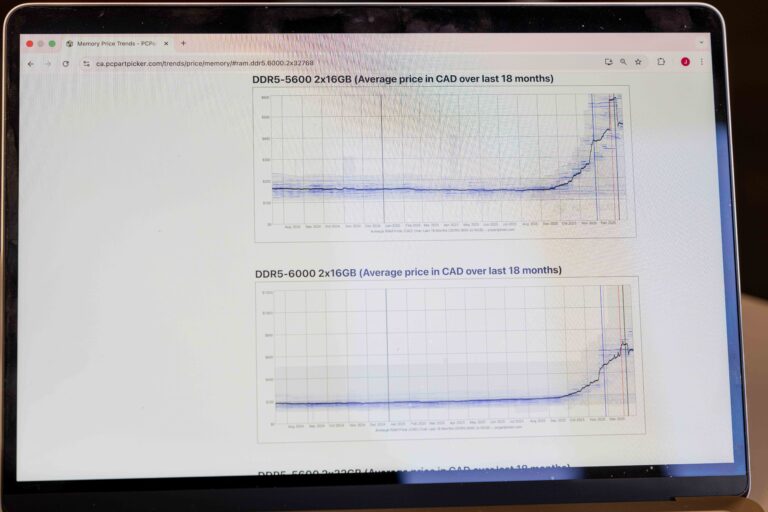
Phones, tablets, and laptops are becoming costlier due to rising costs of random access memory, or RAM, a basic component in nearly all modern devices. Over the past year, memory prices have more than doubled since last October as manufacturers like Micron have shifted production to meet demand for lucrative AI components. As the supply of RAM decreases, these costs are increasingly being passed on to the consumer.
RAM allows devices to run applications, multitask, and process information. It’s embedded in smartphones, laptops, gaming consoles, televisions, and even vehicles. Although consumer electronics rely on relatively standard memory, AI systems require high-bandwidth memory, or HBM, which is designed for rapid data transfer and intensive computing tasks. It’s also more complex and significantly more expensive to produce.
The problem for consumers is that memory manufacturers have limited capacity. As companies prioritize HBM production to meet the booming demand from AI data centres, fewer resources are being allocated to producing conventional RAM.
The result is a supply shortage that’s driving up prices across the consumer tech market. Phones, laptops, and gaming consoles may be affected regardless of whether they are marketed as AI-enabled.
For consumers facing tighter budgets and low confidence in the economy, rising memory prices may influence when and how they upgrade their devices. Waiting for the next generation of technology has traditionally delivered better performance at a similar price. In a market driven by AI demand, newer devices may indeed be faster and more capable, but they’re also likely to cost more.
Manufacturers may expand production capacity over time, but building new facilities can take years. Even as supply improves, prices don’t always return to previous levels once higher costs become part of the supply chain.
For students who rely on RAM-equipped devices for coursework, rising prices may limit access to upgrades or replacements. As costs increase, refurbished electronics and repairable designs may become more practical, lower-cost alternatives.
Tags
artificial intelligence, Economics, Technology
All final editorial decisions are made by the Editor(s) in Chief and/or the Managing Editor. Authors should not be contacted, targeted, or harassed under any circumstances. If you have any grievances with this article, please direct your comments to eic@queensjournal.ca.