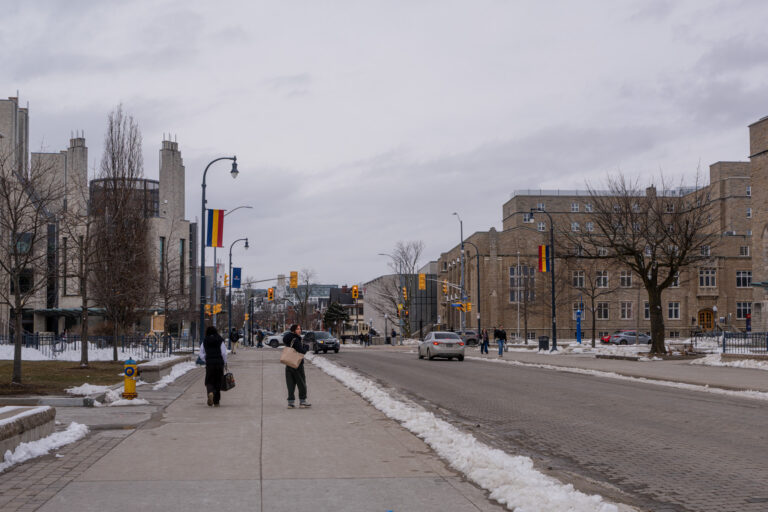
While students are raising concerns with the now disbanded online degree plan, administrators insist the situation is under control.
On Dec. 18, 2023, the Faculty of Arts and Science (FAS) announced it would no longer accept admissions to Arts and Science Online (ASO) degrees and certificates, due to budget tightening. Since then, the University has been teaching out the six fully online degree programs. Due to the teach-out, a part-time student says it has left remaining students with too few upper-year online options and no clear written plan for how part-time students will complete their degrees.
In a statement to The Journal, Brook*, a current ASO part-time student, alleged the Summer 2026 Distance Education calendar includes only two 300-level courses—PSYC 397 and HLTH 332—stating the offerings don’t “meaningfully serve the current cohort” of online students. They also argued that the courses are either limited in scope or have unclear applicability across the six ASO degree programs.
According to Brook, part-time students have been affected differently from those who moved through the online programs on a full-time timeline. They said Queen’s never provided part-time students with a clear closure notice, a stated completion window, or a multi-term teachout plan that reflected that longer timeline.
Brook alleged that while full-time students were generally able to move through the program while more upper-year options still existed, part-time students are now reaching the point in their degrees when those options have shrunk. Brook claimed that the degree framework was vague, allowing Queen’s to cut 300-level options.
“The six fully online ASO degrees were approved under Ontario’s current framework with vague ‘200 level or above’ language instead of clearly defined third year cores. That design has now been used to cancel most genuine 300 level options while still claiming students meet their plans on paper,” Brook wrote.
In an interview with The Journal, Bill Nelson, associate dean (teaching and learning), disputed the suggestion that students are being left without a viable route to graduate.
He shared that FAS planned the teach-out to ensure students could complete their degrees by Fall 2026. Additionally, he said the Faculty is working with part-time students individually to create completion plans, but to create an individual plan, students must take the first step and reach out for advising.
“Every single student, including the part-times, they have a pathway to graduation,” Nelson said.
Brook explained that the issue isn’t simply whether some individualized pathway exists, but whether part-time online students still have access to the kind of upper-year academic depth
they reasonably expected when they enrolled.
Nelson, however, said online offerings vary from year to year because departments rotate which courses are available, and said the FAS’s goal is to preserve the overall number of online courses available to students. According to Nelson, 10 per cent of FAS courses are typically online.
“We are aiming to maintain the same number of online courses that we’ve always had,” Nelson later stated, “we still have robust offerings for online courses.”
Beyond concerns about Queen’s ASO programming, Brook argued that Ontario lacks clear, provincewide rules requiring universities to publish written teach-out plans, preserve meaningful upper-year course options during phase-outs, or guarantee realistic completion windows for part-time students.
The implications, Brook argues, go beyond course registration. They insisted that students with limited upper-year coursework could face disadvantages when trying to transfer into four-year programs, apply to graduate or professional schools, or compete for jobs.
Brook said they tried to raise these concerns with both Queen’s internal Ombuds Office and the Ontario Ombudsman. According to e-mails shared with The Journal, the Queen’s Associate Ombudsperson, Heather Trojek, responded that no systemic review was needed as they hadn’t received any additional complaints.
The Ontario Ombudsman, via e-mail, told Brook that they can review complaints about publicly funded universities, but normally expect complainants to use universities’ internal processes.
Alongside reaching out to administrators and the provincial government, Brook also contacted the AMS with her concerns and a policy brief in early February. In an interview with The Journal, Vice-President (University Affairs) (VPUA), Alyssa Perisa, confirmed that the AMS had received the brief, but because of internal turnover, the e-mail didn’t reach her office until the end of February.
Perisa shared that since receiving the policy brief, she and the Commissioner of External Affairs (CEA) have been working together to review the document, initiate internal discussions, and coordinate with the Arts & Science Undergraduate Society (ASUS) to determine next steps. As well, she’s working to update the incoming VPUA and CEA to ensure they’re up to date, as, due to timing, she assumes most of the advocacy work won’t take place until the summer or the 2026 Fall semester.
Brook said the case should raise wider questions about fairness, accountability, and public trust in Ontario’s university system. She argued that if a program can be wound down without clear protections for upper-year depth or part-time completion timelines, similar risks could face other students in future closures or restructurings.
Tags
Arts and science, arts and science online, Bill Nelson, FAS
All final editorial decisions are made by the Editor(s) in Chief and/or the Managing Editor. Authors should not be contacted, targeted, or harassed under any circumstances. If you have any grievances with this article, please direct your comments to eic@queensjournal.ca.