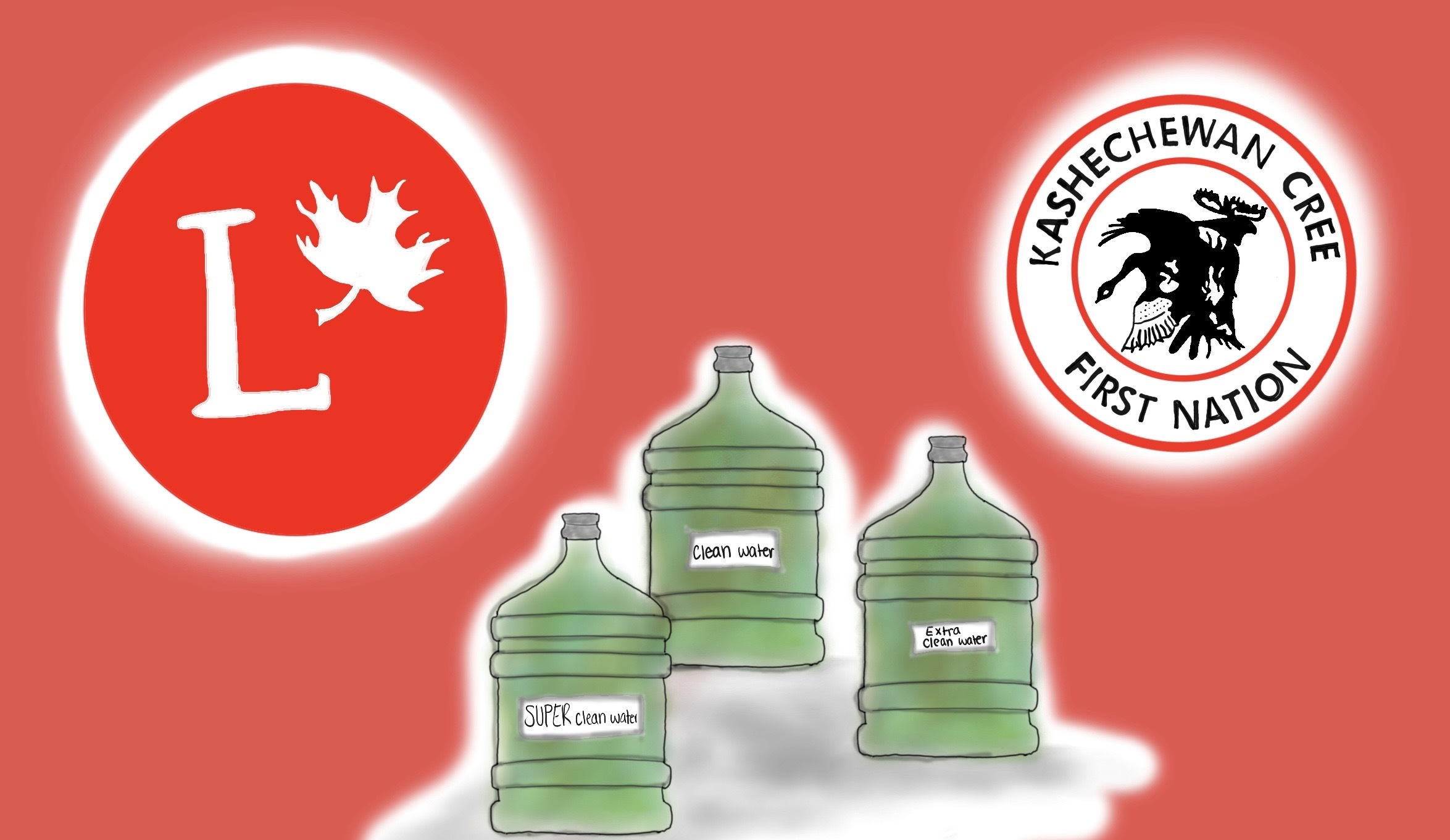
Too many Canadians are left without clean drinking water within the nation’s own borders.
On Jan. 4, the Kashechewan First Nation Chief Hosea Wesley declared a state of emergency, announcing plans to evacuate due to the failure of the water treatment system. It’s the continual occurrence of boiling water warnings on Indigenous reserves that reminds Canadians just how far we’re from achieving campaign promises outlined by Justin Trudeau over a decade ago.
Boil water advisories are far too common in Indigenous communities across Canada. As of December, there were 39 long-term drinking water advisories in Canada, 37 of which were on Indigenous reserves. Almost 50 per cent of these communities have the infrastructure to produce
clean water, but are without the finances to power or repair them. Amid tariff threats, Canadians have become so dedicated to creating a cohesive national identity, Canada has forgotten to acknowledge its own indisputable shortcomings.
In 2015, Justin Trudeau made a campaign promise to end First Nations reserve boil water advisories in the next five years, stating the advisories have gone on for far too long. In 2020, the Minister of Indigenous Services admitted the government wouldn’t be able to meet this deadline. Still, in 2026, Indigenous people are being forced out of their homes with no clear indication of when it’ll be safe to return.
Mark Carney campaigned on a platform of economic prosperity. Shortly following his 2025 election, Carney cut over $2.3 billion in funding for the First Nations Water and Wastewater Program. It’s clear Carney wasn’t referring to the prosperity of everyone when he claimed to be building a “Stronger Canada.” Clean water for all Indigenous and rural communities must be at the forefront of any proposed
nation-building plan. Large economic aggregates often ignore the smaller communities that Canada is built upon. Countries like Canada can’t boast about prosperity while entire communities are unable to have their basic needs met. Beyond truth and reconciliation, clean water is a human right that shouldn’t be denied to anyone.
Each September, Truth and Reconciliation is thrown around like it’s a serious commitment and is forgotten about a month later. While everyone was preparing for the holidays, advising each other to “shop local” and “support Canadians,” the Kashechewan Nation was informed they might not be able to return home.
When the City of Calgary water main broke on Jan 6, crews immediately began repairing the damage. While there is a population disparity between Ontario’s James Bay coast and the City of Calgary, individuals’ right to clean water shouldn’t be up for debate. Each case should’ve been treated with the same urgency.
Boil water advisories and the neglect of Indigenous communities have gone on for far too long. Canadians are now desensitized and misinformed about
issues facing the Indigenous population, and events such as the evacuation of the Kashechewan nation don’t receive the attention they deserve.
A country that’s looking to present a united front in the face of
threats south of the border cannot pick and choose whose basic rights are protected. Reconciliation is meaningless if it isn’t backed by an urgent commitment to guaranteeing the fundamental necessities for everyday life.
—Journal Editorial Board
Tags
Evacuation, Indigenous Communities, water
All final editorial decisions are made by the Editor(s) in Chief and/or the Managing Editor. Authors should not be contacted, targeted, or harassed under any circumstances. If you have any grievances with this article, please direct your comments to eic@queensjournal.ca.