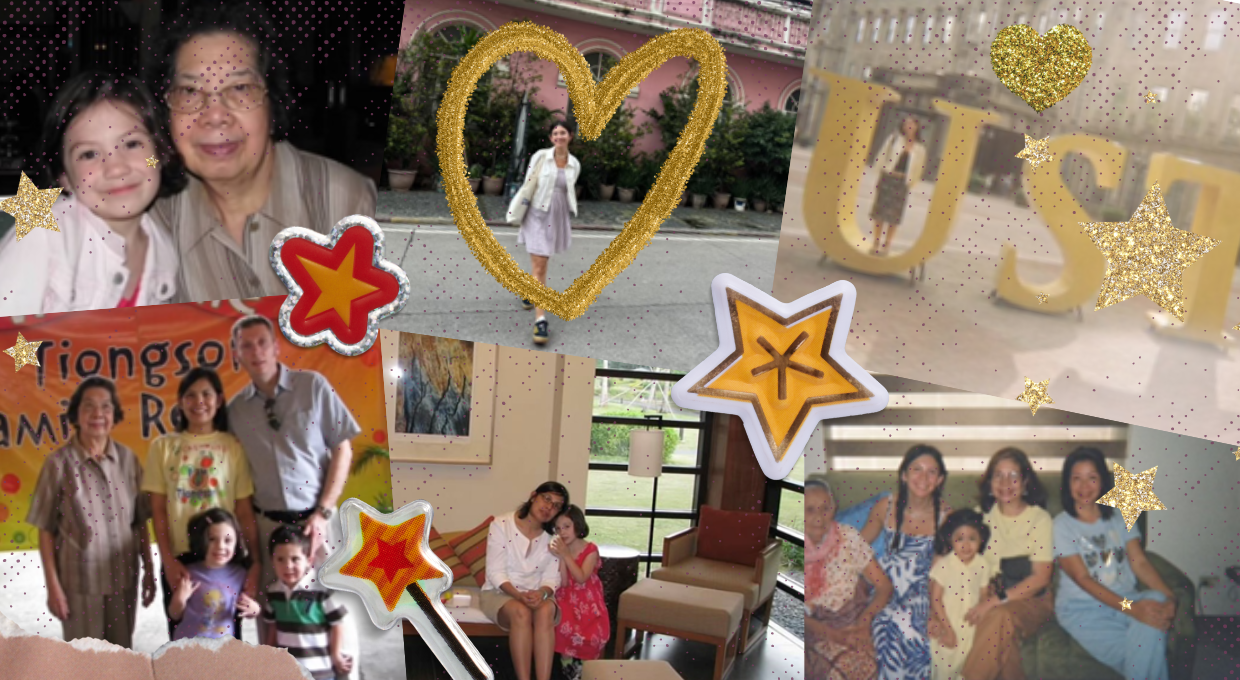
The last time I visited the Philippines was in 2008. I was five years old and have little to no recollection of my stay. I have slivers of memories of the trip—getting my nails painted by my ninangs (godmother), singing karaoke with my family, and walking a cute aso (dog).
Now, fifteen years later, at the age of 20, I’ve returned, and my experience has broadened entirely.
Last fall, I applied for a summer internship through Queen’s Project for International Development (QPID) at Parabukas Pte Ltd., a women-led international consultancy focused on laws and policies related to climate change, the environment, and sustainability. After several rounds of individual and group interviews, I received an email saying I’d been accepted. I was ecstatic.
My mother knew I’d applied and when I told her I was selected, and coined by my QPID supervisor as “Miss Parabukas,” I knew she’d be proud of me for finding appreciation in the country she was born and grew up in.
Being Filipina was something I’d always kept to myself or used as a “fun fact,” something I selectively decided to share when it was convenient or guaranteed to get a reaction from others. It was something no one would ever guess or would have expected me to say: that I am half-white, half-Filipina.
It wasn’t until recently being a woman of colour was something I began to identify with.
Attending predominantly white elementary and high schools as a mixed woman was never something I fully processed or embraced. I often felt caught between two worlds, unsure of where I truly belonged. My Filipina heritage was a part of me, but it was overshadowed by the more dominant culture of my daily life.
The lack of diversity in these communities meant many of my friends were white. It wasn’t something I really noticed or paid much attention to. Now, looking back, I can recall many moments in my childhood where being Asian was something I dismissed, failed to appreciate, or was embarrassed about.
It’s no secret Queen’s is a predominantly white school. When I’m walking on campus with my friends or people-watching at the ARC, there’s a noticeable lack of diversity. It’s a reality that, over time, has made me more aware of my identity and how I fit into the broader, and blonder, campus community.
Even in my own experiences, I’ve faced subtle forms of exclusion and wondered if I wasn’t “white enough” to be fully accepted by some of my white friends.
Scrolling through Instagram, I noticed a pattern among the white women I follow. Most of these women unconsciously gravitate towards posting with other white women, placing favouritism towards the blonde and blue-eyed archetype—even when they have friends who identify as a member of the BIPOC community.
This kind of exclusion might seem minor, but it’s an example of the casual racism that many women of colour face daily.
There’s so much importance in representation, and it’s only recently that I’ve felt pride in seeing mixed women in media. They represent young girls like me, who felt embarrassed about who they were. Shoutout to Olivia Rodrigo, my half-Filipina it-girl!
I’ve had moments of what I call “white envy,” where I feel insecure about not looking like the Betty Cooper-type girls I see on Instagram. I’ve also had moments of “Asian envy,” recognizing I often wasn’t perceived as “Asian enough” either. Comparison is the Devil.
A friend once asked me, “Lauren, why do you want to look like the other girls at Queen’s? Being mixed makes you unique. You don’t need to look like anyone else. You wouldn’t look like you.” Although I appreciated the sentiment, it also left me wondering if it was okay to not fit neatly into any one category.
This summer, I started to understand what I’d missed out on by not connecting with my mother’s culture. I don’t know how to speak Tagalog. I don’t typically eat Filipino food. I don’t have the dark complexion that many Pinoy have. I questioned if these qualities made me any less Filipino.
Living in the Philippines, I was often perceived as a white woman, which somehow felt worse than being Filipina in Canada and not being perceived as such.
Throughout my 10 weeks abroad in Metro Manila, I found myself seeking validation from my titas (aunt) and titos (uncle), ninangs (godmother) and ninongs (godfather), lolas (grandma) and lolos (grandpa), the Parabukas team, and any stranger I met in the elevator at my apartment complex.
The smiles I receive after saying “thank you” in the mother tongue may be common courtesy, but I can’t shake the feeling they simply think I’m a tourist trying her best to pronounce “salamat” correctly.
When the Parabukas team and local interns speak in Tagalog, I like to think they don’t mean any harm by excluding the Canadians from their conversation. But I can’t help but wish they would speak English so we could be included.
As the summer comes to an end, I realize the experiences I had in the Philippines have taught me more than the legal internship itself. Spending time with my mother’s friends and my relatives had made me realize that despite being far from home, I have family supporting me across the world.
At one point in my life, I was embarrassed to be Asian. Now, I recognize how this perspective held me back from feeling proud of my mother’s heritage. I went on this internship for my Mommy and my Lola Dora and I’m leaving with a newfound sense of pride and connection to my roots. Maraming Salamat and Mahal Kita.
At the end of the day, I’m a woman who will have moments of insecurity but knowing that I’m a woman who has had these experiences is a reminder that I’ll overcome them.
Tags
Culture, family, internship, the Philippines
All final editorial decisions are made by the Editor(s) in Chief and/or the Managing Editor. Authors should not be contacted, targeted, or harassed under any circumstances. If you have any grievances with this article, please direct your comments to eic@queensjournal.ca.