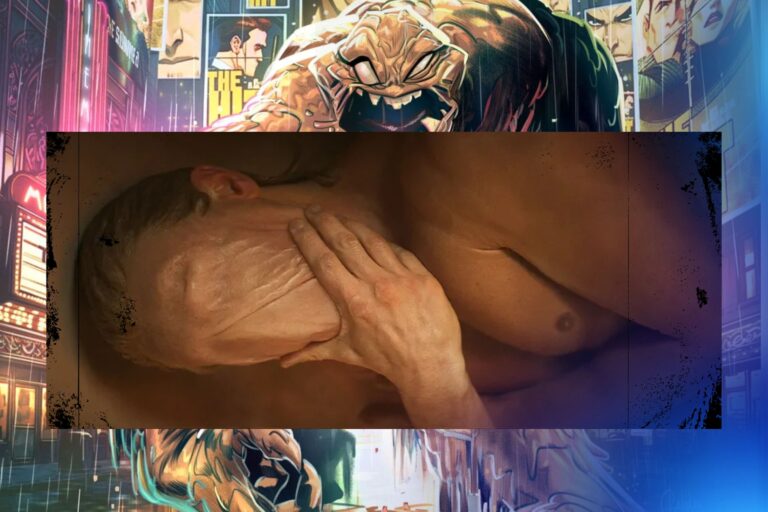
Clayface’s unstable narrative and battle between genres reflects a studio still hoping for a running start.
Released on Oct. 23, Clayface is an ambitious swing, featuring lots of high highs and very low lows, as it is given the difficult task of being both a horror film and a comic book film at the same time. While it has moments of success in both categories, it often flip flops back and forth, meaning its comic-accurate moments don’t get a chance to fully shine, and more absurd horror elements are limited from reaching their full potential.
Since the arrival of James Gunn and Peter Safran as co-CEOs of DC Studios in 2024, the hierarchy of the DC Universe (DCU) has been changing drastically. So far, there hasn’t been stability regarding audience reception. Although Superman proved to be a box office smash, Supergirl couldn’t seem to get up, and was considered a flop.
With only two films and a few TV series under its belt, the DCU has taken a big swing with Clayface, a comic horror film written by horror auteur Mike Flannagan and Academy Award winner Hossein Amini, and directed by James Watkins.
Set in Gotham City, Clayface follows actor Matt Hagen, played by Tom Rhys Harries, on the verge of breakout success. After being brutally attacked and disfigured by crime boss Markos Szabo, Matt begs Dr. Caitlyn Corr, played by Naomi Ackie, to help treat his disfigured face. Although his appearance is back to normal , his grip on reality loosens as he falls down a vengeful path of self-destruction.
Tom Rhys Harris as Clayface holds his own, even if the story doesn’t do him justice. Some of the most crucial parts of Matt’s psyche as a character are laid out at the beginning of the film with a fast-paced edit of him pursuing legal vindication for Szabo’s attack. Yet, he loses as a result of Szabo’s influence with Gotham’s justice system. Matt is not only accused of sexual harassment by Mia, Szabo’s girlfriend, but Szabo also brings up stories of his alleged troubled past to discredit him. The unreliability of both Szabo and Matt leaves the viewer unaware of the truth.
However, Clayface benefits from this ambiguity, suggesting that Matt’s monstrous transformation was already under the surface. Albeit rushed, Matt’s rejection and removal from Hollywood after his disfiguration and subsequent allegations are shown to be merely the tipping point, though parts of that storyline still get lost in translation.
Harris and Ackie’s chemistry drives the emotional weight of the story since the basic “mob villain” Szabo doesn’t really do much other than order his goons around and die at the end.
Characterization is both the film’s strongest and weakest point. While Matt and Caitlyn are fully formed characters that fans will hope to see in later projects, supporting roles like Szabo, Mia, and even Caitlyn’s fiancé John will likely disappear into the public’s collective conscious as the franchise grows.
As a body horror film, there are more than a few nauseating moments. Clayface certainly earns its R rating with some gnarly deaths on screen, inspired by 1980s and 1990s body horror films like American Werewolf in London and The Fly.
Matt’s gruesome transformation possesses thematic elements of the abject, which is when what is expelled from the body represents what is being expelled from society. Matt’s abjection from Hollywood mirrors his body’s abject transformation, where the blood and skin he once feared becomes his strength as he assumes his identity as Clayface.
There are quite a few highlights with the body horror, namely the sequence where Matt is deformed, which not only has gnarly sound design, but a great performance from Harris. His horror as his face is cut up is mirrored by the audience watching. As well, the final death of the half-baked villain feels fresh with one of the most horrifying and thematically on point deaths in the film.
If scenes like these were consistent, I could be confident in considering it a wholly good film.
But although Clayface falters occasionally in the pacing and underdeveloped side characters, it is not a bad start to the DCU. As a whole, the movie does a good enough job at being a horror film and a comic book film, even if it leaves out the best of each genre.
Tags
All final editorial decisions are made by the Editor(s) in Chief and/or the Managing Editor. Authors should not be contacted, targeted, or harassed under any circumstances. If you have any grievances with this article, please direct your comments to eic@queensjournal.ca.