the student body
Earth week is only a month away, and I’d like to take this opportunity to talk about the environment and how it impacts human health. I mean, think about it: as human beings, we are totally dependent on the state of our planet. With dirty air, contaminated water, toxic chemicals on our food, and climate change, real threats are being posed to our health and well-being. We’re talking respiratory problems, cancers, infectious disease and chemical poisoning, just to name a few.
Luckily, in the last few months the Canadian public and our politicians have started to take seriously the damage we are doing to our planet, and therefore, to our health.
It seems gone are the days when environmental activism meant chaining yourself to an old growthtree. Opinion polls in the media are indicating that Canadians are willing to make changes in
their daily lives in order to help the environment. That’s what I call everyday activism.
Still, reversing the damage we have already done to the environment is not going to change overnight simply because we are aware of it.
According to Kevin Morgan, professor of European Regional Planning at the Cardiff School of City and Regional Planning in Wales, changing the systems that have led to environmental degradation “is a process, not an event.”
So what can we do to make a difference over the long term?
Last Tuesday, Morgan gave a public lecture at Queen’s entitled “The Power of the Public Plate: Rediscovering the Value of Local Food.”
After listening to him speak, I’m convinced that one way we can make a difference as a population is to change the way we purchase our food. Morgan spoke of the industrialization of Western agriculture, and how it has led to widespread environmental damage. He argued that in order to combat the “ecological disasters” associated with modern farming, a movement has begun that advocates for the purchase of local, seasonal food from farmers’ markets and local farms as a healthier and more environmentally friendly alternative to the mass-produced food offered at most supermarkets.
After his lecture, I spoke to Morgan about the environmental and health benefits of eating locally. Morgan said local food tends to be organic, which means less pesticides and fertilizers are contaminating our soil, water and food.
As well, Morgan said locally purchased foods are better for us because they have less nutrient loss than imported foods.
“Local food tends to be fresher, as it has traveled less distance. Therefore, there is less nutrient loss in local foods,” Morgan said. Better for the environment, and better for you. What more reason could you need to buy your food locally?
Still, there are other reasons to think about purchasing from your neighbourhood farm.
Morgan also talked about the carbon footprint of a food product’s journey: the shorter a food has to travel before someone consumes it, he said, means that fewer greenhouse gases have been emitted in the process.
“Food miles are only part of the carbon footprint,” Morgan said, adding that other factors have to be taken into account, such as the energy used to produce the food and the emissions spent by consumers in their purchasing of the product. That makes sense, especially if you are driving to the market in order to purchase your local food.
To further reduce the ecological impact of local food, why not walk or ride your bike to the market? Overall, remember that you can help improve the environment by supporting area farmers and their
locally grown, in-season fruits, vegetables and other products as much as possible.
In Kingston, it’s easy to make this change; there’s a Farmers Market that can be found downtown at
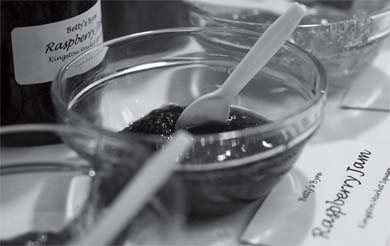
Market Square year round. Keep in mind that the market also visits Queen’s campus once a month, as it did earlier this week.
———————-
Queen’s Oxfam Food Security campaign recently published a seasonal cookbook to promote awareness and use of foods available locally. The cookbook is available through the Food Security page of Queen’s Oxfam’s website: club.myams.org/oxfam/foodsecurity.html
For more information about local food in Ontario, visit Foodland Ontario at www.foodland.gov.on.ca.
All final editorial decisions are made by the Editor(s) in Chief and/or the Managing Editor. Authors should not be contacted, targeted, or harassed under any circumstances. If you have any grievances with this article, please direct your comments to eic@queensjournal.ca.