Opportunities for Queen’s students within the University and the Alma Mater Society (AMS) are plentiful, yet the messaging about such roles isn’t.
Having been minimally involved in extracurriculars during high school, I entered university with a sense of naivety around the opportunities available to me—wrongly assuming that the university life mirrored high school, only consisting of harder classes and a few extra clubs.
I couldn’t have been further from the truth.
At Queen’s, the leap from high school isn’t just academic—it’s a whole new world of opportunity. The kinds of hands-on experiences available are miles beyond what most students encounter before university, but without clear guidance and early outreach, many first-years don’t even know these doors exist—let alone how to open them.
During my undergrad, I’ve met students helping design the very courses they have just taken, or spending their summers conducting research alongside professors. It’s impactful, interesting, hands-on work often landed after only a couple years of undergraduate education.
Within the AMS, there are many student jobs that provide upper managerial experience to students, allowing them to run entire coffeeshops or take charge of commissions that oversee multiple projects, gaining invaluable experience in leadership that usually wouldn’t be possible until late in a professional career.
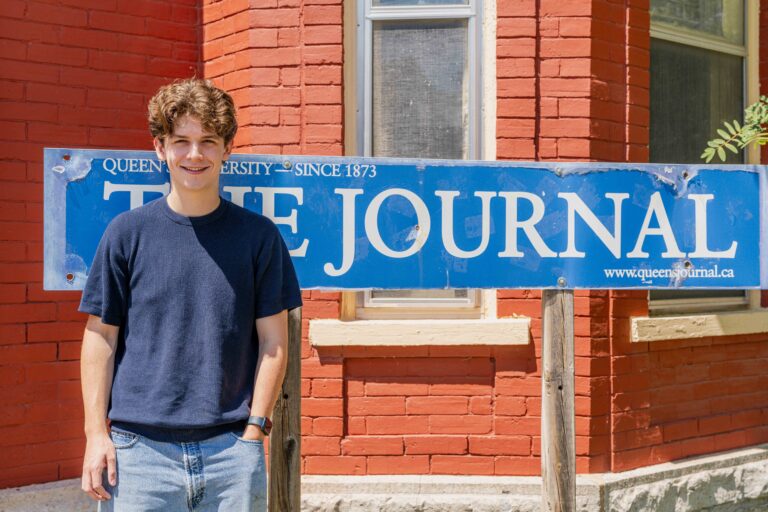
As the Senior News Editor at The Journal, I’m essentially doing the job of a working journalist—while also learning how to manage and lead a team of three assistants. Prior to joining, I had never laid my finger on journalism. Now, I feel confident I could build a career in the field if I choose. But I had only discovered The Journal because I happened to notice a stack of papers on newsstands around campus late in first year—meaning I missed a out on a whole year of valuable opportunities just by not knowing.
Positions similar to mine within the AMS often only exist due to a subsidized system—whether that be using student dollars or public funding—meaning experiences available to students are ones that most private companies simply cannot provide. Private companies exist to return a profit, meaning taking on an inexperienced student is often less appealing than hiring a professional. On the other hand, the AMS and the University are perfectly set up to provide learning opportunities as their mission is education.
Despite all the opportunities that exist for students in both the AMS and the University, their engagement and awareness for students remains too low. From my experience, students landing university positions only heard about them through word of mouth. Further, the has AMS continuously lacked bodies to fill the roles they offer students.
Sure, the University and AMS try to advertise these positions—cue the occasional Instagram post or hiring fair—but let’s be real: that’s not enough. If these opportunities are as valuable as they claim, they should be shouting them from the rooftops, not whispering into the void of the internet. After all, Instagram posts preach to the choir, and hiring fairs miss the students who don’t even know there’s something to look for.
While this issue affects many students, it hits first year students the hardest—they’re the least familiar demographic on campus in regards to understanding how Universities work and are simultaneously navigating a major transition in their lives.
To tackle this, the groundwork needs to be laid early in one’s university career, to reach the clueless first year that I once was. Targeted talks during large first-year classes should be the foundational approach to the problem. After all, every first-year has to show up to class, so if the University and AMS genuinely want to meet them where they’re at, I can’t think of a better place to start.
I’m not claiming a massive hour-long presentation to every first-year class is the means to accomplish a sense of broader awareness. All it takes is a short five-minute explanation to large first-year classes explaining how the AMS and the University operates, outlining both the volunteer and paid positions, and how they often give an incomparable experience to a typical student job working, say working as a waiter or camp counsellor.
Throughout my entire first year, I only had one group come to my class—the Student Works program, a group not even affiliated with Queen’s or the AMS. While I didn’t end up going through with the program, I did my research, learned how it worked, and was able to make an informed decision. If I had that same exposure to University and AMS opportunities at that time, I’m sure my first-year experience would have included a lot more campus involvement, given the sheer number of options.
My life has been massively impacted by my decision to become involved on campus. While The Journal has taught me typical soft skills such as time management and communication, it also has given me an opportunity to peak into the world of journalism and learn about a new area of interest with each story I cover.
My experience has been fascinating and transformative in many ways, and I can’t help but want to share that feeling with others—especially for the incoming first-year student who is just as oblivious as I was.
All final editorial decisions are made by the Editor(s) in Chief and/or the Managing Editor. Authors should not be contacted, targeted, or harassed under any circumstances. If you have any grievances with this article, please direct your comments to eic@queensjournal.ca.