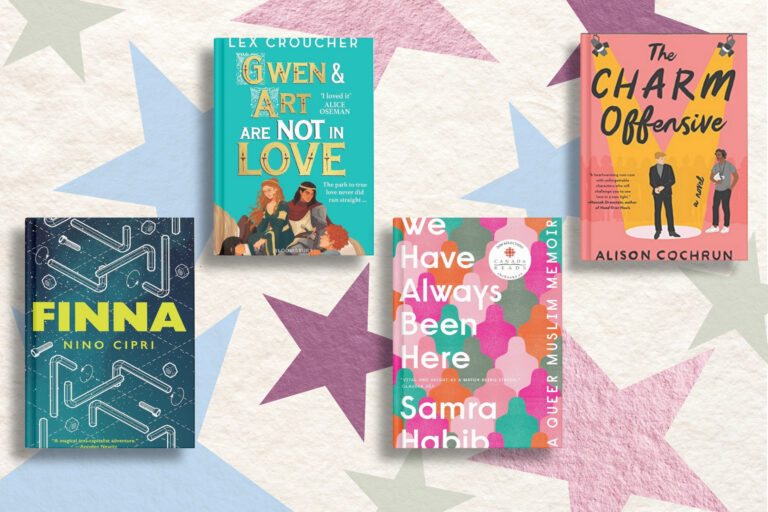
The Journal has rounded up five must-read books that feature queer characters whose story has a happy ending.
Since the late 19th century, the “Bury Your Gays” literary trope has seen queer characters as expendable, leading many of their stories to end in suffering or death instead of a happily ever after. Think characters like Lexa from The 100 or Joan Gilling from The Bell Jar by Sylvia Plath, whose queerness ultimately resulted in their tragic endings because of a cultural response to queer identity.
For centuries, censorship and prejudice have made happy endings a rarity for queer characters in widely circulated novels.
But as society changes, so does the media produced about the 2SLGBTQ+ community.
More authors are realizing that queer characters deserve happy endings too, giving readers positive examples of romance and community for the historically mistreated and misrepresented.
The books on this list aren’t smooth sailing throughout. But regardless of their journeys, each character is guaranteed a future full of possibility for their happy endings.
Aristotle and Dante Discover the Secrets of the Universe by Benjamin Alire Sáenz
The book follows Aristotle (Ari) as he navigates his feelings of loneliness and anger as he grows up. Early on, he befriends Dante at a public pool. As the novel progresses, Ari slowly comes to terms with his feelings for his best friend while family secrets are revealed along the way.
After Ari’s heartwarming confession, he expresses, “How could I have ever been ashamed of loving Dante Quintana?”
The novel contains descriptions of period-typical homophobia, transphobia, and violence, but the titular characters manage to find love and clarity amid their struggles.
Finna by Nino Cipri
The novella follows Ava and Jules as they deal with their recent break up while working together at LitenVärd, an Ikea-Esque department store, all while fighting off danger from alternate universes. The second chance romance is only half the story, as Finna also touches on themes of exploitation of retail workers to critique capitalism.
The ending is ambiguous in terms of Jules and Ava’s status as a couple, but despite this, Ava still chases after Jules, proving that there is more than one kind of love, and that exes can be friends.
Even if their ending is unclear, Ava finds the confidence to leave her toxic workplace and achieves emotional clarity through her potential friendship with Jules.
Art and Gwen Are Not in Love by Lex Croucher
Although this novel exists in the same universe as other , it isn’t a retelling. Croucher introduces two reimagined characters, Arthur, a descendant of King Arthur, and Gwendoline, a princess. Despite being betrothed to each other, the pair discovers they have feelings for other members of the court. They agree to cover for each other before the royal tournament, choosing to engage in a fake relationship to satisfy their families.
This book has the whimsy of a romantic comedy, the tried-and-true fake dating trope, and the high-stakes conflicts of fantasy. Unlike traditional Arthurian stories, this story gives its leads a much needed happily ever after.
The Charm Offensive by Alison Cochrun
Dev works on the set of Ever After, a reality dating show reminiscent of The Bachelor. Charlie is this season’s leading man but has no interest in falling in love. Dev feels responsible for getting him more comfortable on camera and with the other contestants, resulting in a series of “practice dates.”
Tensions rise once everyone around them understands that Dev and Charlie’s feelings for each other are more than platonic. Their romance results in Ever After taking a turn and spotlighting the relationship between the two men and choosing a lesbian to lead their next season.
We Have Always Been Here: A Queer Muslim Memoir by Samira Habib
The book tells the story of Habib’s real life, who recounts their experience as a queer Ahmadi Muslim person. It begins with their childhood in Pakistan, their immigration to Canada, and the personal struggles their family endures while navigating a new country.
As Habib grows up, they experience bullying, failed relationships, and conflicts between their sexuality and their religion. Despite this, the book ends with Habib reuniting with their family and finally receiving acceptance from their loved ones and themself. Habib is now recognized for their work, Just Me and Allah: A Queer Muslim Photo Project, proving that their sexuality and religion don’t have to be at odds.
***
It’s about time queer characters experience being more than a means to an end. Storytellers are realizing they are just as deserving of a happy ending as everyone else. Not every happy ending needs to be romantic. Sometimes, the best endings happen when beloved characters learn to love themselves.
Tags
Aristotle and Dante Discover the Secrets of the Universe, Art and Gwen Are Not in Love, Bury your gays, Finna, queer books, The Charm Offensive, We Have Always Been Here: A Queer Muslim Memoir
All final editorial decisions are made by the Editor(s) in Chief and/or the Managing Editor. Authors should not be contacted, targeted, or harassed under any circumstances. If you have any grievances with this article, please direct your comments to eic@queensjournal.ca.