In May of this year, Thomas Friedman wrote an opinion piece in the New York Times, in which he remarked that “in a world where our demand for Chinese-made sneakers produces pollution that melts South America’s glaciers, in a world where Greek tax-evasion can weaken the euro … our values and ethical systems eventually have to be harmonized as much as our markets. To put it differently, as it becomes harder to shield yourself from the other guy’s irresponsibility, both he and you had better become more responsible.”
The concept of global citizenship revolves around the idea of developing an international culture that transcends national borders.
We live in an age of facilitated communication, where we have the ability to receive and send more information than we have the capacity to understand.
We are presented with endless possibilities for innovation, and at the same time we are given the chance to see the world as we have never seen it before.
We are not only exchanging facts and information through communication technologies – we are also empathizing, and in this way are ethically connected with people around the world. Global citizenship is not just a result of the progression of globalization. It is a distinct identity we must choose to assume – do we remain cloistered on the receiving end of a vast global network, or do we take initiative and try to understand the strange dynamic in which our world functions? If we encounter something we see as injustice, do we try to change it?
The world we live in has been built on a tilted balance. Over 1 billion people around the world live under the poverty line, surviving without security in food or healthcare on the equivalent of 1.25 USD per day.
Financial, social or cultural barriers mean 69 million children across the world cannot attend primary school and physical disability increases a child’s risk of dropping out of school more than two-fold.
Women in higher-level management and politics comprise less than 10 per cent of the total number of individuals involved. Even in developed countries boasting gender parity, including Canada, only 30 per cent of higher-level positions are held by women.
More than 70 per cent of the 30 billion metric tons of carbon dioxide released into the atmosphere each year are the emissions of a privileged 18 per cent of the countries of the world.
Carbon dioxide emissions are also creating environmental havoc, causing global temperatures to increase and consequently melting the glacier systems and acidifying seawater worldwide.
And despite great advances in technology and healthcare in the last decade, information collected by the World Bank shows that more than 2.6 billion people worldwide have no access to basic sanitation.
Our advances in medicine do not change the fact that 8.8 million children under the age of five die each year of preventable illnesses. In short, many of the problems we face today are as widespread as they are complex. The first step in solving them lies in the development of a collective social conscience. To solve the problems of the world, we need the world to care.
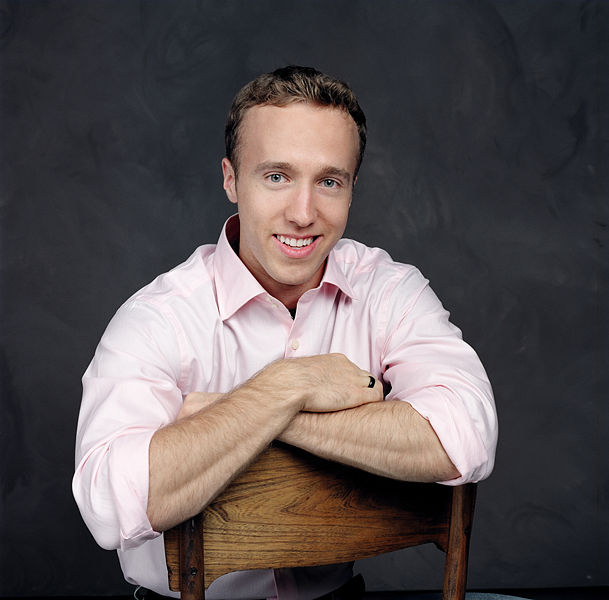
A story in the morning newspaper about a young Pakistani boy’s fatal resistance to bonded labour and child slavery prompted Craig Kielburger to found the children’s charity Free the Children in 1995.
The organisation has since grown to include over a million young people in more than 45 countries, the largest of its kind in the world. At the time, Kielburger was only 12 years old.
LetsStopAIDS, a national network of peer educators on HIV/AIDS, was founded by Shamin Mohammed Jr. in 2004 when he was 15 years old; and STAND, a student-led, Canada-wide movement advocating against genocide, was started in 2005 by students at the University of Western Ontario – people not so different from us.
These organisations share a perspective that is well expressed by Free the Children in their mission, to free children around the world “from the notion that they are powerless to affect change.” Problems can only be solved if people are determined to solve them. The most important mission of these organisations is not to raise money or to have petitions signed, but to show the people of the world, especially the youth of the world, that they are not helpless or voiceless and that their actions can have an impact on the world around them.
We need to understand that fear of failure should not stop us from standing up for a cause we believe in. Success, after all, is only a possibility once an attempt is made. Likewise, progress can only be made if we aspire to affect change.
The Canadian Criminal Code states that inaction while observing a crime against another human being makes the observer an accessory to the offence.
Not preventing the act is no less wrong than the offence itself. While social injustice, extreme poverty and global warming are not problems that can be solved by the decisions of a single person, each individual who commits to affect change becomes part of a larger movement driven by a common purpose.
We no longer have an excuse to be ignorant. Our access to information gives us glimpses of someone else’s experience without ever physically seeing or knowing them. These short pieces of other’s life stories have inspired people to look beyond themselves and achieve things that they never would have believed possible.
If there is an issue that captures your heart and mind, that inspires or moves you, take initiative. The success of young advocators like Mohammed and Kielburger prove that youth or fear of failure should by no means be reasons for inaction.
Finally, if you have the heart but are unsure of yourself and your cause, I would like to share with you famous words that inspired me when I first heard them: If not you, who? And if not now, when?
Rachel Lam is the vice president of the Queen’s chapter of Engineers Without Borders.
All final editorial decisions are made by the Editor(s) in Chief and/or the Managing Editor. Authors should not be contacted, targeted, or harassed under any circumstances. If you have any grievances with this article, please direct your comments to eic@queensjournal.ca.