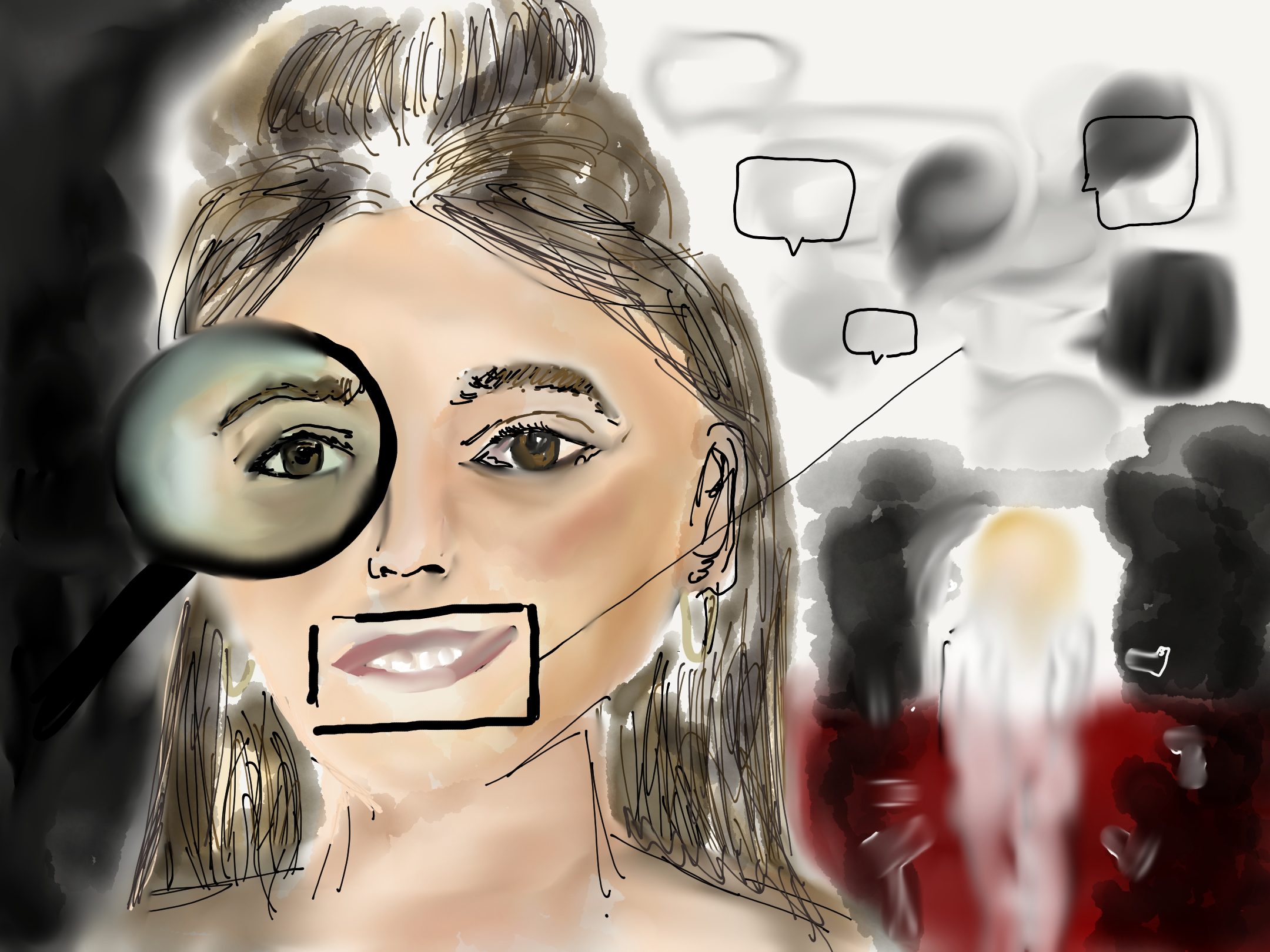
A new trend has emerged in the world of pop culture , one that sets a dangerous precedent by distorting the body images of young women, including female university students.
Female celebrities once celebrated for resisting Hollywood’s beauty standards —perfectly straightened teeth and skin that doesn’t age—have slowly become the subject of mockery for prominent entertainment outlets.
With constant exposure to social media, young people are frequently confronted with narrow beauty standards. Female university students, in particular, are vulnerable to internalizing harmful messages, especially when online discourse critiques female celebrities’ natural bodies or unconventional features. This scrutiny can be especially damaging for an impressionable audience navigating their self-image.
In September 2023, Canadian actress Pamela Anderson made headlines by attending Paris Fashion Week without makeup—a choice she described as an effort to “challenge beauty.” Her barefaced appearances, which continued in the months that followed, were widely praised by both celebrities and the public. For female university students constantly exposed to polished online images, Anderson’s stance offered a rare counter-narrative—one that encourages rethinking rigid beauty norms and embracing authenticity in a campus culture often shaped by social media aesthetics.
However, it now seems as though the media had a timeline for how long Anderson’s natural beauty look was viable—the expiration date has now passed. At the 2025 Met Gala, Anderson debuted a bobbed haircut and minimal makeup look. The Daily Mail went viral for a comment criticizing her appearance: “Frumpy Pamela Anderson looks far from her Baywatch days.”

PHOTO BY: @tova_leigh on Instagram
British actress Aimee Lou Wood, who most recently starred in season three of The White Lotus, also gained public admiration for defying beauty standards by displaying her natural teeth rather than succumbing to Hollywood’s veneer culture. However, just like Anderson, the positive reception that Wood experienced proved to be short-lived.
In April 2025, Saturday Night Live included a skit mocking Wood’s teeth. Wood responded to the skit by calling it “mean and unfunny,” and has also recently expressed frustration with the disproportionate amount of attention her teeth have received in the media.
Anderson’s and Wood’s experiences don’t exist in isolation from one another. Women in Hollywood have long had their appearances scrutinized, and recent events demonstrate a new way to inflict judgement. Now, the excessive amount of praise that female celebrities receive for rejecting beauty standards actually serves as a catalyst for the ensuing criticism they face for failing to conform.
Celebrities known for their unconventional traits often gain popularity online, but this visibility is a double-edged sword. While praised for their individuality, these women are also subjected to intense scrutiny, with public discourse centring on their appearances. This pattern doesn’t stop with celebrities—female university students, constantly consuming and participating in these conversations, may internalize the same critical gaze, shaping how they perceive both themselves and their peers.
Social media already perpetuates body image issues in young women around the world. Witnessing the media’s ever-changing stance on women’s bodies can be difficult. This ridicule is part of a larger history where women’s physical attributes become trendy, and for young women already experiencing body image issues, this trend is no help.
Cosmetic procedures like Botox and other filler injections are increasingly popular among young adults. Originally designed to smooth natural face wrinkles, trends like “barely-there” Botox encourage people to start using fillers in their early 20s as a “preventative” measure. Social media trends like “Snapchat dysmorphia” and the “Instaface effect” reinforce unrealistic beauty standards that influence surgical considerations.
For female university students, this environment creates mounting pressure to alter their appearance to align with unrealistic standards. In contrast, public figures like Pamela Anderson and Aimee Lou Wood, who embrace their natural looks despite online criticism, offer rare but powerful examples of authenticity—models that can help young women push back against a culture of perfection and self-surveillance.
Don’t forget—you were born beautiful, and you don’t need an app filter or a needle to prove it.
All final editorial decisions are made by the Editor(s) in Chief and/or the Managing Editor. Authors should not be contacted, targeted, or harassed under any circumstances. If you have any grievances with this article, please direct your comments to eic@queensjournal.ca.