The growing push to enforce a strict gender binary ignores not only the lived realities of transgender and non-binary people today, but also the long history of Indigenous gender diversity on Turtle Island.
On U.S. President Donald Trump’s second day in office last year, he signed Executive Order 14168, which prohibited the federal government from recognizing the gender identity of transgender people. The order required the American federal government to replace the term “gender” with “sex,” which is defined as an immutable male-female binary determined “at conception”.
It also disallowed gender self-identification on federal documents and ended federal funding for gender-affirming care and the promotion of what it called “gender ideology.”
While it’s tempting for Canadians to watch this from across the border and file it as an American political issue, Canadians themselves are far from united on questions of gender identity. According to a 2023 survey conducted by the Angus Reid Institute, 56 percent of Canadians believed people should identify only as male or female, while only 36 percent believed the binary is too limiting, and 10 percent abstained from answering.
The growing popularity of these views can make it easy to assume the gender binary is universal, timeless, or rooted in historical fact. However, it is not.
Long before Canada and the United States ever existed, many Indigenous groups across Turtle Island recognized forms of gender diversity that existed outside the categories of man and woman. While Indigenous cultures are not monolithic, and gender systems varied significantly among nations, many communities recognized people who occupied social, ceremonial, and spiritual roles beyond those assigned to their gender at birth.
Today, many Indigenous people and cultures use the term Two Spirit to describe some of these identities and traditions. The term was adopted in 1990 as a pan-Indigenous umbrella term to describe pre-colonial gender identities in English, though the specific meanings and roles associated with gender diversity differ between nations and individuals.
At least 150 Indigenous groups have documented words or terms describing identities that extend beyond male and female. In Ojibwe communities, ikwekaazo referred to men who fulfilled women’s roles, while ininiikaazo referred to women who fulfilled men’s roles. Both were often viewed as spiritually gifted and honoured within their communities.
Similar concepts existed in Cree, where înahpîkasoht referred to a woman who dressed, lived, and was accepted as a man, while ayahkwêw referred to a man who dressed, lived and was accepted as a woman.
Much of this history has been lost or obscured by colonization. European settlers and Christian missionaries actively suppressed Indigenous gender systems, imposing rigid understandings of gender and sexuality that reflected European social norms rather than Indigenous traditions
Yet, despite centuries of suppression, gender diversity remains a poignant part of contemporary Canadian society. Statistics Canada reported that in 2021, 1.3 million Canadians aged 15 and older identified as part of the 2SLGBTQ+ community, and more than 100,000 Canadians identified as transgender or non-binary, a number that is growing at a faster rate than at any time in modern Canadian history.
Debates about gender tend to cast gender-diverse people as a new phenomenon challenging long-established traditions. In reality, the opposite is often true.
Denying the existence of gender diversity does not simply invalidate the identities of transgender, non-binary, and Two Spirit people living today; it also erases cultural traditions and histories that have existed on Turtle Island for generations.
At a time when both anti-Indigenous racism and hate crimes targeting LGBTQ+ communities continue to rise across Canada, understanding this history is more important than ever. Not just during Pride Month and Indigenous History Month, but during every day of every month.
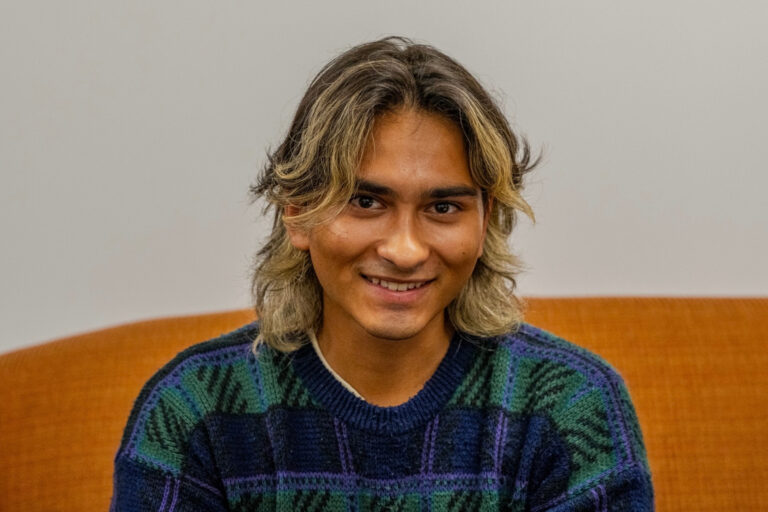
Daniel is a third-year English and Drama student and a member of The Journal’s QTBIPOC Advisory Board.
Tags
Indigeneity, indigenous culture, Pride month
All final editorial decisions are made by the Editor(s) in Chief and/or the Managing Editor. Authors should not be contacted, targeted, or harassed under any circumstances. If you have any grievances with this article, please direct your comments to eic@queensjournal.ca.