Growing up in the Northwest Territories, an elderly neighbor once told me, “Whatever you do, do not grow old here.”
Imagine spending your life in the place you call home, only to realize home cannot support you in your time of need.
This reality exists for more than six million Canadians who do not have a regular family physician or nurse practitioner. The shortage is a national issue, but its greatest consequences come in Canada’s North — namely the Yukon, Northwest Territories, and Nunavut. Compared to the national average of 85.7 per cent, only 59.9 per cent of Canadians in the Northwest Territories, and 39.9 per cent of Nunavummiut, have access to a healthcare provider.
Driving this crisis is a disconnect between Canadians’ expectations of the North and what it actually is. What exacerbates the experience and fuels distrust for Northerners is a system that evolved on injustice and neglect, and what exists now is a compromise.
The problem starts on an individual level. Tell anyone you’re from the North, and you get asked, “How do you live up there?” The same question does not exist when you originate from a small rural town in Southern Canada. This is the culmination of an ignorant attitude that pictures Northern Canada as rugged and undeveloped, and if our future healthcare professionals’ beliefs are shaped by these sentiments, it is no wonder they cannot see themselves pursuing a career in the North.
It is a shame Canadians know so little about our own country, especially considering the historical subjugation systematically imposed on Indigenous communities in the North and elsewhere.
This was in the form of “Indian hospitals,” which were racially segregated institutions providing medical treatment for First Nations, Métis, and Inuit. In its 2024 apology, the Canadian Medical Association admitted that Indigenous patients in these facilities received “substandard and unsafe care” and “were subjected to abuse, experimental treatments, and forced and coerced sterilization.”
Given this past, if there is any substance to be found in the word “reconciliation,” the North can no longer be overlooked or seen as an afterthought.
Yet, the issue persists to this day. Erin Griffiths, CEO of a health authority in the Northwest Territories, said that the last time the authority had a full-time, permanent physician was in 2019. The authority’s full complement of physician positions is seven, a level Griffiths says they haven’t had since 2005 or 2006.
Now, the authority operates on a locum practitioner model; a model that Griffiths says requires them to get creative with their contracts to prioritize returning locums. A locum practitioner model is where a temporary practitioner fills a vacancy for a permanent position. It is a compromise deemed necessary to carry a semblance of continuity, when the alternative is not having a practitioner at all.
Still, challenges remain, especially during busy times like the holidays when locums would rather spend time with their families than serve a community that is hundreds, if not thousands, of kilometers away.
Ultimately, misconceptions about the North lead to an environment that fails to attract healthcare providers, and what results is a band-aid locum practitioner model solution for a wound that runs deep.
When Northerners see a different practitioner every week, every connection is impersonal; coupled with the historical atrocities, many Northerners no longer think the healthcare system has their best interests at heart.
We need systematic, proactive education for Canadians about life in the North that is more than colouring in a map of Canada. When Southerners no longer view Northern Canada as an abstract thought, only then can meaningful change happen.
Perhaps, then, people will no longer be scared of growing old in their own home.
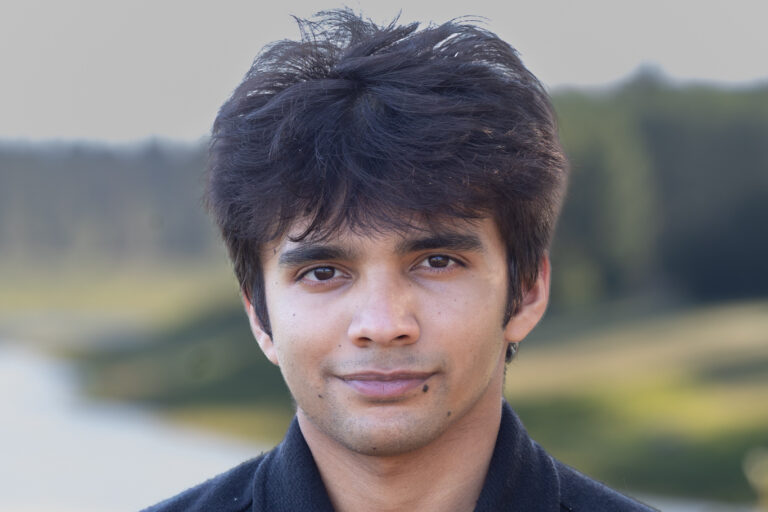
Rohaan Malik is a second-year Health Science student and The Journal’s QTBIPOC Advisory Board Member
Tags
Canadian politics, Education, healthcare access
All final editorial decisions are made by the Editor(s) in Chief and/or the Managing Editor. Authors should not be contacted, targeted, or harassed under any circumstances. If you have any grievances with this article, please direct your comments to eic@queensjournal.ca.