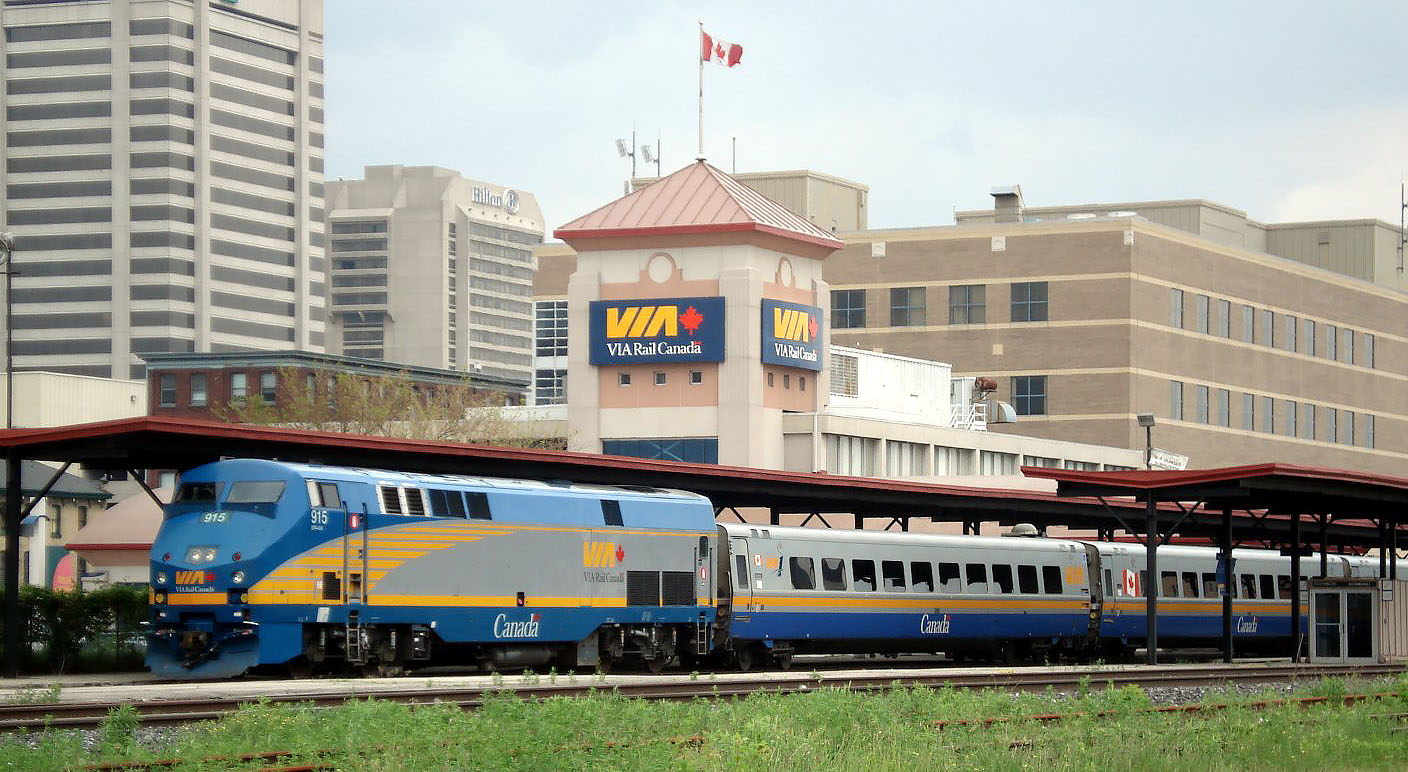
Canada is about to spend $90 billion on its first high-speed rail network and yet, Kingston hasn’t received an invitation.
Alto, the federal crown corporation behind the project, has promised a 1,000 km electric railway connecting Toronto to Quebec City, with stops in Peterborough, Ottawa, Montreal, Laval, Trois-Rivières, and Quebec City. Trains would reach speeds of 300km/h compared to Via Rail’s current average of around 110km/h. But to many people’s concern, Kingston, one of the country’s busiest Via Rail hubs, didn’t make the cut.
For nearly 29,000 Queen’s students and over 170,000 Kingstonians who depend on Via Rail as the primary way in and out of a city with no commercial airport, the stakes are high to get Kingston included before plans are finalized and development proceeds.
Kingston and the Islands MP, Mark Gerresten, has been pressing Alto officials and the federal Minister of Transport directly on the exclusion.In a statement provided to The Journal, he was direct about what bypassing Kingston might mean for a city already short on options. “Kingston already faces transportation gaps: no commercial air service, limited VIA reliability, and heavy dependence on the 401,” Gerresten stated. “Bypassing Kingston risks making that worse.”
Gerresten mentioned that Kingston’s inclusion is necessary to give students, commuters, and businesses faster and more reliable access to Toronto, Ottawa, and Montreal, while also driving growth and connectivity across the region.“This isn’t about Kingston versus other communities,” he said. “It’s about designing a corridor that maximizes public benefit. Ultimately, this project should improve accessibility, support regional development, and deliver long-term value — not just reduce travel times between two endpoints.”
City Councilor Conny Glenn, who represents the Sydenham district, made a similar argument. “Bypassing Kingston with high speed just doesn’t make any sense, given how busy we are,” she said in an interview with The Journal.
Glenn argued Kingston must not be left out because of the value Kingston provides to the project, rather than the value the project provides to Kingston. “The biggest product out of Kingston is people,” she said. “With all the educational institutions and research and innovation in healthcare, we are people-based. Even our military base is about communications and electronics, it’s a highly educated workforce. We must be able to get people in and out.”
Glenn, who sits on the board for the Federation of Canadian Municipalities, was able to successfully move a motion through, calling on the federal government to do a review of the current structure and adopt what she described as a “passenger-first approach” to rail. Similar to Gerretsen, Glenn doesn’t mind the idea of adding on extra time to the route if it means passengers are being served.
For Queen’s Students specifically, Glenn mentioned that she is consistently hearing complaints regarding the frustration of getting in and out of Kingston regularly as a student. “If we want to support our post-secondary and educational institutions, the reality is that we have to have a good rail service to get students in and out,” Glenn explained.
She stressed how without a more effective rail stop, more students will drive, leading to more emissions and ultimately a larger strain on the city’s already limited parking spaces. “From an environmental impact, having cars drive in and out of the city just doesn’t make sense. That sort of flies in the face of our environmental and sustainability goals that we have created for the city,” Glenn said.
Wanting Kingston included and figuring out how trains get there are two different problems.
Alto has proposed two potential paths through eastern Ontario. The northern route, which connects with Peterborough and travels through the rugged Canadian shield until Ottawa bypasses Kingston almost entirely. A southern option would curve through rural South Frontenac, bringing the rail closer to Kingston geographically, but cutting through acres of farmland, which could have devastating effects on farmland and properties.
Gerretsen told The Journal that he has been advocating for a solution that acknowledges both sides of the arguments. “We need a solution that balances national infrastructure goals with the realities on the ground, minimizing impacts on rural communities while ensuring Eastern Ontario benefits fairly,” he said.
After a 100 day public consultation period that concluded on April 24, residents in the region had the chance to voice their concerns around routing, land use, and the environmental impact which will be reflected in the public consultation report released this summer. Both advocates drew a clear line between what Kingston needs now, and what Alto might eventually deliver. In Glenn’s experience talking to the public, residents aren’t dying to have a flagship new service. “What passengers really want is reliable, on time, frequent service,” she claimed. “They don’t care if that’s Alto or Via”.
As well, Glenn pointed out the enormous scale of the $60-90 billion Alto Budget. “With the amount of money they’re putting into Alto, if they would take even a small portion of that and put it into Via, we would have a strong reliable service here,” Glenn said. “The Alto build wouldn’t be operational until at least 2040, where Via Rail improvements could happen now.”
Her confidence in Kingston’s long-term growth is based on the city’s expanding role as a federal military hub. Over 900 new housing units for Canadian armed forces members are already underway, as a result of a $1.4 billion investment in Canadian Forces Base (CFB) Kingston and bases nationwide by the federal government. Glenn mentioned that this kind of investment only holds up if people can actually travel in and out of the city.
“If the federal government wants that strategy to work here, it has to make sure that happens,” she said.
Whether that ultimately means an Alto stop or a stronger Via Rail service is still open to question, but the warning from Glenn and Gerresten was clear. If Kingston is bypassed, it could lead to generations suffering the economic impact of high speed rail skipping the city.
Tags
high speed, Kingston, rail, train, trainsport
All final editorial decisions are made by the Editor(s) in Chief and/or the Managing Editor. Authors should not be contacted, targeted, or harassed under any circumstances. If you have any grievances with this article, please direct your comments to eic@queensjournal.ca.
Sharon Magor
Wonderful article. Well written and a great review of points of view.