As medical students, we are taught that patient-centered care, health equity, and accessibility are the foundational pillars of our future profession. The Queen’s MD Program explicitly aims to train physicians who are prepared to champion the needs of equity-deserving groups, while promising a community where equity, diversity, and inclusion are embedded in everything we do.
Yet, as a second-year medical student spending more time within the walls of our local healthcare system, I have quickly learned about a hidden curriculum — a set of unspoken forces and administrative constraints that dictate what type of healthcare is accessible, who is allowed to receive it, and who is allowed to speak about it.
Here in Kingston, we have three operational hospitals, but two of them — Hotel Dieu Hospital (HDH) and Providence Care Hospital (PCH) — are Catholic-affiliated organizations. Despite being publicly funded, these institutions are legally permitted to limit access to essential forms of healthcare that do not align with Catholic religious principles.
While these limitations are often seen as historic anomalies, their modern applications actively undermine patient autonomy and health equity. Catholic affiliated hospitals utilize their religious principles to selectively and disproportionately affect transgender patients. These Catholic ethical guidelines, while initially appearing to affect only a marginalized community, in reality complicate hospital logistics, which compromises medical access for the broader Kingston community.
The most problematic aspect of these Catholic guidelines is not that the surgeries are technically complex or unavailable, but that the restriction is based purely on the identity and medical motivation of the patient.
The gynecologic portion of gender-affirming surgery for individuals assigned female at birth typically involves a total laparoscopic hysterectomy and bilateral salpingo-oophorectomy. This is an OHIP-funded, medically necessary intervention that yields documented, significant improvements in quality of life, body image, and mental health for trans patients.
These exact operations are performed routinely every single week at HDH for indications such as abnormal uterine bleeding, fibroids, and early-stage cancers. Yet, they are explicitly prohibited if the indication is gender affirmation. This manifests as an unwritten administrative rule: if a surgeon writes “fibroids” on an HDH operating room referral form, the surgery proceeds without issue; if “gender-affirmation” is written, the surgery is silently flagged and canceled.
A parallel injustice occurs with reproductive care. Procedures like bilateral salpingectomies and intrauterine device (IUD) insertions are routinely blocked at HDH if performed for the purpose of contraception, despite being freely permitted for cancer prevention or other non-contraceptive indications. These practices directly mirrors institutional mandates outlined in the Catholic Health Alliance of Canada’s Health Ethics Guide.
This is a clear contradiction of the Canadian Human Rights Act of 1985, which mandates that all individuals should have an equal opportunity to have their needs accommodated without being hindered by discriminatory practices based on gender identity or expression. By offering identical anatomical procedures for cisgender indications while banning them for transgender indications, Kingston Health Sciences Centre (KHSC) is passing moral judgment on the worthiness of a patient’s medical needs.
Transgender individuals are already among the most vulnerable in our society, facing disproportionate rates of discrimination and violence. Denying them equal access to a medically necessary procedure at a publicly funded facility only perpetuates this systemic violence.
A common misconception is that faith-based medical restrictions only impact patients seeking niche or highly specific religious-confronting care. In reality, institutional religious mandates disrupt the efficiency of the entire municipal health infrastructure.
In Kingston, HDH holds roughly 60 percent of the city’s gynecological operating room space. Because general gynecology is allocated six times more operating room time at HDH compared to the secular Kingston General Hospital (KGH), routine operations are designed to be cleared through HDH. However, because HDH restricts procedures tied to contraception and gender-affirmation, these routine operations are forced onto KGH’s operating tables.
KGH’s limited operating room space is traditionally reserved for complex, highly comorbid patients and cancer cases. When straightforward, day-surgery procedures are systematically offloaded onto KGH due to religious policies at HDH, it creates an artificial bottleneck. Patients requiring complex gynecological surgeries, who are already facing extensive wait times, are forced to wait even longer as KGH absorbs the routine surgeries turned away by HDH.
Faith-based restrictions do not exist in a vacuum; they strain secular institutions and compromise systemic care for every resident in communities where catholic hospitals are dominant healthcare providers.
Unfortunately, Kingston’s struggles are part of a broader, systemic issue across Canada where the 2013 Catholic Health Alliance of Canada’s Health Ethics Guide continues to cast an ambiguous, unwritten shadow over public hospital policy. The consequences of these institutional barriers are perhaps most visible, and tragic, in end-of-life care.
Because PCH operates under Catholic principles, it completely bars Medical Assistance in Dying (MAID) on its premises. Terminally ill, fragile patients must be heavily sedated and transferred via ambulance to KGH simply to exercise their legal right to a dignified death — a logistical hurdle that causes immense, documented distress to families and providers alike.
This institutional obstruction is finally facing legal action. In the British Columbia Supreme Court, a landmark lawsuit brought by the family of 34-year-old Samantha O’Neill, alongside Dying With Dignity Canada, is challenging the right of publicly funded, faith-based hospitals like Vancouver’s St. Paul’s Hospital to enforce “forced transfers” for MAID. O’Neill, suffering from stage four cervical cancer, endured a traumatic and agonizing transfer in her final hours due to institutional religious policies.
Her family’s Charter challenge argues that public funds should demand public compliance with federal healthcare rights. A success in this B.C. trial is expected to create a legal domino effect, emboldening Ontario physicians and patients to challenge these archaic regulations.
KHSC’s website proudly states: “We treat each person with respect and dignity… by caring for the whole person, when and where they need it most.” Yet, the current reality of surgical access for contraception and gender-affirming care stands in stark opposition to the organization’s professed values. Institutional religious restrictions on gender-affirming and reproductive care directly discriminate against transgender patients while creating systemic bottlenecks that compromise healthcare access for everyone.
As medical trainees, we are entering a profession with a historically troubled legacy regarding the mistreatment of marginalized groups, particularly patients of colour and queer individuals. Frontline physicians speaking out on these injustices often operate under a professional spotlight, taking turns in their advocacy to shield themselves from administrative backlash or professional consequences from the hospitals they are employed at.
This leaves medical students and trainees with a unique responsibility. Because we sit outside the administrative hierarchy, we have the distinct freedom to name these injustices loudly.
Advocacy around this issue stands on the foundational work of Dr. Chris Vicenza and Dr. Emma Denison. Hospital administrators often rely on the short memory of medical training, expecting advocacy to fade as leaders move on in their careers to new institutions. As a second-year medical student inheriting this torch, I wish to not let these systemic injustices be forgotten.
I hope that by highlighting this issue during Pride Month, we can reflect on which members of the 2SLGBTQIA+ community KHSC, and subsequently Queen’s University, deem acceptable to celebrate as they promote their allyship this June.
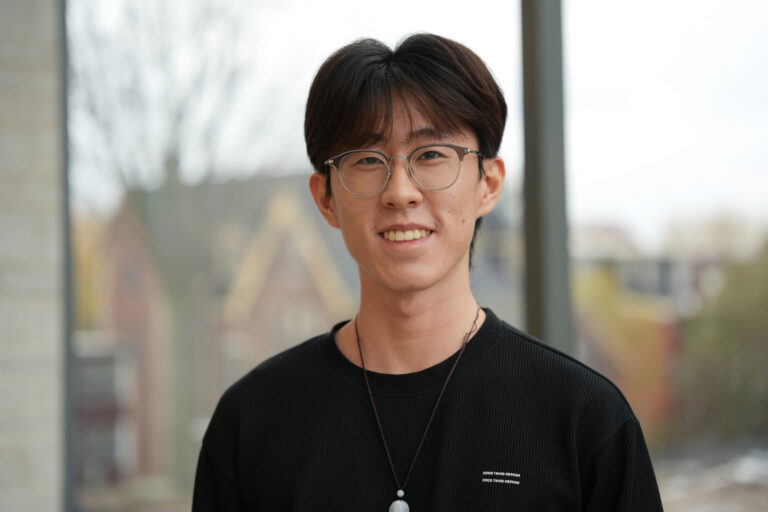
Zi Han (Henry) Li is a second-year medical student.
Tags
Catholic schools, Catholicism, hospitals, KHSC
All final editorial decisions are made by the Editor(s) in Chief and/or the Managing Editor. Authors should not be contacted, targeted, or harassed under any circumstances. If you have any grievances with this article, please direct your comments to eic@queensjournal.ca.
Steven Maynard
Thank you for this. The piece is categorized as an op-ed, but this is one of the most informative pieces of investigative journalism I’ve ever read in the Queen’s Journal.
Queen's MD '98
Hi Henry,
Interesting article. I agree that it is bizarre and archaic for a religiously affiliated hospital to impose its values on the public writ large. That said, I think your article misses a fairly basic point.
You make a sweeping accusation of discrimination, but you don’t adequately justify one of your central assumptions: that gender-affirming gynecologic surgery should be treated as comparable in priority to oncology, obstetric emergencies, severe bleeding, or other conditions involving immediate physical pathology. More importantly, and more disturbingly, your piece barely touches on the overall access crisis facing women’s healthcare.
OR time isn’t some symbolic arena for political or moral validation. It’s a finite clinical resource. If Kingston already has limited OBGYN OR capacity, then it doesn’t just matter whether two procedures are anatomically similar, but whether the indication has the same urgency, risk, and clinical necessity. Trans patients deserve appropriate care and respect, but respect does not require pretending that gender dysphoria is clinically equivalent to cancer, hemorrhage, obstetric complications, or RPOC.
I also find it telling that this argument is being made specifically through gynecologic OR access, rather than through other specialties that also provide gender-affirming care, like plastics. Somehow, when women’s healthcare is already under-resourced, the focus still cannot remain on women. The burden is once again shifted onto OBGYN, a specialty already dealing with backlogs, delays, and decades of systemic underinvestment.
There’s an important conversation to be had about religious influence in publicly funded hospitals, especially around contraception. But prioritizing this issue over the wider failures of our healthcare system toward women does them a disservice.
A bit more judgment and humility, and a bit less rhetoric, Henry, will serve you well in medicine.
Meds ’98
Kingstonian
Queen’s MD ‘98
Thank you for your response and sharing your expertise. I really appreciate the important points you raised and the way you clearly highlighted key arguments that are important to consider.
YGK health
Q98, I think you’ve completely sidestepped the author’s actual argument.
The point isn’t that gender-affirming surgery should jump ahead of cancer, hemorrhage, or obstetric emergencies. Nobody argued that. You brought that into the conversation.
The point is much simpler: why is a publicly funded hospital allowed to refuse an otherwise legal, medically approved procedure because it conflicts with the hospital’s religious beliefs?
That’s the issue.
Instead of addressing it, you pivot to OR resource allocation. Of course OR time is finite. Every surgeon knows that. But scarcity isn’t a license for religious doctrine to determine which lawful procedures a publicly funded hospital will or won’t provide.
Those are two completely different conversations.
Then you take another detour into women’s healthcare, as though the article is asking women to give something up. It isn’t. The author’s argument is that these restrictions create bottlenecks that make gynecologic care worse for everyone. If you think that’s wrong, explain why. But don’t substitute a different argument.
What really stood out to me, though, was the ending.
“A bit more judgment and humility…”
Really?
A medical student publicly questions an institutional practice that many people are too nervous to touch, and your takeaway is that he needs to be more humble?
I’d argue medicine needs more people willing to ask uncomfortable questions, not fewer. You don’t have to agree with the author’s conclusions to recognize that speaking up takes considerably more courage than criticizing from the sidelines.
Imagine if your comment had ended with, “I disagree with your conclusions, but thank you for raising an issue worthy of serious discussion.” That would have challenged the argument while demonstrating the very judgment and humility you encourage the author to develop.
Instead, you argued against a position the author never took and finished by lecturing him. That’s not insight. It’s just easier than engaging with the argument he actually made.
DavidWilkins
I commend you on bringing to light the hurtful impact of Catholic dogma impacting vulnerable communities. A well written exposé of this problem. Let’s hope publicly funded healthcare can finally free itself from religious zealots through the legal system.
Yvonne Walker
Your comment about IUD insertion for contraception being blocked at HDH is FALSE. Myself and many other women I know have had and continue to be treated to have IUD insertion for the sole purpose of contraception at HDH. Regardless of your findings, I question your degree of accuracy given my personal experience and experiences ot many other women.
John doe
Im all for supporting everyone, however the blatant cherry picking is visible. Majority of female at birth transgender people have success yes. Over 90% of male at birth regret the decision or take their own lives because the change didn’t do what they wanted. Can we not try to abuse statistics for personal gain? Thanks.
Jens
I couldn’t agree more with Meds 98s comment.
Sarah J
So now you’re marginalizing Catholics with these accusations. Trying to bring down other groups to raise another up is an interesting stance to take. A lot of misinformation is in this article. Bad journalism.
YGK health
QMD98: I think you’ve completely sidestepped the author’s actual argument.
The point isn’t that gender-affirming surgery should jump ahead of cancer, hemorrhage, or obstetric emergencies. Nobody argued that. You brought that into the conversation.
The point is much simpler: why is a publicly funded hospital allowed to refuse an otherwise legal, medically approved procedure because it conflicts with the hospital’s religious beliefs?
That’s the issue.
Instead of addressing it, you pivot to OR resource allocation. Of course OR time is finite. Every surgeon knows that. But scarcity isn’t a license for religious doctrine to determine which lawful procedures a publicly funded hospital will or won’t provide.
Those are two completely different conversations.
Then you take another detour into women’s healthcare, as though the article is asking women to give something up. It isn’t. The author’s argument is that these restrictions create bottlenecks that make gynecologic care worse for everyone. If you think that’s wrong, explain why. But don’t substitute a different argument.
What really stood out to me, though, was the ending.
“A bit more judgment and humility…”
Really?
A medical student publicly questions an institutional practice that many people are too nervous to touch, and your takeaway is that he needs to be more humble?
I’d argue medicine needs more people willing to ask uncomfortable questions, not fewer. You don’t have to agree with the author’s conclusions to recognize that speaking up takes considerably more courage than criticizing from the sidelines.
Imagine if your comment had ended with, “I disagree with your conclusions, but thank you for raising an issue worthy of serious discussion.” That would have challenged the argument while demonstrating the very judgment and humility you encourage the author to develop.
Instead, you argued against a position the author never took and finished by lecturing him. That’s not insight. It’s just easier than engaging with the argument he actually made.