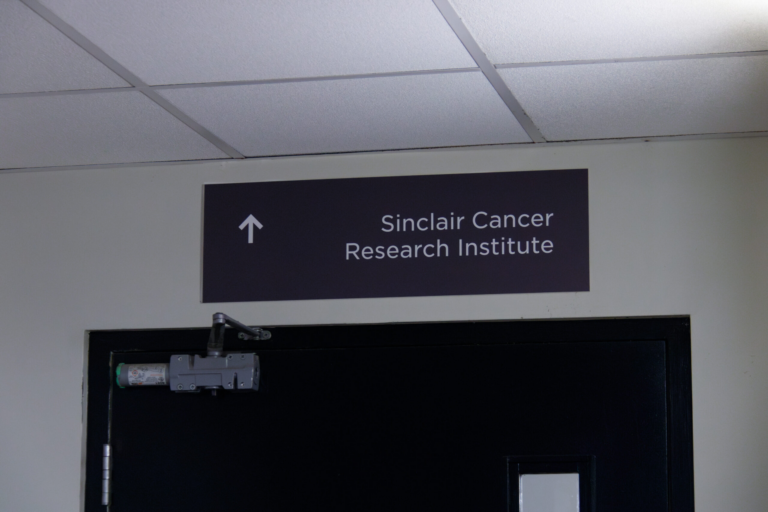
In a building on the east end of campus, a team of researchers coordinates clinical trials involving thousands of cancer patients. Most people passing by would have little reason to notice it, yet the work taking place inside has helped shape how cancer’s treated in hospitals around the world.
Kingston is home to the Canadian Cancer Trials Group (CCTG), one of Canada’s largest academic cancer clinical trials organizations. Based at Queen’s since 1980, the group designs and runs large multicentre trials that evaluate cancer therapies, prevention strategies, and supportive care interventions. These studies often involve dozens of hospitals and thousands of patients across Canada and internationally.
Clinical trials are how cancer treatment advances. A therapy may appear promising in laboratory research or early studies, but it only becomes standard practice once large trials demonstrate that it improves outcomes compared with existing treatments. Organizations like CCTG coordinate these studies by bringing together physicians across multiple hospitals, recruiting patients, and analyzing the data needed to determine whether a treatment meaningfully improves survival or quality of life.
Although headquartered in Kingston, CCTG operates on a national and global scale. The organization collaborates with more than 80 cancer centres across Canada and research partners around the world. According to CCTG, it has facilitated more than 600 clinical trials through a network of 85 member institutions and over 2,000 Canadian investigators, enrolling roughly 3,000 patient volunteers each year. Internationally, the group works with more than 20,000 researchers and clinical trial professionals across 40 countries on six continents.
Over the past several decades, trials coordinated from Kingston have had a tangible impact on cancer care. A clinical trial led in part by the CCTG helped establish the four-drug chemotherapy regimen mFOLFIRINOX as the standard treatment following pancreatic cancer surgery, reducing the risk of recurrence by nearly 50 per cent for a disease known for its poor prognosis. Another CCTG trial has shown that combining immune checkpoint inhibitors can extend survival in patients with advanced colorectal cancer whose disease no longer responds to conventional therapies.
Much of the organization’s work prioritizes practical questions clinicians encounter every day: how cancer can be detected earlier, which treatments are most effective, and how therapies can be delivered with fewer side effects. Because CCTG studies often involve large numbers of patients across multiple hospitals, their results can provide the level of evidence needed to affect clinical guidelines.
These trials also expand care options for cancer in patients in the region. At Kingston Health Sciences Centre (KHSC), physicians participate directly in many of the studies coordinated through the Canadian Cancer Trials Group network. For patients in Kingston and surrounding areas, this can mean access to emerging therapies and clinical trials locally, without needing to travel to larger research hospitals.
Decades of research have given Kingston an influence on cancer care that extends well beyond its size. Studies coordinated in the city continue to impact how cancer’s diagnosed and managed worldwide, with a 2022 report ranking Kingston fifth in Canada based on total cancer research funding—placing it ahead of many much larger cities.
Tags
All final editorial decisions are made by the Editor(s) in Chief and/or the Managing Editor. Authors should not be contacted, targeted, or harassed under any circumstances. If you have any grievances with this article, please direct your comments to eic@queensjournal.ca.