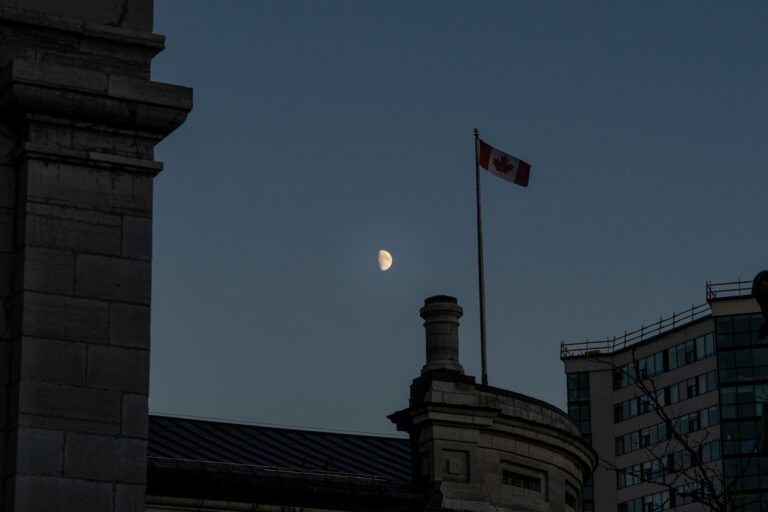
Everyone’s asked to turn their eyes to the Moon for an annual night of discovery.
Skywatchers and moon enthusiasts are preparing to celebrate the 17th annual International Observe the Moon Night, an event held each year in September or October when the moon is favourable for viewing. This year’s celebration falls on Oct. 4, offering a chance to experience our closest celestial neighbour through community skywatching, science talks, and cultural activities.
Started by the National Aeronautics and Space Administration (NASA) in 2010, following the launch of the Lunar Reconnaissance Orbiter (LRO). The LRO, according to NASA, has been studying the Moon from up close since 2009, making it the “longest-lived” lunar orbiting mission ever. Their only goal is to make lunar science accessible, blending public outreach with opportunities for education and cultural appreciation.
The Moon on Oct. 4 will be in its waxing gibbous phase—occurring after the first quarter and before the full Moon—where more than half of the Moon is illuminated by the Sun. Given these conditions, observers will be able to see large, dark patches on the surface of the Moon called ‘maria,’ originating from 4.4 billion-year-old volcanic eruptions that occurred at the time of the formation of the Moon.
NASA plans to celebrate International Observe the Moon Night 2025 with a special focus on Artemis II, a 10-day-long, manned lunar mission launching in early 2026.
Among the many ways to commemorate International Observe the Moon Night, here are some ways to celebrate at home—starting by looking up. With the unaided eye, or with the assistance of binoculars or a telescope, the intricate terrain and its topography can be observed.
Those viewing the Moon through a telescope can follow the Observe the Moon Night 2025 Moon Map, which highlights interesting features on the Moon’s surface as they will appear at 8 p.m. EDT.
For Kingstonians, the North Frontenac Astronomy Park in the North Frontenac township boasts the darkest skies in Southern Ontario and is one of the best spots in the province to observe the Moon that night.
Another option is to tune into online livestreams hosted by NASA and its partners, such as the Observe the Moon Night 2025 show. They include telescope feeds, expert talks, and interactive Q&A sessions with astronomers where they discuss international initiatives space enthusiasts can involve themselves in, cultural storytelling, and some lesser-known facts about features of the Moon.
International Observe the Moon Night offers more than a chance to gaze at the Moon–it connects communities, sparks curiosity about space, and celebrates the science and culture surrounding the brightest object in our night sky.
Tags
International Observe the Moon Night, LRO, Moon, NASA
All final editorial decisions are made by the Editor(s) in Chief and/or the Managing Editor. Authors should not be contacted, targeted, or harassed under any circumstances. If you have any grievances with this article, please direct your comments to eic@queensjournal.ca.