For ovarian cancer patients, waiting for surgery doesn’t have to mean standing still.
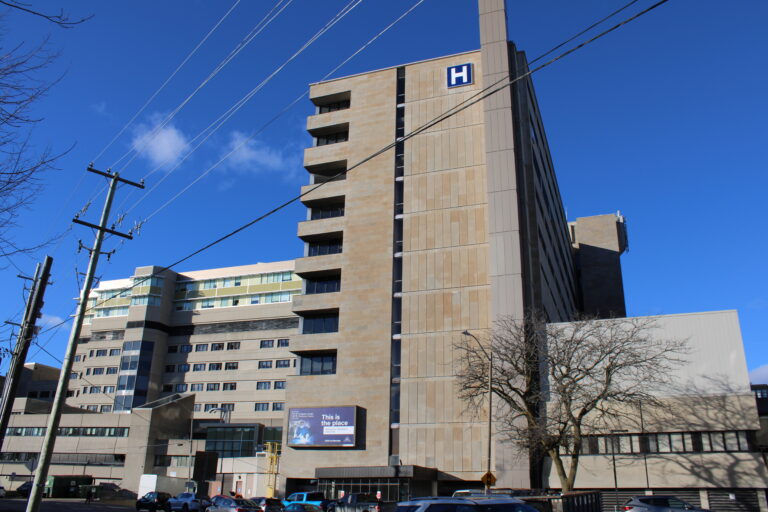
A $43,738 grant from the Women’s Giving Circle is set to launch a pilot prehabilitation program, called PreHabKHSC, at Kingston Health Sciences Centre (KHSC), preparing patients with ovarian cancer physically, nutritionally, and psychologically before surgery to improve post-operative outcomes, according to a KHSC press release on Oct. 22.
PreHabKHSC is a pilot study, designed as a patient-preferred clinical trial (PPT), which allows participants to choose the mode of prehabilitation that suits them best, including options for virtual, in-person, or informational-only options.
In an interview with The Journal, Dr. Jordan Leitch, assistant professor for the Department of Anaesthesiology and Perioperative Medicine at Queen’s, identified the current gaps in pre-operative care for patients with ovarian cancer.
Ovarian cancer arises when cells in one of a person’s two ovaries, or in the nearby fallopian tubes, undergo abnormal changes and begin to grow out of control. Because these organs lie deep in the pelvis and early symptoms tend to be subtle, ovarian cancer is often detected at a later stage. In fact, ovarian cancer affects over 3,000 people in Canada annually, according to Ovarian Cancer Canada.
“When patients are diagnosed, we’re able to give out pamphlets that say you should keep moving, stop smoking, and eat more protein. Honestly, even that’s rare. Most of the time, nothing beyond the necessary preoperative blood work, testing, and paperwork is done,” Dr. Leitch said.
Prehabilitation fills the gap, offering structured guidance to help patients meaningfully improve fitness and resilience during the stressful wait between diagnosis and surgery.
Typically, it takes about four weeks from diagnosis to surgery and PreHabKHSC leverages that time period for maximum impact. “These patients come in frail and suddenly face a life-altering illness,” Dr. Leitch explained. “Prehabilitation allows them to use that wait time meaningfully, improving physical readiness and psychological resilience before surgery.”
The program focuses on three pillars that improve surgical outcomes–exercise, nutrition, and mental health. The approach is considered practical and rooted in everyday behaviours.
“It starts with moving your body, having the right calories and macronutrient balance, and psychological well-being through simple meditation techniques like box breathing and cyclic sighing,” Dr. Leitch said. “Even these small interventions have been shown to regulate the nervous system and improve outcomes after cancer surgeries and chemotherapies.”
The program, set to launch in the next few months, is rooted in collaboration. By incorporating KHSC’s anaesthesiology department, gynecologic oncology nurse practitioners, and Master’s and PhD kinesiology students who are the prehabilitation coaches, PreHabKHSC offers preoperative care that focuses on patient advocacy.
“These students [prehabilitation coaches] have the time to sit down with patients, guide them, and show that they can meaningfully alter their fitness before surgery,” Dr. Leitch added.
Dr. Leitch emphasized that prehabilitation programs have the potential to offer a relatively low-cost approach with potentially massive healthcare benefits, such as faster physical recovery and reduced hospital stays. According to research published in The Journal of Gynecologic Oncology, prehabilitation projects across the world have shown cost-saving of up to $33.8 million per year.
“If you can link these simple, inexpensive interventions to better outcomes after surgery, you have a chance at massive health care cost savings, because a very cheap intervention could give a massive payout after surgery.”
All final editorial decisions are made by the Editor(s) in Chief and/or the Managing Editor. Authors should not be contacted, targeted, or harassed under any circumstances. If you have any grievances with this article, please direct your comments to eic@queensjournal.ca.