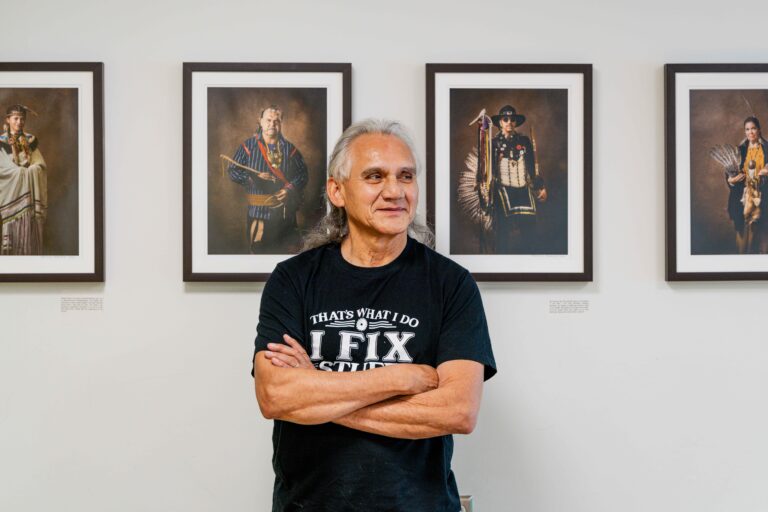
During 2025’s Indigenous History Month, the Queen’s University Office of Indigenous Initiatives is hosting a series of monthly Elder Talk sessions with Cultural Advisor Te ho wis kwûnt, Allen Doxtator, also known as Al. Al is from the Onedia Nation of the Thames and is a member of the Bear Clan.
On June 16, Al sat down with participants for the first session of the series to discuss Indigenous culture, teachings, and mindset. The Welcoming Room in Mackintosh-Corry Hall was bright and inviting as Al spoke about the intertwined relationships between patterns of teaching influence patterns of thought.
“Mindset is based on our culture and our teachings,” he said. “Culture is value. Teachings [are] value. Mindset is value,” Al said during the session.
“An Indigenous mindset promotes [the] broader picture.” Al said in the session. “Everybody matters. Everybody’s ideas matter.” Historically, to participate in colonial academia, First Nations Peoples had to renounce their Indigeneity under a process known as enfranchisement. “Our values have been lost due to [trauma]. For us, it’s difficult to adjust,” he said. “Today, it’s good that we’re here. We should be able to teach our mindset”.
A large portion of Al’s discussion emphasized the difficulty of adopting the Indigenous mindset in an academic setting, where students are generally encouraged to think of things as having a single, unchanging solution. Al describes the difficulty of adopting the Indigenous mindset as tunnel vision. where new ideas are approached with criticism first and understanding second.
Growing up, Al was taught that adopting the colonial mindset in Canadian schools would allow him to make the world a better place. He continued by explaining how he has seen the word destroyed, citing rising levels of pollution in local areas like the St. Lawrence River and government inaction involving environmental stewardship.
Al also emphasized the importance of embracing an Indigenous mindset for both Indigenous and non-Indigenous learners, regardless of cultural background. “When we can understand our teachings, we as Indigenous people can look at others as human beings. When you see someone as purely human, you have a base relationship,” he said.
When it comes to academic institutions, Al affirms that Indigenous teachings need to be brought into this place. “We [must] change our own mindsets. That’s what it is.” When alone it’s easy to feel powerless to make change, but Al encourages students to “say what’s on your mind. Talk out of turn.” The more we are exposed to different aspects of
culture, teachings, and worldviews that are not our own, the better. “That’s what we should be doing—broadening the mind.”
The next session in the Elder Talk series will take place on July 10 and will focus on Honouring the Land—Connection, Respect, and Preservation.
Tags
Elder Talk series, Office of Indigenous Initiatives
All final editorial decisions are made by the Editor(s) in Chief and/or the Managing Editor. Authors should not be contacted, targeted, or harassed under any circumstances. If you have any grievances with this article, please direct your comments to eic@queensjournal.ca.