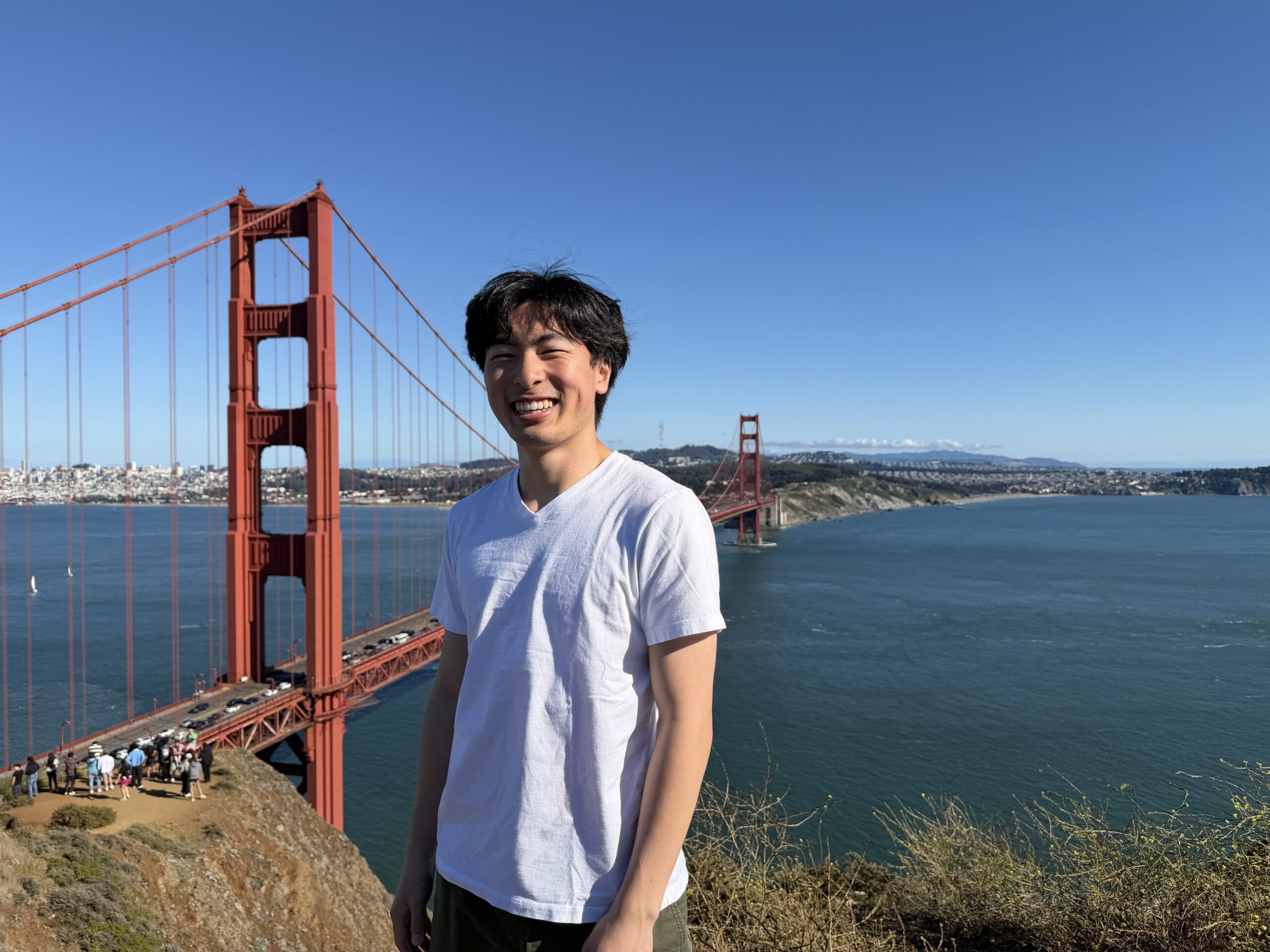
Once there, some of the mystique surrounding the city’s startup world began to disappear.
“When I first came here, I didn’t really know. I was like, oh, I wonder what a $100 million founder is like,” Yu said in an interview with The Journal. “And then you realize, bro, he’s just a kid, like all of us.”
The path there began months earlier, when Yu returned from exchange and started building a matchmaking project for Queen’s students, inspired by a friend’s similar idea that never fully launched.
He later reached out to Henry Weng, who had launched Date Drop at Stanford. The platform uses a compatibility questionnaire to match students based on their values and relationship preferences, rather than having them swipe through profiles.
The two discovered they shared a similar vision, and Yu joined Date Drop to bring the platform to Queen’s.
In May, he moved to San Francisco to work for the Relationship Company, the company behind Date Drop. After leaving at the end of June, he joined competing dating startup Ditto.
Loneliness as a catalyst
Yu arrived at Queen’s after COVID-19 had shaped much of his high school experience. He described himself as a shy kid accustomed to what he called “the COVID kind of life,” with fewer friendships and less of the social experience he associated with high school.
In first year, he wanted the opposite.
“I started to really seek out these kinds of social interactions and found myself becoming more extroverted,” Yu said.
He also noticed how easily students can stay within the social circles of their own faculties. In programs such as Commerce and Engineering, he said, people can “stick within those programs for their friends.”
“I definitely wanted to kind of expand my friend horizon and meet all different types of people,” Yu said.
His interest in connection was also personal. Being alone had once felt like a safe space, but after COVID-19, too much solitude began to feel less like a refuge.
“It got to a point where, yeah, after COVID being the catalyst, I was like, oh, I don’t know if I can deal with this anymore,” Yu said.
He wondered whether other students felt the same.
“I think most people don’t even realize that they’re lonely.”
At the same time, Yu was figuring out what kind of career he wanted. He entered Commerce interested in technology and entrepreneurship, but was drawn toward finance, investment banking, and consulting because those were the paths he saw around him.
“I was definitely following the crowd and not being true to myself,” Yu said. “I did explore finance and consulting, but I just realized I couldn’t fake it.”
Yu eventually returned to technology, joining the Queen’s Technology and Media Association, which he described as a tech incubator club within Commerce. There, he began to see how he could pursue his interest in technology while studying business.
Even after his path took him to San Francisco, Yu doesn’t see his experience as evidence he has everything figured out or is fundamentally different from his classmates.
“If I was doing anything different, I would say it’s just being honest and true to myself.”
Experiment to Date Drop
When Yu returned from exchange, many of his friends were still away. He wanted something to build.
A friend, Keshav Mehndiratta, BASc ’27, had created a waitlist for a Queen’s matchmaking platform called QRush but never fully launched it. Yu saw its launch video and thought the concept was worth pursuing.
“I thought, oh, like, this is a cool idea. Like, let’s see what I can do about it,” Yu said.
Yu began building his own version around January.
In early March, he reached out to Weng. Yu initially wanted to learn about what he had built, but their conversations developed into a partnership.
“We had this shared kind of vision and goal,” Yu said.
Date Drop already had a brand and Stanford launch behind it, while Yu had a campus where he could test the idea. He joined the project and began building and marketing its Queen’s version.
The product replaced swiping with a compatibility questionnaire about values and issues that could matter in a relationship, including children, religion, and politics.
“We try to match them based on their similarities, but also some of their differences as well,” Yu said.
The Queen’s launch came near the end of March, leaving about three weeks before the academic year ended. Yu estimated more than 300 matches were sent out, though the team didn’t track how many led to dates.
Promoting the project required Yu to make himself visible in a way its users didn’t have to be. He marketed Date Drop through blind-date videos.
“There’s a certain stigma to dating,” Yu said. “If people see this, then I’m going to be known as that guy, or if it fails, then I’ll be known as this guy who tried to start this dating thing at Queen’s.”
Yu said the first videos spread quickly around campus without the negative feedback he had feared.
But the response that stayed with him came later.
The quiet users
After the first matches went out, Yu began speaking with users.
He expected many students to have signed up “for the plot.” Some had. But others described years of frustration with dating apps and little success finding matches.
“They seemed very defeated, and I genuinely felt their concern and their worry,” Yu said.
One student told Yu they had used Hinge and Tinder for years but received only a few matches.
“I definitely was like, oh damn. I didn’t know these people existed at Queen’s,” Yu said.
Those students weren’t necessarily the users most visible online.
“The people who actually really need the product, they’re not the ones commenting on a video or the ones reposting,” Yu said. “They’re the ones who are at home who happen to see this and sign up, but they don’t really tell anyone.”
Those conversations changed how Yu saw the project.
“It kind of made me realize, oh, yeah, I’m actually solving a real problem, helping these people.”
The San Francisco era
Yu moved to San Francisco in May to continue working on Date Drop with the Relationship Company, on a team of roughly five people.
His experience challenged his assumptions about what separated startup founders from students at Queen’s.
“The world was built by people no smarter than you and me,” Yu said.
He doesn’t believe the founders he met were necessarily more ambitious or hardworking than his classmates. Instead, he pointed to their willingness to act on opportunities.
“It’s more just taking the opportunities that they have, or taking that first step to go out there,” Yu said.
At Queen’s, Yu said, students can see clearer pipelines into fields such as finance, while entrepreneurship and technology can feel less obvious.
Looking more closely, he found Queen’s alumni who had taken paths he admired.
“If you start digging, turns out there are some good people,” Yu said. “So then you go out and reach out to them and talk to them.”
San Francisco also challenged the idea that reaching the city would make Yu more certain about what he wanted, or more fulfilled once he got there.
Yu left the Relationship Company at the end of June, saying aspects of the team dynamic had become difficult. He moved to Ditto, a competitor with a similar mission, hoping a different work environment would offer some of what he felt was missing.
Some aspects improved at Ditto, but his broader dissatisfaction remained.
“I don’t really feel as fulfilled as I thought I would feel,” Yu said. “I think that stems from just working for someone else’s vision and someone else’s ambitions and their problems that they want to solve.”
By September, Yu was less certain that dating was the problem he ultimately wanted to spend his time solving.
“I think I want to try a different space,” Yu said.
The technology paradox
Working in dating startups made Yu skeptical that any dating app has fully solved the problem it promises to address.
People often want falling in love to feel accidental, natural, or fated rather than calculated by an app, he said.
“I think most people would want to tell a story of how they met against all odds, or it was meant to be.”
For that reason, Yu said the most successful “dating app” may actually be a social platform such as Instagram, where people can meet without defining their first interaction as a date.
Yet Yu believes the same technology people turn to for connection has contributed to their loneliness. While texting and phone calls can bring people closer, he said, constant phone use and social media can take away from in-person relationships.
“I definitely think the root cause of the increased human loneliness is because of technology.”
Using technology to address a problem he believes technology helped create leaves him unsure where that cycle ends.
“Dang, it’s kind of mind-boggling,” Yu said. “Can the root cause of this problem also be the solution?”
Whether future technology can reverse that trend remains an open question for Yu.
“I hope that’s the case,” Yu said. “But in terms of what the actual outcome will be, I have no idea.”
A good place to be lost
Despite having more than 30,000 followers on TikTok, Yu said he sometimes feels like “the most lost person” and doesn’t understand why people look to him for answers.
His advice to students who feel behind is not to wait for certainty before acting.
“You will never feel ready,” Yu said. “The longer that you ponder on that thought, or wait to feel ready, time will just pass you by, and you’ll miss out on a lot of opportunities.”
Yu used to envy people who seemed to know what they wanted from an early age. Over time, he realized most people are still figuring it out.
His father tells him much the same thing.
“He’s like, hey, I’m a 50-year-old man, but I still don’t know what I want to do in life,” Yu said. “He’s like, yeah, but I think life is like this. You’re in pursuit of living your most fulfilled life.”
“You can never be absolutely fulfilled,” Yu said. “So then you keep on trying new things and discovering new things and discovering yourself.”
This fall, while his classmates returned to Queen’s, Yu stayed in California a little longer.
“I low-key miss Kingston,” Yu said. “I just miss being a student, you know?”
He plans to return to Kingston after Reading Week.
The uncertainty hasn’t gone away. Yu thinks that’s normal.
“Don’t be worried if you don’t know what you want to do. I would say that is very normal,” Yu said. “That is a very good place to be.”
Tags
app development, dating apps, Queen's, start-up, STEM, Technology
All final editorial decisions are made by the Editor(s) in Chief and/or the Managing Editor. Authors should not be contacted, targeted, or harassed under any circumstances. If you have any grievances with this article, please direct your comments to eic@queensjournal.ca.