This article contains discussions of residential schools and the cultural genocide of Indigenous people in Canada, and may be distressing for some readers
Statues aren’t history lessons, they’re celebrations, and not everyone deserves to be celebrated.
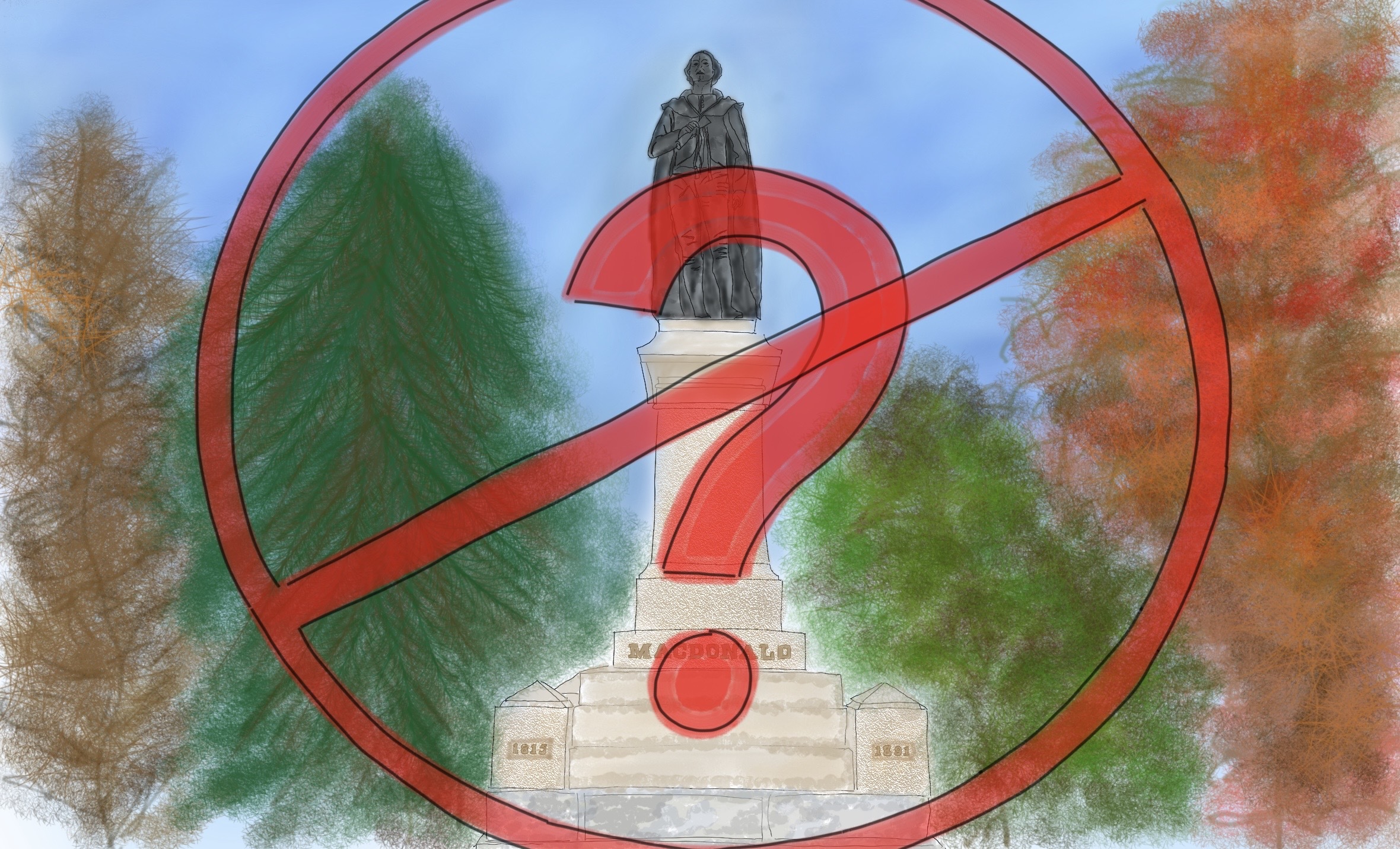
On Jan. 9, The Kingston Whig Standard published an opinion piece by Mark Johnson, arguing for the reinstatement of the John A. Macdonald statue in City Park. The statue was removed due to Macdonald’s role in the residential school system, which murdered over 10,000 Indigenous children, and left lasting impacts on the rest—a system that’s now considered the largest cultural genocide in Canadian history.
Johnson claimed taking the statue down was “erasing history,” however, most would argue that forcing children away from their homes and repeatedly abusing them for speaking their own language is a much more serious form of historical erasure.
He praises the efforts of Save Our History, a historical organization he happens to be the president of, for preserving Canadian history by reinstalling statues of Macdonald across the province. The piece, and Save Our History, focuses on John A. Macdonald’s positive legacy, calling him “Kingston’s favourite son” and a “local boy.” Though Macdonald owned real estate in Kingston for the majority of his life, he only lived here full time for approximately four years, the same length of time as most of us will be here for.
Removing a statue doesn’t remove history; it’s preserved in history books and in classrooms, but it doesn’t necessarily need to be put on a pedestal (literally). Reinstalling John A. Macdonald’s statue would be an oversimplification and glorification of a man who helped commit cultural genocide.
Canada was confederated to avoid political deadlock with the U.S., and garner financial support from England. A haphazard business deal at best, the Canadian confederation doesn’t need extensive celebration, and it certainly isn’t worth the $80,000 price tag to reinstall the statue. Reducing years of hard-fought activism, lobbying, and consultancy to a bout of emotions while basing an entire piece on emotion alone is disrespectful to the hard work of Indigenous activists.
Johnson halfheartedly acknowledges John A. Macdonald’s contentious history by offering to add some additional information to a plaque. He argues the plaque and the statue would help people not to “look away” from history. While not turning away from history, passersby would definitely be turning away from the small plaque acknowledging Indigenous history in favour of the 19-foot-tall statue.
Opposed to the “emotional” decision to remove the statue, Johnson’s piece is rife with emotion, describing Macdonald’s life as a boy and hailing him as a hero. If Johnson is such a passionate defender of history, maybe he should look into the deeper, richer, and more severely overlooked history of Indigenous people in Canada.
The bottom line is that John A. Macdonald shouldn’t be glorified, and reinstalling his statue won’t inspire productive conversation about the thousands of Indigenous people murdered under his rule.
—Journal Editorial Board
Tags
Indigenous history, John A. MacDonald, Kingston
All final editorial decisions are made by the Editor(s) in Chief and/or the Managing Editor. Authors should not be contacted, targeted, or harassed under any circumstances. If you have any grievances with this article, please direct your comments to eic@queensjournal.ca.
Zedrick Serson
Removing the statue was wasteful (the money spent would have been much more effectively used providing material benefit to First Nations peoples) and putting the statue back up would be even more wasteful (the money spent would be much more effectively used providing material benefits to First Nations peoples.)