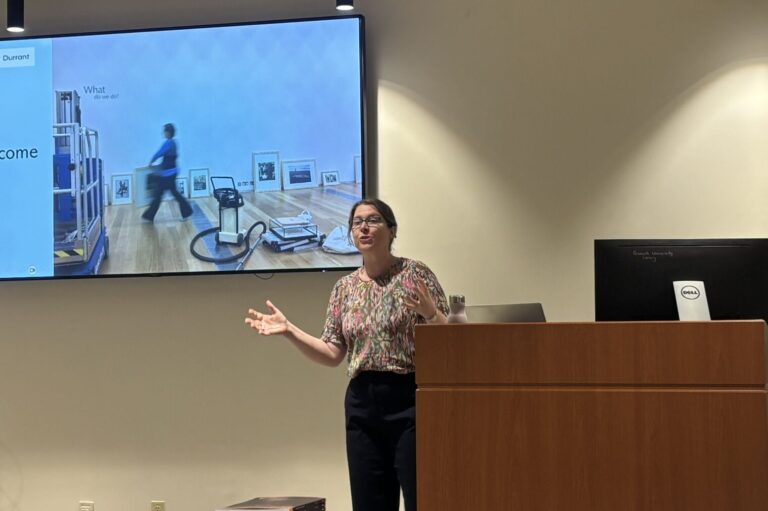
On Sept. 9, the Agnes Etherington Art Centre hosted Jenny Durrant’s hour-long lecture, “Shaping Collections for the Future.” The event turned into a three-hour seminar-style discussion about the ethics of who gets to make those decisions and why that process is essential to heritage organizations.
Durrant is a UK-based collection specialist, currently working as a collections officer at Jane Austen’s House, Chawton. As Durrant explained, deaccessioning is the process of removing an object from a museum, library, or archival collection. Many find this thought challenging, especially when it relates to museum artifacts. However, Durrant encourages skeptics to be intentional and consider if certain objects are necessary for the site.
The day started with a land acknowledgement from Agnes’ Collections and Care Manager Gabriel Bevilacqua, followed by a brief welcome speech by Oneida First Nations Elder Allen Doxtator.
Doxtator discussed the countless Indigenous items that are sitting in museums, and the number of procedures in place that keep the communities from accessing their cultural artifacts.
This opening allowed Durrant to segway into her lecture. Collecting objects isn’t the final goal. Objects are there because they’re important and they mean something to a community or society at large.
Durrant began by discussing the kinds of terminology she likes and dislikes when approaching museum collections. She prefers to use “shaping” rather than “refining,” as it is more human forward and intentional.
The lecture’s theme was “why does shaping collections matter?”
To Durrant, curating intentionally is vital because it is possible for collections to be overwhelmed by too many artifacts. Museums should be aware of its contents and have valid reasoning for why each item is where it is.
“There’s no point in something existing in a museum storeroom, in a collection, if nobody knows it’s there and nobody is engaging with it over time in some way,” Durrant said in her lecture. “That is the fundamental basis for what I do.”
While Durrant came prepared with a slide show and notes, the seminar was discussion forward, and attendees were encouraged to respond to prompts in small groups and with the rest of the crowd.
There was a mix of museum curators and collections managers, as well as interpreters, directors, and a few students. Despite the group’s different experiences, the conversation flowed throughout the discussion periods.
The topic of repurposing museum items was brought up. If a museum has no need for an item in their collection, where can it go?
Durrant gave examples of objects being donated to theatre groups and charities, and archeological remains being turned into benches that the community can engage with.
While it is important for museums to preserve historical items, if they do not fit the institution’s purpose and goals, Durrant suggests those artifacts would be better off in other capacities. This perspective gives viewers the opportunity to engage with historical items in a non-traditional way.
As Durrant noted during her lecture, collections are like breathing; things need to come in, but they must also go out. Although deaccessioning and disposal processes are time consuming, and often stressful, it is necessary to keep museums truly connected to their artifacts.
Tags
All final editorial decisions are made by the Editor(s) in Chief and/or the Managing Editor. Authors should not be contacted, targeted, or harassed under any circumstances. If you have any grievances with this article, please direct your comments to eic@queensjournal.ca.