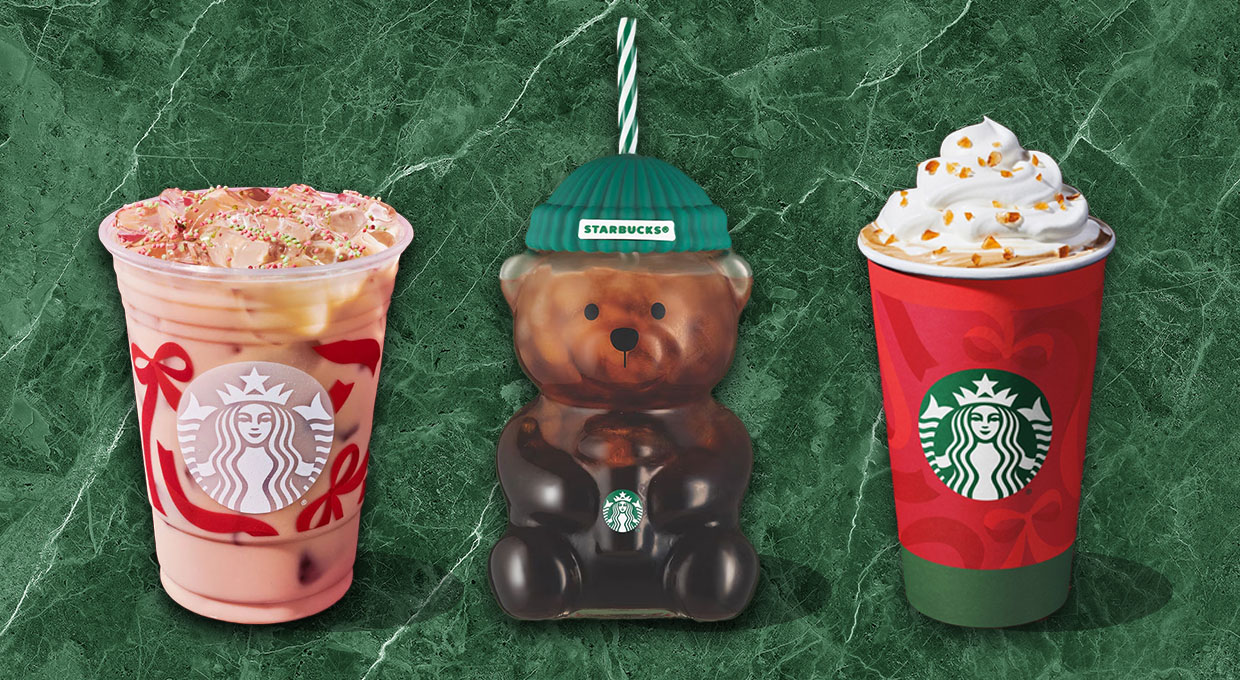
Starbucks’ new holiday merchandise has customers throwing fits and fists.
On Nov. 6, Starbucks seasonal drinks for the holiday season were released, and North American stores were flooded with eager customers desperate for the incredibly popular Sugar Cookie Oat Latte.
Alongside the holiday drinks, Starbucks also released a bear glass cup, nicknamed “Bearista,” that has swept the internet as the beanie-adorned trinket caused outrage in stores as they sold out pretty much instantly. Ariel Hung, ArtSci ’26, who has been a Starbucks barista for the past two and a half years, explained how the Starbucks on Division St. was especially busy this year for the release.
“Many people came in asking for the bear cup, but we sold out very quickly,” Hung said in an interview with The Journal.
There have also been videos of customers camping outside Starbucks stores to get the cup, and customers complaining that Starbucks employees bought all the bear cups. There have even been physical altercations in stores of customers fighting over the Bearista cup.
Despite the absurdity of these reactions, it raises questions about North American society’s dedication to consumerism and how Starbucks is playing the marketing game right.
Starbucks is currently being critiqued online for not stocking the stores with enough Bearista cups. However, this shortage was likely an intentional strategy to increase the exclusivity of the item, making customers want it even more.
Exclusivity’s often cited by economists as a common marketing strategy because it increases a sense of urgency for customers to want to buy the item as soon as possible. As well, the exclusivity relies on the idea of “flexing culture,” posting and showing off that you’re one of the only people who managed to get the hot new item while others have to miss out.
The ‘Bearista’ cups are already being resold on eBay for over $1, 000 and dupes have already begun popping up everywhere from Shein to Walmart as people scramble to get their hands on this glass mug before the trend inevitably fades into irrelevancy.
The idea of a trend fading away as quickly as it arrived is the issue with exclusivity and “flexing culture”—the items and brands are rendered irrelevant once they become more accessible to the general public.
Banking on exclusivity as a marketing strategy isn’t the only reason for Starbucks’ marketing success. Nor is it the biggest reason. The core foundation for Starbucks’ recent success in the contemporary world is the fact that Starbucks and the internet seem to go hand and hand.
The coffee chain has been around since the early ’70s, but hit its stride in the ’90s with the invention of the Frappuccino. They’ve managed to remain relevant by constantly pumping out new drinks and merchandise that entice customers by offering them something they can’t get at any other coffee shop. Once they’ve come up with their ideas, they seem to catch fire in the digital world, where influencers and chronic posters basically do their marketing job for them.
Starbucks has always been an innovative coffee chain, but the internet makes these conversations about what customers want a lot easier. It seems once a month, the internet chooses a new product to hyperfocus on. For example, when the release of Wicked was overtaking the internet last November, Starbucks released Wicked-themed drinks.
Our algorithms want us to collect and spend into a hallucinatory frenzy.
“There must be some young people in tune with the online world who are on the marketing team. Like this past year, there was the trend of putting banana cream in Matchas, and now, Starbucks offers Banana Cream Matchas. They [The Starbucks marketing team] definitely follow the social and cultural trends of the time very closely,” Hung said.
Enjoy your crazy coffee concoctions, but remember these elaborate Starbucks marketing schemes and internet algorithms are connected to one mutual goal—the desire for you to spend and the desire for trivial things, like collectibles, to seem all-consuming.
As Benjamin Franklin once said, “Beware of little expenses; a small leak can sink a great ship.”
Tags
Bearista Cup, Marketing, Starbucks
All final editorial decisions are made by the Editor(s) in Chief and/or the Managing Editor. Authors should not be contacted, targeted, or harassed under any circumstances. If you have any grievances with this article, please direct your comments to eic@queensjournal.ca.