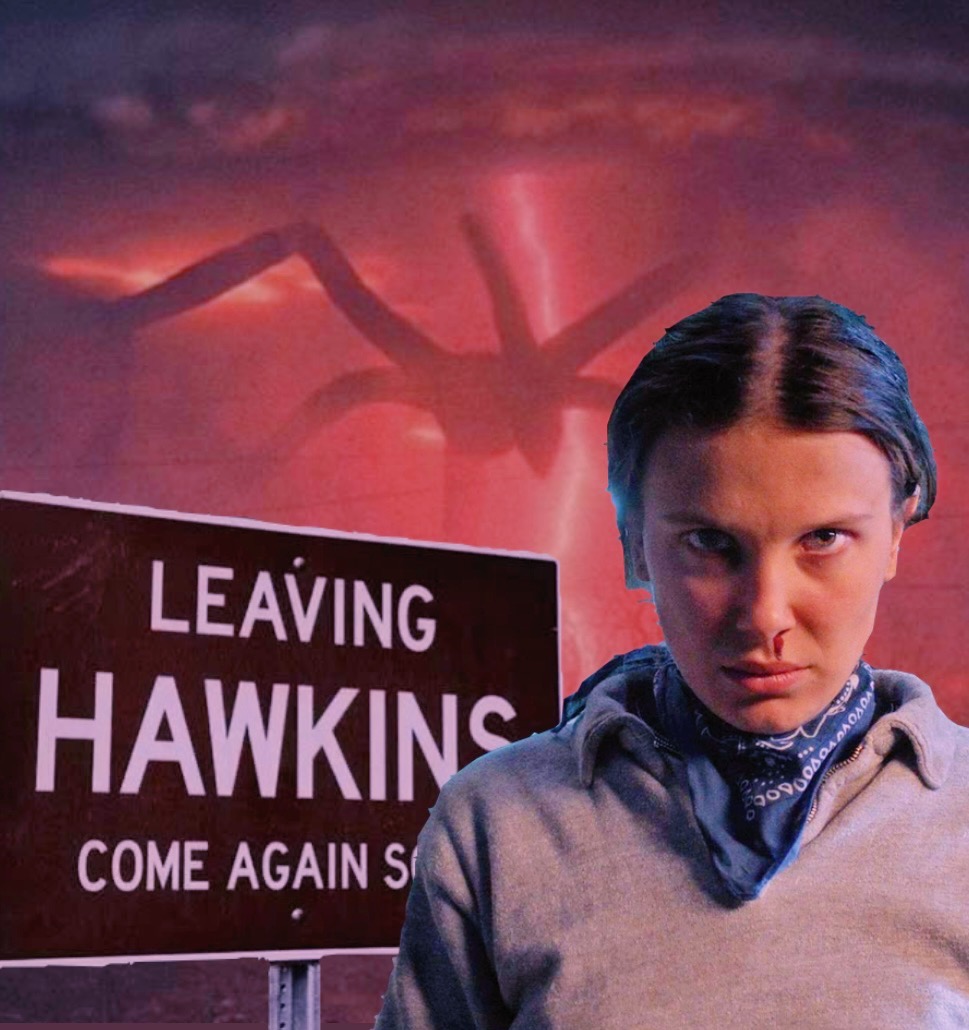
After watching Stranger Things season 5, I have mixed thoughts.
At 8 p.m. on Nov. 26, part one of the series’ final season was released on Netflix, temporarily crashing the site. Featuring four episodes, each with over an hour’s runtime, the Duffer brothers’ hit streaming series returns for a fifth season of monsters, mystery, and 80s mullets. Reviews are mixed for the initial run of episodes.
Critiques feel inevitable when a mammoth show like Stranger Things ends. The show’s no longer free to stretch its limbs, reaching for new storylines; instead, viewers crave nostalgia, wanting their favourite characters to recite iconic lines at the series’ curtain call.
Season five struggles to balance fresh writing with high expectations. Like all long-running popular shows, Stranger Things is also showing its age. Corny jokes, perhaps an attempt to reclaim the goofiness of previous seasons, feel stale now.
The streaming landscape is different than when the show first released in 2016, incentivizing viewers more than ever to click away and turn to more creative offerings. Interweaving plots aren’t as tight as previous seasons, causing me to inevitably pick and choose my favourites—a common pitfall for stories with massive main casts.
Releasing only four episodes to start practically guarantees viewers will watch them all at once, exactly as I did. The result is a nearly five-hour Stranger Things extravaganza varying in its ability to capture attention, especially given the plodding pace of the first two episodes.
However, it’s important to consider what Stranger Things has become over the course of its long, explosively popular run. If you meet it where it’s at, season five has much to offer.
The show has a lot in common with Dungeons & Dragons (D&D) games, which recur as a motif throughout different seasons. When viewed as a D&D campaign, the overarching story of Stranger Things makes sense, changing over time from a sci-fi mystery grounded in realism to a simpler adventure story involving supernatural elements and strong characters.
If you compare season one to five, they’re two entirely different shows. But if you compare season five to season four, and so on, the series’ gradual evolution makes narrative sense. In the age of binge-watching television series back-to-back, viewers can lose appreciation for long-term growth.
Of course, Stranger Things still has the same ground rules. There has to be an elaborately planned break-in sequence, Will needs to have a life-saving vision, and Eleven needs to blow something up. Steve and Robin need banter, and there needs to be plenty of Demogorgons ripping nameless characters to shreds without harming the main cast. These things come as promises with every Stranger Things season, and on these promises, season 5 delivers.
Play Stranger Things season five by its own rules, taking magic at face-value and leaning into cheesy characters. Think of it less as a supernatural twist on the real-life 80s, and more as a realistic take on the Stranger Things universe, which happens to exist in the 80s.
Worry less about picking the plot to pieces, and simply enjoy. It’s still a thrilling ride, nearly 10 years from its premiere date. Without giving anything away, the nail-biting second half of episode four sets up what will certainly be a creative series finale.
Like a good D&D campaign, win or lose, you’ll have gained something along the way.
Tags
Entertainment, Netflix, Stranger Things, Streaming, Television, television series, TV, TV Series
All final editorial decisions are made by the Editor(s) in Chief and/or the Managing Editor. Authors should not be contacted, targeted, or harassed under any circumstances. If you have any grievances with this article, please direct your comments to eic@queensjournal.ca.