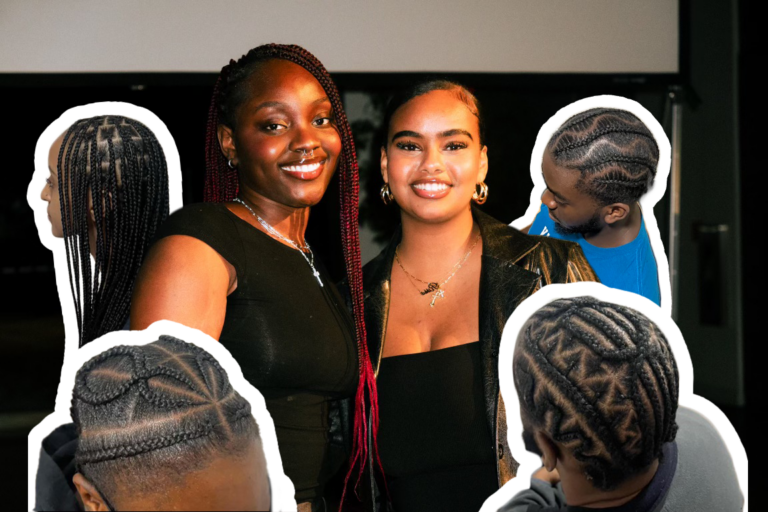
TnR Crown Care started off as a venture between best friends Theresa Ibonye, HealthSci ’25, and Rabeca Mengesha, ArtSci ’25. Their hairstyling business caters to Black hair and textures, serving as an essential service for Black student on Queen’s campus.
TnR Crown Care took off in January 2024. Their price list ranges from $35 to $80 depending on the style of hair and the time needed. Before the business’s establishment, Ibonye had been interested in starting a hairdressing business for a while.
“There has always been a lack of hairstylists that catered to Black hair textures on Queen’s campus,” Ibonye said in an interview with The Journal.
Ibonye recalls being stressed about the thought of opening a business on her own, believing the endeavour would be too stressful to tackle alone. She worried about managing the finances and the significant time commitment required.
Luckily for Ibonye, fate intervened when a mutual friend noticed the hairstyles she and Mengesha had crafted. A casual remark planted the seed of the possibility of the two friends starting a hairstyling business together.
“I remember in my first year needing to plan out my hairstyles to ensure they would last until I got back home to Toronto to get them redone. At my Toronto hairdresser, a service like braiding would cost around $190, whereas in Kingston, I have been forced to pay as much as $250 for the same service. Under dire circumstances, I have been forced to pay these extreme prices or take time to do it myself,” Ibonye said.
This stark price difference highlights how valuable the affordable services TnR offers are for students, making hairstyling accessible to Black students at Queen’s University.
“This challenge is even more difficult for students who don’t know how to do their own hair. Some students may be forced to choose between paying rent, buying groceries, or getting their hair done. With TnR Crown Care, we hoped to alleviate some of that burden,” Mengesha added.
The duo shared the highs and low surrounding the launch of opening TnR Crown Care.
“Before starting, we realized that different logistics would go into creating a business on campus, including delegating schedules,” said Mengesha in an interview with The Journal.
Ibonye and Mengesha had to decide their availability during the semester, set prices for various services, and determine how to organize their social media page, Ibonye said.
TnR Crown Care’s main point of contact is through Instagram. Their official social media page allows potential clients to peruse their work before booking. Currently, most of their services are carried out of their Kingston homes.
Ibonye mentioned her strong communication skills have helped her be a valuable business partner and supportive friend to Mengesha.
“We can give each other grace when needed. [For example] one of us can take on more of the workload when the other is busy during the semester, and vice versa,” Ibonye said.
TnR Crown Care maintains an affordable price range which accommodates the student budget. The two entrepreneurs each contribute to the business which allows them to keep costs low, while ensuring quality service and the workload is balanced.
“The cost of hairstyling for Black students is often exorbitant, given the fact that hair plays an integral part in Black culture,” Mengesha said.
“Most of our clients are interested in creative cornrows as well as single and knotless braids. Through this business, we have built great relationships with a myriad of people we usually wouldn’t come across, and seeing their satisfied faces after a visit certainly makes us fulfilled,” Mengesha added.
Ibonye and Mengesha hope more students open businesses on campus—it not only benefits student entrepreneurs but also the entire university community.
“I think more student businesses on campus would foster a sense of innovation and creativity among the student body, inspiring others to pursue their entrepreneurial dreams,” Mengesha said.
READ MORE: Making bank as a student nail technician
The friends believe having a variety of student-run businesses on campus would create a more vibrant and diverse environment, giving students more options for goods and services.
Tags
Black hair textures, hairdressing, student entrepreneurs
All final editorial decisions are made by the Editor(s) in Chief and/or the Managing Editor. Authors should not be contacted, targeted, or harassed under any circumstances. If you have any grievances with this article, please direct your comments to eic@queensjournal.ca.
Barbara Guerin
In Canada you need to write a government exam to be a licensed Hairstylist so really opening a business you need to have insurance and a license so you need to be aware of regulations and laws.