On Valentine’s Day, I found myself in the last place most people would choose: a dark theatre, watching a film about grief. Yet it felt exactly right.
Hamnet, directed by Chloé Zhao, starring Jessie Buckley and Paul Mescal, brings to life Agnes Hathaway and William Shakespeare. Adapted from the Historical Fiction book Hamnet by Maggie O’Farrell, the film recounts the death of their 11-year-old son, Hamnet, and traces the family’s journey through grief, devotion, loss, and the immortality of enduring love.
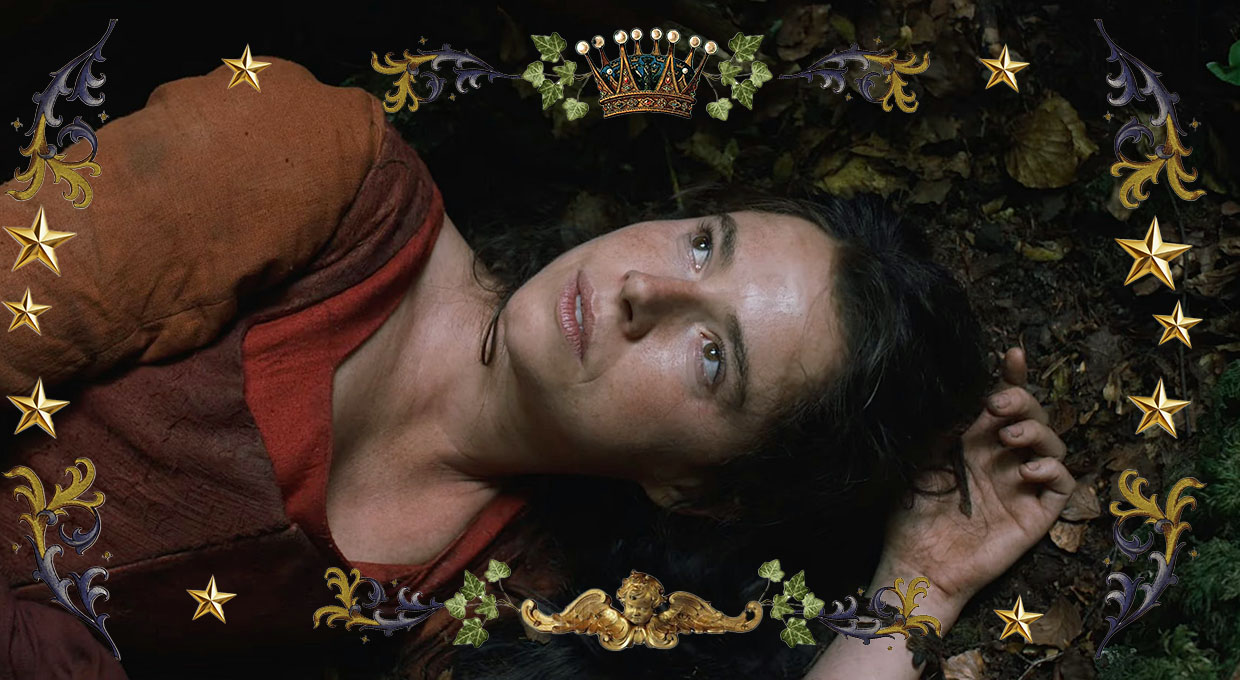
From the very beginning of the film, it’s impossible not to appreciate the respect for nature expressed through visuals and cinematography. This connection to the natural world is embodied in Agnes, introduced to the audience as the daughter of a forest witch. In the opening shot, Agnes is curled into herself underneath a large tree, her body pressed into the soil. Everything about her, from her red dress to the loose hair, felt like a reflection of the bond she shares with the natural world she calls home.
After falling in love with a man the audience comes to know as Shakespeare, a poet and a writer whose passion is always poured into his work, Agnes supports him wholeheartedly. After the birth of their first daughter, Susanna, played by Bodhi Rae Breathnach, she encourages Will to move to London to follow his dream of becoming a playwright. Even though she knew she would be alone, she continuously supported him.
Perhaps we have Agnes to thank for allowing Shakespeare to leave for London, so that, decades and centuries later, we can still celebrate his work. It all started so beautifully: a small family living their life together. I wish someone had called “CUT!” then, but they didn’t, and neither did my tears for the rest of the movie and sometimes after.
It started with the twins’ birth scene, where Agnes is forced to give birth inside, in an uncomfortable setting she never wanted and never asked for. The only place she ever found peace was in nature, beside the tree we saw her under in the opening shot, where she felt closest to her mother.
Buckley’s acting took my breath away, every scream, every cry for her mother, and every moment of pain as she feared she had lost her child during the birth. As a woman who has never had children or experienced childbirth, I couldn’t relate physically, but emotionally, I was taken on an emotional high I didn’t know I could reach.
It didn’t stop … the tears kept coming as the twins, a boy and a girl, Hamnet, played by Jacobi Jupe, and Judith, played by Olivia Lynes, grew older and formed a bond unlike anything I had seen before. A bond so tender and inseparable that it had me ugly crying in the middle of The Screening Room.
Then comes Hamnet’s death, the moment that breaks everything. Just a scene earlier, he had bravely promised his father he would take care of the family. Jupe’s performance in that scene, as Hamnet “cheats death” by swapping places with his twin sister, is heartbreaking.
The screams of Agnes that followed, along with the haunting imagery of Hamnet being taken by death, scared, alone, searching for his mother, and unable to return, made my heart ache for a child I never had and yet somehow felt I had lost.
What followed was the aftermath of loss, two parents carrying the same grief but in entirely different languages. Agnes, angry at Shakespeare for not being there in Hamnet’s final moments while she gave everything to keep him alive, struggles with the weight of that loss. For Shakespeare, grief became creation, keeping his son alive through his writing, and thus, he dedicated Hamlet to him and to Agnes, showing her that he can live on forever. Hamnet’s memories continue to live on for centuries; they continue to exist long after death cruelly took him away at such a young age.
The film ends with the staging of Hamlet, where Agnes comes to understand that Shakespeare’s way of grieving was to share his son with the world, allowing others to mourn him rather than carrying that loss alone. In the final scene, Agnes reaches toward the actor playing Hamlet on the stage. One by one, the people in the theatre extend their hands toward him as well. To me, this moment showed the collective nature of grief; it’s shared, shaped between people, and transformed through connection.
As James Baldwin put it once, “Each one of us has lived through some devastation, some loneliness, some weather superstorm or spiritual superstorm. When we look at each other, we must say, ‘I understand. I understand how you feel because I have been there myself. ” So, don’t let grief isolate you in a shell—because when grief is shared, it becomes a bridge, a connection, allowing love to endure even in loss.
Tags
Film, Hamnet, movie review, Theatre, Valentines
All final editorial decisions are made by the Editor(s) in Chief and/or the Managing Editor. Authors should not be contacted, targeted, or harassed under any circumstances. If you have any grievances with this article, please direct your comments to eic@queensjournal.ca.