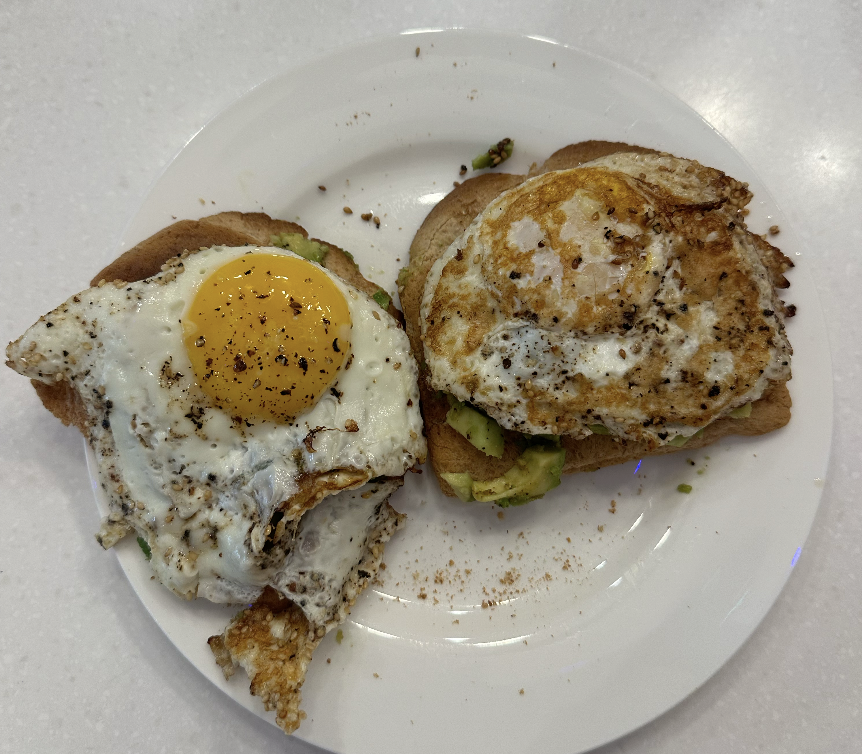
For students, the EAT-Lancet report is a reminder that how we eat is inseparable from how we live.
As the EAT-Lancet Commission renews its call for a global “planetary health diet,” students are being reminded that sustainable eating is as much about context as it’s about choice.
The report, updated this fall, describes dietary changes that could reduce disease and environmental harm, but its recommendations have led to debate over how global targets might translate to daily life. For students shopping on tight budgets, sustainability can feel like an abstract goal rather than a daily decision.
In an interview with The Journal that Kristen Lowitt, Associate Professor in Environmental Studies at Queen’s, said the report’s strength lies in connecting ecological boundaries to what we eat. “It’s not prescriptive,” she explained. “It’s not saying you can’t have meat, or you must eat tofu—it’s asking how we adapt these global goals to our local ecologies and cultures.”
Lowitt said that for students, the question becomes what a sustainable diet looks like in their own communities. “It’s about what grows well where you are, what’s culturally meaningful, and what’s affordable,” she said. Although reports like EAT-Lancet often speak in global terms, she stressed that diets remain “place-based” and must reflect local food systems, traditions, and access.
Still, she cautioned that the politics of food can’t be ignored. “A handful of corporations exert control over much of what’s grown, processed, and sold,” she said. “That influences what’s available and what people can afford.”
She added that shifting away from a corporate-driven model of food production toward one that’s more diverse, resilient, and community-based could help achieve better planetary outcomes in our diets.
Lowitt pointed to the Kingston Food Policy Council as one local example of change in action. The council’s developing a regional food strategy to strengthen community food systems and make local produce more accessible. “Students can take part in those conversations,” she said. “It’s not just about what you buy, it’s about how you participate as a citizen.”
Dr. George DiCenzo, Associate Professor in Biology and Chemical Engineering, approaches the issue from another angle: the soil. His research explores how microbes could reduce agriculture’s carbon footprint by replacing or supplementing chemical fertilizers.
“Nitrogen fertilizers are essential for maintaining yields,” DiCenzo said in an interview with The Journal. “But they’re also a major source of greenhouse gas emissions—both when produced and when applied.”
Through the multi-university BENEFIT Project, which focuses on optimizing microbial inoculants for Canadian crops, his team is developing products that help plants use nutrients more efficiently and thrive. “Even a 10 to 20 per cent reduction in fertilizer use would have a meaningful impact in terms of meeting environmental targets,” he said.
DiCenzo noted that the challenge is often one of trust rather than technology or science. “Growers have to trust these products,” he said. “Historically, there have been poor-quality microbial products on the market, especially where there’s little regulation. Earning that trust means proving these solutions actually work.”
Both researchers agree that food sustainability can’t be reduced to individual choice alone. Although microbes may impact agriculture from the ground up, community action and policy are just as important above it.
“With many of the challenges society faces, it’s important to take a holistic view—not just the biology, but all the other aspects that influence it,” DiCenzo said. For students, the EAT-Lancet report is a reminder that how we eat is inseparable from how we live.
Tags
Environment, food systems, Research, Sustainability
All final editorial decisions are made by the Editor(s) in Chief and/or the Managing Editor. Authors should not be contacted, targeted, or harassed under any circumstances. If you have any grievances with this article, please direct your comments to eic@queensjournal.ca.