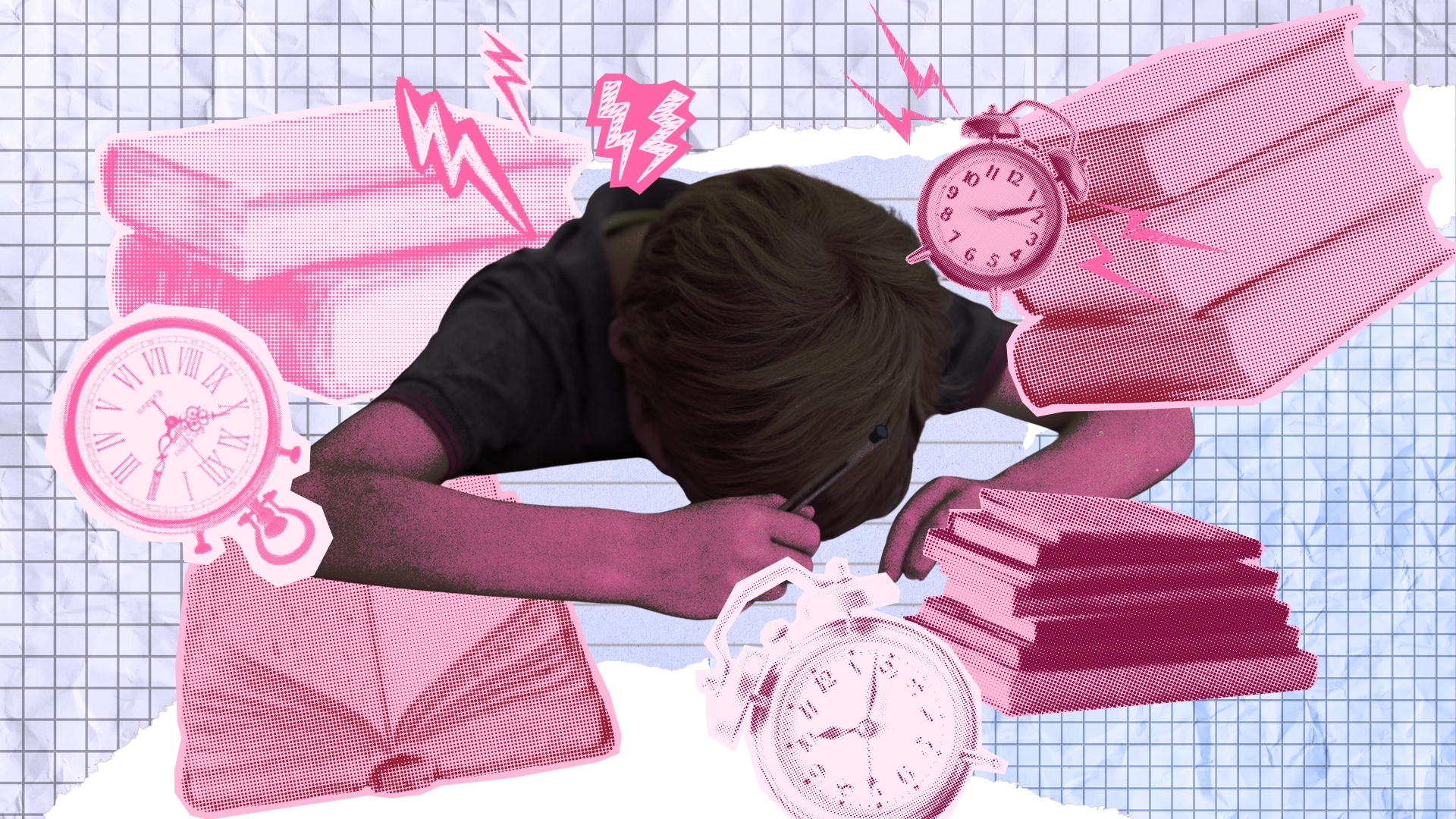
Studies and conversations show students who snooze, win—or at least they certainly don’t lose.
The role of napping’s become a point of contention among university students, which leaves many questioning whether daytime rest truly supports student well-being. Current online culture heavily pushes the narrative that to be successful, one must sacrifice sleep and be as productive as possible throughout the entire day. However, despite these convincing chronicles, that’s all they are— chronicles.
For those who struggle with exhaustion during the day, studies show mixing in a brief 20-30-minute nap to replenish your energy is never a bad idea. Individual sleep needs vary drastically, but universally, a solid overnight sleep of about 7-8 hours is objectively good for everyone, raising an important question of where this leaves naps.
Queen’s psychology professor Hans Dringenberg, a neuroscientist who is particularly interested in sleep’s relationship to memory, sat down with The Journal to explain that everyone’s bodies and sleep functions are different. Napping isn’t for everyone, as sleep is very subjective.
However, with that being said, Dringenberg stresses that a quick nap isn’t unhealthy at all. “A short 25–30-minute nap is always a good idea. It’s a good idea for restoration, it’s a good idea for attention, it might be good to help you to store some information,” Dringenberg said, pointing out that if it doesn’t interfere with your overnight sleep, napping can be a powerful tool.
Professor Dringenberg went on to discuss how university students have irregular sleep schedules, due to different class times each day, and that social life may lead as well to later nights. However, he acknowledged how important this time of life is to live in the moment, even if that means occasionally sacrificing sleep. Sometimes, he says, it’s easier to mix in naps than to commit yourself to reshaping your entire sleep schedule when that’s not compatible with your current lifestyle.
For Queen’s student Yafiet Teame, ArtSci ’26, quick naps are a common occurrence on campus while studying, typically in Robert Sutherland Hall. “The reason I nap on campus throughout the day is because I don’t have the best sleep schedule, which reflects when I’m studying, as I get very tired very quickly,” Teame said in an interview with The Journal. “I often take little power naps to get through the day. I’ll wake up feeling groggy, but after pushing through the 15 minutes of grogginess, I feel refreshed.”
However, Teame isn’t the only student who searches for space on campus to replenish his energy while studying. Executive Director at Housing and Ancillary Services (Interim), Kate Murray, stated in an interview with The Journal that while asking for feedback for the design of Endaayaan – Tkanónsote residence, “many expressed a need for a space they could access between classes to rest and recharge.”
These requests are why Queen’s offers an on-campus nap spot in the residence Endaayaan – Tkanónsote that opened in September 2022. The nap room’s currently only for students in residence.
“The nap room aims to address the need for a quiet, restorative space between classes, support for mental health and stress reduction, as well as convenience for students who can’t as readily access their room during the day,” Murray said.
To not interfere with overnight sleep, as Dringenberg also emphasizes, the nap room’s specifically designed for short rest periods, “offering a dedicated space for quick restorative breaks.” The room features two nap pods with reclining seats and an enclosure over your head for privacy. The user can adjust the lighting, the ambient music, and charge their phone while they nap.
Murray claims the nap room’s booked around 4 times per week.
“A nap is a useful thing; it’s better than spending the next hours of your day or evening feeling completely zonked out. Instead of scrolling your phone or browsing the internet for the next half hour aimlessly for entertainment, put it down and get 30 minutes. That can be an easier thing to do than, every night I am going to go to sleep and get exactly 8 hours,” Professor Dringenberg said.
Based on conversations with Queen’s students, it’s quite clear that it’s common for young adults to turn to social media for a “doom scroll”: when one spends a large amount of time trapped in the online world, consuming content for hours at a time. Scrolling social media before bed has been connected countless times to poor sleep quality.
Teame has experienced the negative effects of phone use and scrolling right before bed. “If I pick up my phone right before I go to sleep and I open TikTok or Instagram, I’m on the phone for another hour and a half, two hours even. It’s always ‘one more video’, ‘one more video’, and then I’ll get sucked in, as unfortunate as it is,” Teame said.
Getting stuck in the online cycle isn’t the only cycle Teame feels stuck in. He fears his afternoon naps might impact his nighttime sleep, but he doesn’t feel able to push through studying the entire day without a brief nap because he’s so tired from the night before.
Teame isn’t the only student who struggles with becoming trapped within the online world before bed. For Matthew Casciato, Eng ’26, sleep is frequently disturbed by online activity before bed. “I’ve probably gone on Instagram Reels every night before bed for the past semester and I’ll walk into my bedroom, exhausted from the day, but then when I lie down and turn my phone on, I notice I don’t feel tired anymore. I could watch for a few hours, lying in bed doing that,” Casciato said in an interview with The Journal.
The reason Casciato believes he’s kept awake is because the videos are all endless stimulating. “There’s no lines between the videos. They’re so short and they’re all the same. It keeps you wired because everything they’re showing you is either extremely interesting, extremely terrifying, or extremely fun,” Casciato said.
Nevertheless, endless scrolling doesn’t only cause poor sleep, but it also promotes harmful cultural commentaries that try to downplay the importance of sleep for the youth. In “toxic productivity culture” that prizes constant hustling, napping is frowned upon, as sleep as a whole has been devalued and demonized online.
“I often see on social media, people discussing staggered sleep: sleeping for 2-3 hours then waking up and doing work then sleeping for another 2-3 hours. I think sleep is presented online, in hustle culture, as a tool to meet a certain end goal, not to actually nourish yourself,” Teame said.
Professor Dringenberg expresses concern over these sentiments as well.
“You have people online who boast about sleeping for only 3 hours a night and then they go, go, go for 20 hours a day. You have a lot of stories in the media about how impressive that is and if you want to get ahead in life, that’s what you need to do,” Dringenberg said. “[…] But for decades of living like that, your immune system will be depressed, your cardiovascular system will suffer, there are changes in the brain that you can see in chronic insomniacs.”
Dringenberg flags the “Rise and Grind” mindset—this idea that sleep signals laziness or self-indulgence—and warns it’s a belief that will hit people hard 20–30 years from now.
For Dringenberg, the key message he wants students like Casciato and Teame to act on is this: take everything they read during their nightly doom-scroll at face value—whether it discourages or encourages daytime napping.
“I would encourage people to go to Google Scholar or find research articles for the suggestions and ideas you may see on TikTok. They might be completely valid and important, but as students, when you hear any kind of claim, you should use your critical thinking and fact check,” he said.
It seems the smartest sleep hack of all might just be quite simple: powering off your phone before bed and shutting your eyes.
Tags
Doom scrolling, Hustle culture, Naps, Rise and Grind, Sleep
All final editorial decisions are made by the Editor(s) in Chief and/or the Managing Editor. Authors should not be contacted, targeted, or harassed under any circumstances. If you have any grievances with this article, please direct your comments to eic@queensjournal.ca.