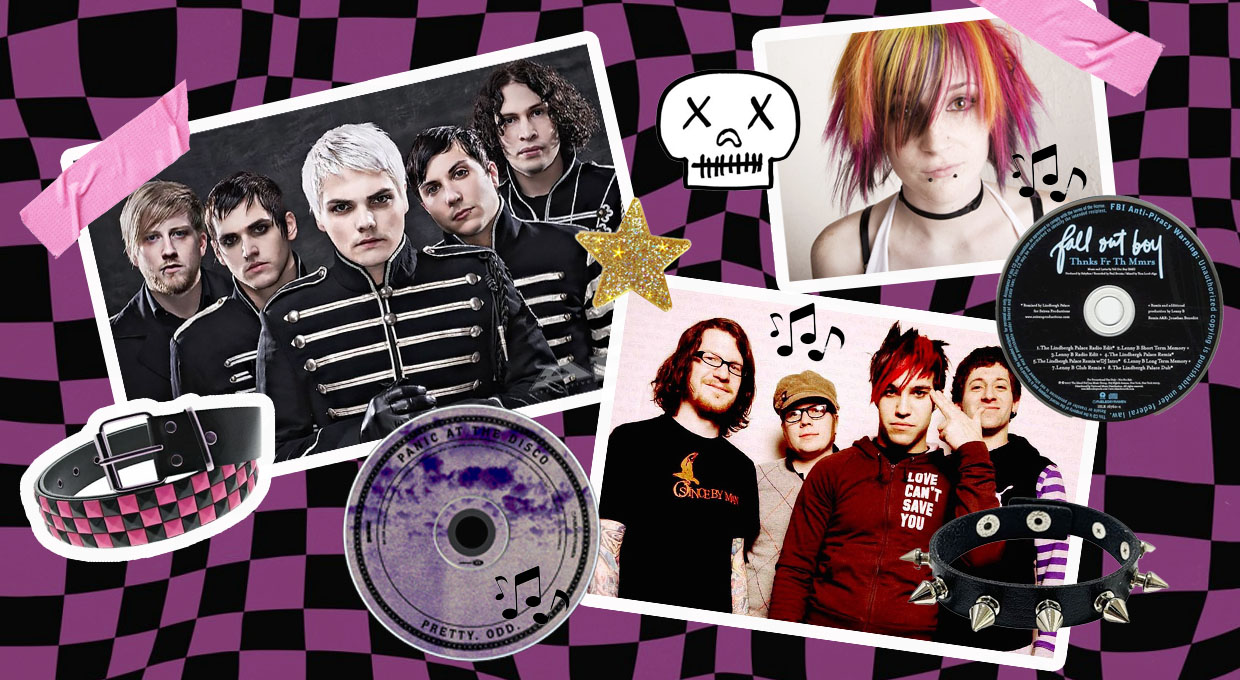
Emotional-Hardcore, or “Emo,” has a complicated identity.
Emo’s a subgenre of punk rock, originating from the mid-80s in Washington D.C., that focuses heavily on self-reflective lyrics and emotional insecurity. The fashion and lifestyle subcultures of the Emo scene encompass a range of styles, with argyle sweater vests on one side and tight black jeans on the other, shifting dramatically over the years.
Some other subcultures include artists and bands that share a similar auditory quality, but Emo’s more nuanced than just shared characteristics. Even in a group of three Emo fans, one might enjoy loud “Screamo” like Saetia, another might enjoy third wave like The Used, and still another might favour a softer Emo sound, like Bright Eyes. While all three are completely different sounds, they’re all classified under the Emo “family.”
Fluidity blurs lines among subgenres within the Emo community, with “Waves” explaining the multitude of Emo types. First wave Emo in the mid-80s features hardcore characteristics, but introspective, including self-reflective lyrics from bands like Rites of Spring. Second wave Emo began in the early 90s and was commonly referred to as “Midwest Emo,” with alternative and indie rock influences. Emo fashion took its first major step in the second wave with what could be considered as “twee,” a geeky style that fit Midwest Emo’s nerdier crowd.
The third wave began in the late 90s to early 2000s, catapulting the genre into the mainstream with bands like The Used and the “eyeliner-and-blood” aesthetic of My Chemical Romance. The genre was no longer defined by DIY-punk rock and delicate emotional expression, becoming more malicious. This changed again in the fourth wave, which began in the late 2000s and ended in the mid-2010s, returning Emo to an indie sound closer to the second wave, with fashion shifting toward work clothes, cozy sweaters, and earth tones galore.
Today, Emo’s in its fifth wave, with a sound more influenced by Screamo and Math Rock than previous waves, and maintains a deep connection to online culture. But alongside its internet roots, the expansion of Emo’s community has raised questions about who is and isn’t part of the group. Sharing rich culture among listeners of specific music types creates a space for fans and artists to bond over interests and lifestyles. Ironically, the online gatekeeping of Emo within the scene from contrasting subcultures has created an environment of toxicity in a genre designed to be introspective.
Some Emo’s prefer black-and-white definitions, “Real Emo,” like those who use the site isthisbandemo.com. Users argue there’s “Real Emo,” and everything outside this definition is irrelevant. However, this website was created as a partial joke, highlighting the ironic pretentiousness within the community. So even amid tension, the community can laugh at itself.
Above all, Emo’s about perseverance and self-reflection. Emo comes from the “Emotional” part of Hardcore, and what makes someone Emo’s the same today as it was in the 80s. As times change and new bands emerge, examining the history of a genre can shed light on how trends and attitudes about music change over time.
Emo’s a genre defined by pure emotion and heartbreaking misunderstandings; everyone experiences the themes of Emo and can define themselves as an Emo because it’s an ever-changing genre, including as many styles and types of music as possible.
Because the genre’s so open and universal, everyone can relate to Emo, and anyone can be Emo.
Tags
Culture, emo, emotional hardcore, Fashion, Music, rock, subculture
All final editorial decisions are made by the Editor(s) in Chief and/or the Managing Editor. Authors should not be contacted, targeted, or harassed under any circumstances. If you have any grievances with this article, please direct your comments to eic@queensjournal.ca.
ProBallooning
Really appreciate your effort