A university that is politically unbalanced does not necessarily lack ideological diversity.
A common criticism of Canada’s higher education system is that universities lack viewpoint diversity, acting more so as an ideological echo system rather than institutions of impartial objectivity.
In particular, this sentiment is emphasized on the political right, with prominent Conservative think-tanks such as the Fraser Institute finding that 83 per cent of right-leaning Canadian university students responded that their professors promoted a left-of-centre position, in contrast to only 45 per cent of left-leaning students.
With many students believing their classrooms are politically one-sided, it creates an environment where students feel as though they are less likely, and less able, to engage in academic debate. This concern is not without merit. If students perceive some viewpoints as unwelcome, it is reasonable to worry that they might be less willing to openly participate. But that perception alone does not establish that universities are intellectually homogeneous.
That said, political imbalance does not necessarily reflect ideological homogeneity. A university can employ mostly left-leaning professors who still hand their students competing interpretations and arguments. An echo chamber requires more than an unbalanced faculty. It requires students who encounter only one point of view, while other perspectives are discouraged or shut out.
The political imbalance in academia is more complicated than tallying how many professors are Liberal versus Conservative, with even our efforts to determine that split further complicating the issue.
Studies that sort academics by political leaning produce widely varying results, depending on how ideology is measured. A study of 3,318 Canadian academics in the Canadian Journal of Higher Education finds considerable heterogeneity in professors’ ideological positions, with academic disciplines playing an important role in shaping political attitudes. Its authors place Canadian academics somewhat to the left of the political spectrum, while warning that sorting professors into left and right is misleading.
This is because partisan labelling does not offer a clear image into the ideas that students explore in the classroom. Political labels reduce an individual’s beliefs into a single, one-dimensional category, and tells us relatively little about what they actually believe. In reality, “the left” encompasses a wide range of political thought.
Two professors can share the same political affiliation while fundamentally disagreeing about the meaning of social justice, the role of government, or even how political issues — at their most fundamental level — should be addressed. Treating university faculty as intellectually interchangeable ignores the disagreements that exist within political parties.
This distinction is important because academia is not organized around political parties. Universities are designed to produce disagreement through competing theories and methodologies. This is where intellectual diversity lies, not between ideological positions but between disciplinary perspectives. Intellectual diversity is not a political diversity problem.
The better question is not how many self-identified conservative professors teach in Canadian universities, but whether students are free to follow a line of reasoning to its end and reach a conclusion themselves. A strong academic environment requires students to assess evidence and defend their positions rather than reproduce the views of their instructors.
Disagreement does not have to come from opposing political camps. A student can be challenged by a professor who shares their political outlook but questions their assumptions and presses for further inquiry. What matters is less how a professor would be categorized, and more whether students are questioned on what they walked in believing.
Professors do not need to be politically diverse to be intellectually diverse. A left-leaning university can still offer its students fresh arguments and differing assumptions. Mistaking faculty politics for a lack of intellectual diversity turns academic freedom into an argument for political representation.
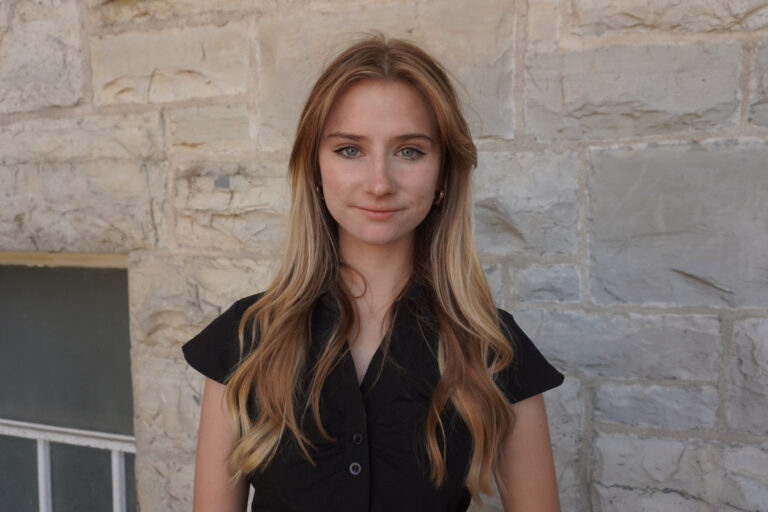
Sophie Campbell is a third-year History student and The Journal’s Opinions Editor.
Tags
bias, culture wars, Education, Politics, Professorship
All final editorial decisions are made by the Editor(s) in Chief and/or the Managing Editor. Authors should not be contacted, targeted, or harassed under any circumstances. If you have any grievances with this article, please direct your comments to eic@queensjournal.ca.
Ahmed Absiye
I think this is naive given the polarization and conservative students are afraid to share their perspectives in the classroom. When it becomes common place to call politicians “fascist nazis” people like Charlie Kirk get assassinated by university students who are in this academic bubble. It is only liberal students who feel empowered and conservative students do not want to challenge their professors because they will be stigmatized.