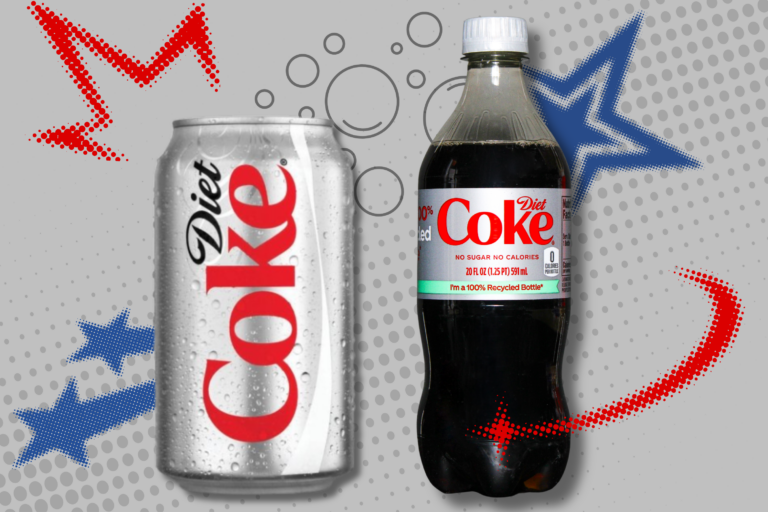
Standing the test of time, Diet Coke is fizzing in popularity at Queen’s.
Diet Coke has developed from a “health alternative” for original Coke into a brand that can stand on its own, nearly overshadowing its predecessor. Growing from an ordinary diet soda, diet coke has pushed itself into the mainstream and become a standalone product, with influencers and celebrities pushing the beverage almost as a lifestyle.
At Queen’s, the Diet Coke trend has crept its way into the lives of students with many having opposing opinions on the beverage.
Introduced in 1982, Diet Coke was an attempt by the Coca-Cola company at salvaging their brand with a new product after a rather tough decade. By the end of 1983, it was the number one soft drink in the United States and the top soft drink brand among women. Many studies have come out about the harmful effects of aspartame consumption, which could lead to issues with gut health.
Still, the cultural relevance of Diet Coke today is arguably as high as it has ever been. It seems to serve a dual purpose now, being both a diet soda and an accessory to pose with on Instagram.
With Gen-Z only adding more fuel to the fire, Diet Coke has transcended its beverage status. There are Diet Coke bags to hold your diet soda, and Diet Coke hydro-flasks to make “water drinkers” feel like they’re part of the fun.
Despite its undeniable appeal, many still have differing opinions on the beverage.
“I mean it’s fine. I can’t tell much of a difference. That’s how little I drink Coke,” said Brenden Hamilton, ArtSci ’27, in an interview with The Journal. “I don’t care for the fake sugar.”
While Hamilton seemed to be fervent in his indifference for the beverage, Alexander MacLean, ArtSci ’27, gave interesting insight into the mind of a Diet Coke drinker.
“It’s like a fridge cigarette,” he said in an interview with The Journal, calling it “an instant and quick release.” He expanded, “I’m more addicted to the taste of Diet Coke than I like it. It’s a familiar taste.”
While that “familiar taste” is likely the aspartame entering our bodies, it’s interesting to see the connection be made in person. Nic Farinaccio, ArtSci ’27, added to the dialogue, saying Diet Coke was probably his favourite drink.
“There’s just something about it. For me, I think normal Coke leaves too much of a sugary coating on my teeth. It feels like a resin. In addition, I think Coke Zero leans too far into tasting like its own thing. Diet Coke is a good middle ground between the two.”
“And aspartame. That shit’s banging,” he concluded.
Diet Coke as a beverage is not inherently harmful, but the continuous presence it has on younger generations currently is something to consider. The student perspective of the beverage seems to vary, but it is undeniable that there is something about it that keeps people coming back.
Tags
All final editorial decisions are made by the Editor(s) in Chief and/or the Managing Editor. Authors should not be contacted, targeted, or harassed under any circumstances. If you have any grievances with this article, please direct your comments to eic@queensjournal.ca.