“Anything but Jean Royce Hall. Anything. Why is there even a West Campus anyway?” These are the words I mumbled when I found out where my time slot was in the first-year residence lottery last summer.
In the 1960s, Queen’s experienced massive program expansion and student enrolment growth. The administrative leadership needed to find solutions to accommodate this growth, including the Ontario government’s desire to establish a new teachers’ college at the same time.
Ultimately, the University purchased 15 acres of land about two kilometres west of main campus, and West Campus was born.
Whether you personally like it or not, the nearly 30-minute walk or 5-minute transit ride between main Campus and West Campus results in a level of isolation from the university community for many students.
The reality is that students need to travel to main campus to access the majority of their classes and the services that they depend on in their day-to-day lives. There are no medical services, indoor athletic facilities, or full-service grocery stores on-site or within walking distance of West Campus.
West Campus feels like an island without easy access to student services. However, there is a real chance to transform what living on West Campus actually looks and feels like if Queen’s and the community start planning now.
The City of Kingston has identified in their Population, Housing and Employment Growth Analysis Study that full-time post-secondary student enrollment will increase by 14,000 full-time students by 2051, growing from 34,000 to 48,000, an increase of 42 per cent.
The majority of this increase in projected student population is attributed to Queen’s. An increase in students will require more services and facilities to support the student experience including housing, classroom space, study areas, and athletic facilities.
There is an opportunity to reimagine the role of West Campus and how it can be transformed into a vibrant community as part of an overall plan to accommodate an additional 14,000 students.
Think about what West Campus might look like in the future if thousands more students call it home. It would be converted from an isolated satellite campus into a complete community, able to provide the services necessary to serve a much larger population.
Students would no longer be forced to make the trip to Main Campus for their day-to-day needs but would have everything they require close by.
Don Amos, the councillor for the Portsmouth District, which includes West Campus, recently identified that the most pressing issue in his district was food security and the need for a grocery store. Currently, there is not a single grocery store in the entire Portsmouth District, and students on West Campus must travel all the way downtown to access a full-service grocery store.
Access to food is already a struggle for students, with 11 per cent of Queen’s students facing severe food insecurity according to a 2022 study. Distance from a grocery store should not be another contributing factor blocking students’ ability to feed themselves.
With the allure of a significantly larger student population on West Campus, new development, such as a grocery store, would be incentivized to meet the greater needs of both students and permanent residents. Growth on West Campus is a win-win solution for students and the wider community.
The revitalization of historically ignored areas into full, vibrant communities by focusing on development to meet student housing needs is a concept very familiar to Kingston. Not that long ago, the area of Princess Street between Division Street and Bath Road, often referred to as Williamsville’s main street, was a neglected corridor of abandoned business and parking lots.
Today, it has been completely transformed into a hub of growth. You need only to compare the Google Street View images from 2016 to today to see how drastically the neighbourhood has changed over the last 10 years with new residential development, businesses, and services, including grocery stores at either end.
The streetscape was also redesigned to focus on people. Providing a more pleasant environment for pedestrians and cyclists was important, and something lacking in much of Kingston. This especially impacts students, who often do not own cars.
In fact, students actually helped initiate the Princess Street project. 15 years ago, a group of students at the School of Urban and Regional Planning developed a plan that considered the revitalization of Princess Street and the type of development that would be appropriate for the area. Ultimately, this led the city to formally study what was possible, resulting in the Williamsville Main Street Study adopted in 2012.
We are in the same situation we were 15 years ago, and, in many ways, in the 1960s. Enrollment is projected to rise, and we need to figure out how and where to accommodate more students.
Therefore, a similar approach needs to be initiated for West Campus. This area is a prime target to be the next designated space for new student-focused development in the city. If it is, we will see the same level of economic and social benefit as we have in Williamsville.
Queen’s students today have the knowledge to get the process started just as they did on Princess Street, but planning needs to get underway. The Williamsville revitalization is only where it is today because of the work done then.
If we want West Campus to feel like a real community — one that addresses issues the city is facing and provides a place where a growing population of students wants to live — we need to start working on our vision for West Campus now.
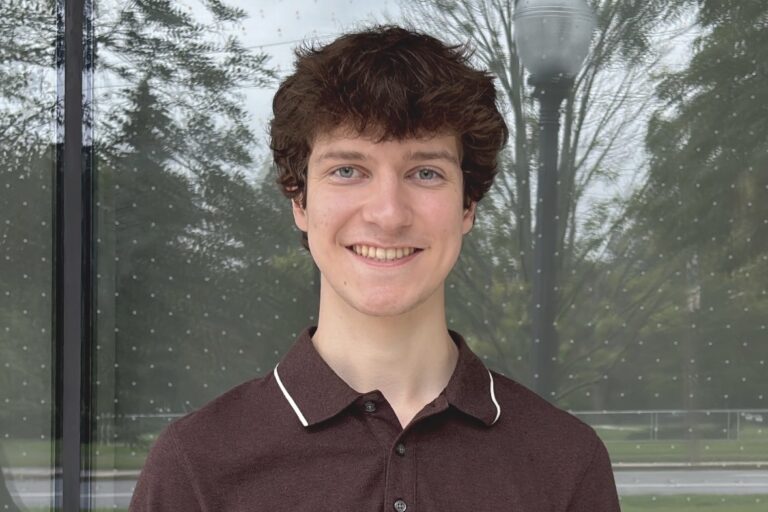
Andrew DaCosta is a second-year Politics, Philosophy, and Economics student.
Tags
Jean Royce Hall, urban planning, West Campus, West Campus revitalization
All final editorial decisions are made by the Editor(s) in Chief and/or the Managing Editor. Authors should not be contacted, targeted, or harassed under any circumstances. If you have any grievances with this article, please direct your comments to eic@queensjournal.ca.