The story has been updated as of Nov. 18 to reflect that staff members will no longer be required to pay £400 per month for office space.
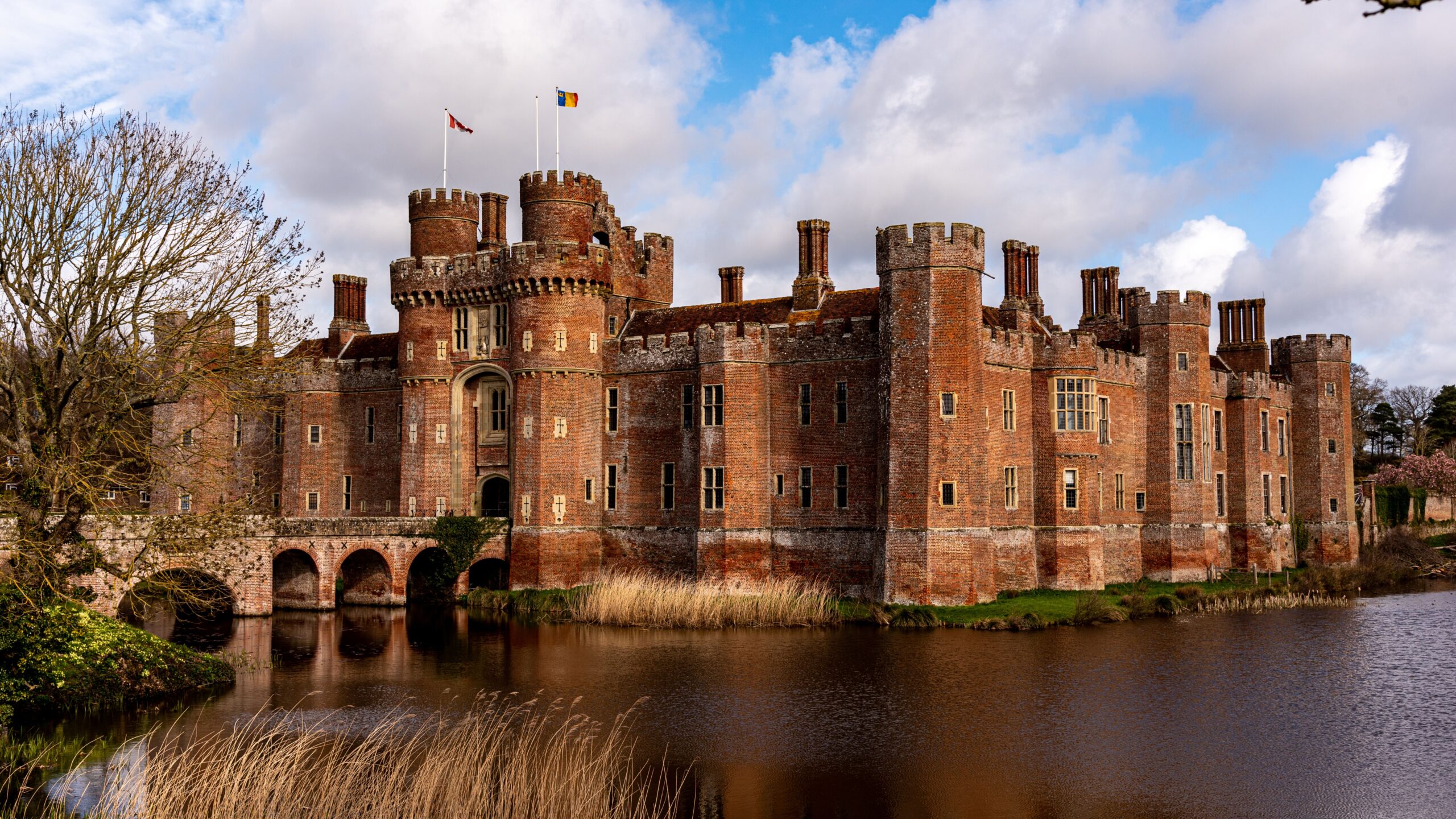
After two years of closure for major restorations, Bader College will reopen Herstmonceux Castle in 2026 with a renewed academic vision.
The relaunch will bring multiple changes, starting with a Scholars Retreat in January 2026, offering 20 spaces for Queen’s faculty members, postdoctoral fellows, and graduate students to live and work on research projects for one-to-six months in the castle.
Faculty can also submit academic programs to be held at the College under the Academic Programming Development Initiative, which allows faculty to submit proposals for courses to be held at Bader. The college’s reopening follows two years of closure and $6 million spent on castle repairs, according to the University in an e-mail statement sent to The Journal.
READ MORE: After two-year hiatus Bader College reopens for Winter 2026
“They [faculty, postdoctoral fellows, and graduate students] have the opportunity to base themselves there [at Bader] to do really intensive work that requires focus in a beautiful, inspirational environment,” said Head of Academic and Educational Planning at Bader College, Diana Gilchrist, in an interview with The Journal.
In its statement, the University also wrote that proposed changes to programming came during conversations after its closure.
“The pause in academic programming at Bader College due to the repairs needed to Herstmonceux Castle provided Queen’s with an opportunity to rethink its operations and the approach to educational programming. During this time, it became clear that using the castle primarily to offer first-year programming to Queen’s students didn’t maximize the full potential of the site,” the University wrote.
Gilchrist explained that the program aims to make the castle more accessible to Queen’s researchers and re-establish it as a global site for scholarship. Applications will open to other Canadian and United Kingdom universities in November and to select Chinese universities in December, with China chosen for its close relationship with the college, according to Gilchrist.
Participants will pay for their accommodation, ranging from £1,200 to £1,700 per month. Gilchrist said early interest in the program has been strong, but they’re unsure if they’ll receive full occupancy.
She hopes those who attend the retreat will feed into the new academic programming model, encouraging those who attend to design short courses worth half a term credit. The first confirmed cohort, Queen’s International Law, will return to the castle in May 2026 for the first time since its closure.
Future courses will follow two models: the “Living Lab,” which emphasizes site-based learning tied to the castle and the “Gateway to Europe,” which connects classroom teaching with field experiences across the continent.
Under the Living Lab, programs will focus on history, archaeology, historic architecture, astronomy, and ecology. The castle’s facilities include an observatory, a national geodesy station, and over 300 acres undergoing a rewinding project to restore biodiversity on former farmland.
Bader College will also expand its continuing education offerings during the academic off-season, including professional and “lifelong learning” courses. The first professional program will offer Institution of Occupational Safety and Health (IOSH) workplace safety certification, which are mandatory courses in order to advance in some UK career paths, designed to generate revenue for the college and meet community needs.
When asked how the University will balance commercial needs with the academic mission, the University said this will only enhance the education it can provide.
“The commercial activities won’t interfere with Bader College’s educational mission and in many instances, they will enhance the educational offerings (for example, the collaborations with the observatory, and academic conferences),” Queen’s wrote.
There will also be a focus on heritage crafts and conservation, giving participants hands-on experience restoring the castle itself. Learners will study techniques like lime plastering and historical masonry repair alongside experts currently working on-site.
“It’s win-win,” Gilchrist said. “We’re saving endangered skills by teaching them. We’re providing an opportunity in our Living Lab for them to get an authentic work experience, and we’re actually getting work done on the building that we’ve to do anyway.”
Queen’s said that while major repairs will be completed by the end of 2025, upcoming work will focus first on repairing the north side gatehouse, with future projects planned for the east and west wings. Later work will involve routine maintenance, including masonry, drainage, and roof upkeep.
All final editorial decisions are made by the Editor(s) in Chief and/or the Managing Editor. Authors should not be contacted, targeted, or harassed under any circumstances. If you have any grievances with this article, please direct your comments to eic@queensjournal.ca.