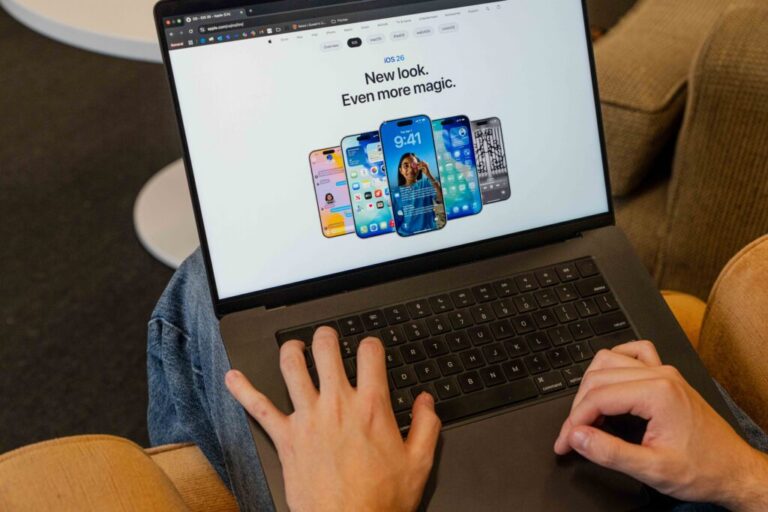
Apple has built its reputation on inventing the future of technology, but with the latest trend of AI being the future for generations to come, the company is now paying $250 million for not following through on their promises.
In a settlement filed May 5 in a California federal court, Apple agreed to pay $250 million USD ($350 million CAD) to resolve a class action lawsuit accusing the company of unkept promises and false advertising around its new AI features integrated in the iPhone 16.
The lawsuit was based on the new feature “Apple Intelligence,” which was unveiled at the 2024 developer conference. Apple claimed that Siri, its famous voice assistant — which was breakthrough technology when announced in 2011 — would be transformed into an AI assistant, capable of understanding user’s unique demands and controlling functions across apps. This function never released under the iPhone 16, and Apple stated that the AI update would be delayed again.
This caught many consumers by surprise, especially when tech giants like Google, Microsoft, OpenAI, and X have been offering Generative AI chat bots for years, as the AI industry continues to grow exponentially. This delay from Apple, the second largest company in the world by market cap, raises the question: how did they end up paying customers for promises its rivals have already made real?
Goce Andrevski, an associate professor and distinguished research and teaching fellow of strategy at the Smith School of Business, says the lawsuit’s outcome doesn’t answer this question.
“It is settled, which means that we cannot know whether there was a court that decided Apple intentionally misled customers,” he said in an interview with The Journal. “It is also possible that they overpromised, that they thought it would come out in time, and it did not.”
One explanation he says is that it is deliberate. Andrevski explained that Apple’s strategy has always been based on privacy, reliability, and the tight connection between hardware and software.
“Historically, they try to be fast movers, not first movers,” he said. Apple sits back while competitors take the early risks, then arrive late with a better version that works.
This explanation only goes so far, though. “This cannot explain why they’re so late,” Andrevski explained. “It can explain that they are delayed a little bit”.
An alternate explanation coms in the form of what he called “strategic misallocation.” This argument suggests that Apple didn’t fail to invest in AI, but it jumped on the wrong AI.
In 2014, Apple started Project Titan, a secretive, fully autonomous electric vehicle. They spent a decade and billions of dollars on the project before cancelling it in February 2024, where they then reassigned billions of dollars and thousands of employees to the AI development team. By the time Apple had pivoted, Andrevski said that the opportunity cost of staying out of the AI race had become too high.
“Thays why I say it’s a strategic miss,” he said. According to Andrevski, Apple wasn’t ignoring AI, but it was building the wrong kind.
He claimed that he doesn’t think it’s too late for Apple to recover. However, he was adamant that they are too late to go head-to-head with the already established large language models. “Those generalized generative LLMs are far ahead”, he said. “They cannot win that race.”
Instead, he expects Apple to lean into smaller models that are held on its own devices, an approach that has been shown in the new MacBook Neo. This strategy would let Apple preserve the privacy and reliability reputation that consumers love.
Tags
AI, Apple, artificial intelligence
All final editorial decisions are made by the Editor(s) in Chief and/or the Managing Editor. Authors should not be contacted, targeted, or harassed under any circumstances. If you have any grievances with this article, please direct your comments to eic@queensjournal.ca.