Trustees discuss government policies, finances, and tuition changes at their first meeting of the year.
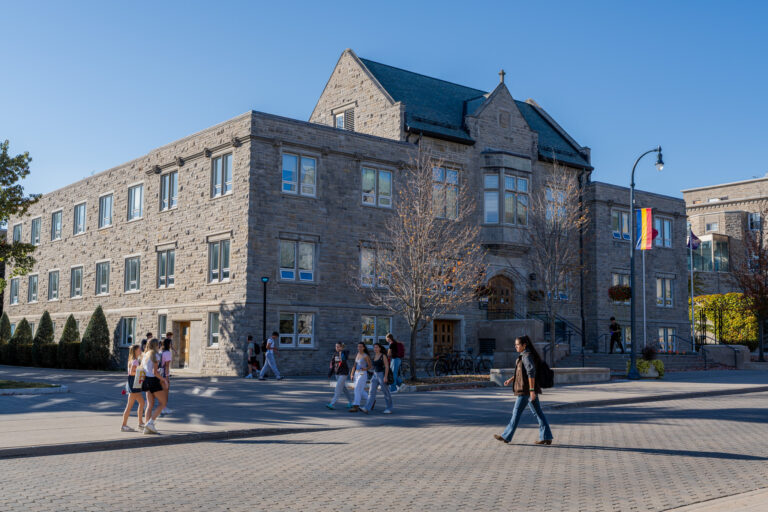
The Board of Trustees (BOT) met on Sept. 26 in Richardson Hall at 4:30 p.m. to discuss various items relating to the financial health of the University. The agenda was mainly filled with discussion items, with trustees meeting for about two hours to speak about the state of the University.
BOT kicked off with remarks from various administrators and reports from student leaders. Chancellor Shelagh Rogers dedicated much of her remarks to reconciliation ahead of National Day for Truth and Reconciliation on Sept. 30.
“We’re four days away from the National Day for Truth and Reconciliation, as David said, and it’s for truth and reconciliation, not of truth and reconciliation. For implies momentum; it implies activity and advocacy and support, as in “I am for this.” We’re there to honour the survivors of residential schools and their families and the children who never came home,” Rogers said.
In Principal Patrick Deane’s remarks, he explained how he attended the Global Forum on Higher Education, which he said had many United States university administrators. He added that this reinforced the concerns seen at Queen’s aren’t unique to the University, but are seen around the world, specifically outlining a lack of trust in institutions and the erosion of the university’s ability to do their work shielded from politics.
He discussed the specific issue of Bill 33, explaining he worries about its student fees and admission standards, which the bill seeks to regulate. He finished his report by expressing his goal to continue outreach regarding the Bicentennial vision.
The SGPS’s report, which is typically delivered by the President, was provided by Vice-President (Graduate) Surabhi Velagala. She also highlighted Bill 33, specifically citing the harm that could be caused by organizations like the Food Bank losing student funding.
“[Bill 33] distracts us from the real issue of chronic funding. Students continue and will continue to struggle due to the austerity cuts the university has to make due to the lack of funding from the government,” Velagala said.
Student Reports
In Rector Niki Boytchuk-Hales’ report, she spoke to similar issues relating to Bill 33, adding she remembers a similar situation with the student choice initiative in 2019. She also expressed the importance of the Bicentennial vision.
“I can very confidently say, based on meetings with my peers recently, that students want a holistic education that will meet the demands of the world they will step into, which, from turning on the news, I know is a very tall order. This includes our current vision tagline, which is solving the world’s greatest challenges,” Boytchuk-Hale said.
President of the AMS, Jana Amer, also reported to the board, highlighting various issues facing students. She specifically highlighted certain students’ feelings that were shared with her, specifically, an Indigenous student who protested outside her office on Sept. 26, who explained that she never felt included at Queen’s.
“She was struggling with the constant weight of having to explain her culture. She carried two jobs at the University, a student and a teacher,” Amer said. “They carry not just textbooks, but the legacy of colonialism and the burden of being cultural translators.”
She drew this into broader conversations around action on specific issues, explaining, “commemoration means nothing without action, and we saw this in things like the Principal Review Committee for Responsible Investing. Students poured their time into submission, and not only did they feel like they got no answer, but they felt like their voices were carried away, and it told them that their perspectives did not matter.”
Queen’s Financial Health and Tuition Adjustments
Discussed in the Audit and Risk Committee, the board approved the audited consolidated financial statements, which were conducted by the external UK-based firm Klynveld Peat Marwick Goerdeler (KPMG) to examine the University’s financial health.
The University ended the 2024-25 fiscal year with a surplus of $60.1 million, according to its audited financial statements. KPMG also confirmed there were no issues with how finances were reported.
The surplus came largely from investment earnings. Without those returns, the University would have recorded a deficit of $8.6 million. While investments boosted the overall budget, the cost of running day-to-day operations such as teaching and administration continued to exceed what Queen’s collected from tuition and government funding.
The operating fund, which accounts for about two-thirds of total revenue, was expected to lose money. After adding in investment income, it finished the year with a surplus of $15.8 million, but there was a $26.1 million deficit before those investment dollars were included.
Trustees also approved new international tuition rates effective September 2026.
Arts and Science fees will drop by $10,000 for new and continuing international students. Provost Evans justified these changes by explaining that Queen’s already offers a $10,000 discount to international students in their first year, meaning this change would only apply to their successive years. He added that this tuition decrease aims to make them more attractive to prospective students and bring the University back in line with competitor institutions’ prices.
Health Sciences tuition also saw changes, with it set to rise by $2,000 for those entering their first year. The increase in Health Sciences tuition was also cited as a way to match competitor rates, with Evans adding, “We feel that the market can sustain that [tuition hike] as the demand for the Health Science Program is robust.”
The Board met for a closed session on Sept. 27. The next BOT meeting will be on Dec. 12.
Tags
Board of Trustees, BOT, international tuition
All final editorial decisions are made by the Editor(s) in Chief and/or the Managing Editor. Authors should not be contacted, targeted, or harassed under any circumstances. If you have any grievances with this article, please direct your comments to eic@queensjournal.ca.