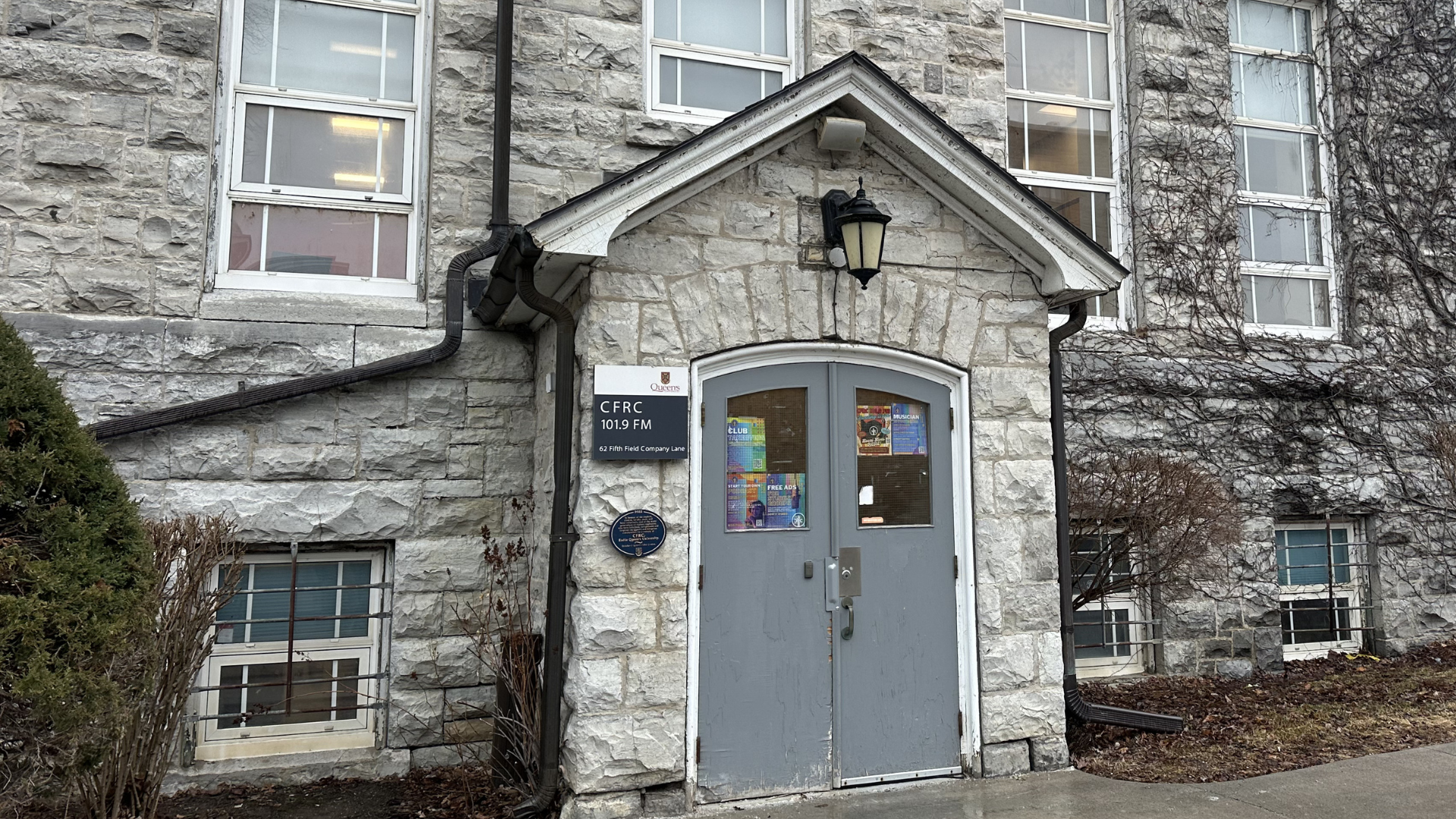
CFRC 101.9 FM is calling for greater transparency in how the AMS runs referenda after narrowly renewing its optional student fee in Fall 2025.
In an interview with The Journal, Dinah Jansen, executive director of CFRC, Queen’s campus and community radio station, said the station isn’t trying to frame the issue as a dispute solely between CFRC and the AMS, but as a broader concern about how referenda were administered.
“The lack of organization, the lack of personnel, the lack of training, the lack of communication, the lack of working forms, everything was really just a gong show,” Jansen said.
CFRC receives funding through an optional AMS student fee of $8.22. Jansen said the station passed its most recent fee renewal by a narrow margin, at just over 52 per cent, and would’ve faced an existential threat if it had failed.
“We’re the longest running campus station globally, the second oldest radio station in Canada, we would ultimately have to wrap up our operations probably after a year,” she said.
Jansen said CFRC had wanted to undergo its triennial review in the winter 2026 referendum cycle but was told in August 2025 that all groups under triennial review would be required to participate in the fall referendum instead.
In a timeline document shared with The Journal, CFRC said it raised concerns at the time that fall campaigns historically see lower turnout, which increases the percentage of “yes” votes required to meet approval thresholds. She said this put the station at an “existential risk” because a failed renewal wouldn’t have guaranteed another chance in the winter cycle and could’ve forced the station to attempt the more difficult process of establishing a brand-new fee.
The same document alleges that the station later discovered 11 triennial review groups appeared in the winter 2026 cycle, despite CFRC having been told by the AMS that all such groups would run in the fall
In a statement to The Journal, AMS Secretariat Racheal Reddy said all groups undergoing triennial review are scheduled for the fall cycle by default, and that deferrals to winter occur only when the Student Activity Fee Review Committee (SAFRC) determines additional information or clarification is needed for a submission to meet policy requirements.
Jansen said CFRC still hasn’t received a clear explanation for why it was required to go in the fall while other groups were deferred. In her statement, Reddy said deferrals are determined on a case-by-case basis by the SAFRC, but didn’t address why CFRC wasn’t deferred.
Jansen also raised concerns about the administration of the referendum period itself, arguing forms were malfunctioning, responses from the elections team were often delayed or absent, and it wasn’t clear who was responsible for overseeing the process.
In the documents shared with The Journal, CFRC alleges there was no ratified elections team in place when the fall election period began on Oct. 20, 2025, and that the station was told at one point the elections team wouldn’t be ratified until December, after the referendum had concluded.
“There was no governance team basically through the entire fall period,” Jansen said. “And this is highly problematic.”
During a January Special Assembly, former AMS President Jana Amer said the fall referendum period coincided with staffing shortages and vacant positions within the organization,
including in areas responsible for elections administration.
“In terms of communication and oversight, deadlines and procedural requirements are communicated through the Civic Affairs Office, with oversight from the Secretariat and the AMS President,” Reddy wrote. “Structurally, the Civic Affairs Office is responsible for administering elections and referenda processes, while operating independently to preserve procedural integrity.”
Despite her concerns, Jansen praised the AMS marketing team, saying its work helped raise awareness of the referendum and may have helped several groups keep their fees.
However, CFRC also says campaigning opportunities were limited. Jansen said groups were initially assigned only two tabling days in the ARC and weren’t given notice or flexibility to organize in-person outreach.
The station further alleges that referendum results weren’t communicated within the timeline required by AMS policy, which states that results must be announced within 12 hours of the end of voting. According to the documents, CFRC received results from an elections e-mail address at 11:11 p.m. on Nov. 15, nearly 24 hours after voting ended, while the official e-mail from the Chief Returning Officer wasn’t received until the afternoon of Nov. 17.
Jansen said that the delay was especially difficult given what was at stake for the station. Reddy said the AMS “takes the concerns raised seriously,” and is reviewing the process.
Tags
AMS, ams referendum, CFRC, CFRC radio, Fall Referedum
All final editorial decisions are made by the Editor(s) in Chief and/or the Managing Editor. Authors should not be contacted, targeted, or harassed under any circumstances. If you have any grievances with this article, please direct your comments to eic@queensjournal.ca.
Zedrick Serson
This is really funny given the recent history of the CFRC fee. When the SCI was struck down, AMS ran a referendum on restoring the formerly-mandatory fees. When CFRC’s fee narrowly failed, AMS falsely claimed that students misinterpreted it as a referendum to restore its mandatory status, then reran the referendum to obtain a result more favorable to them.