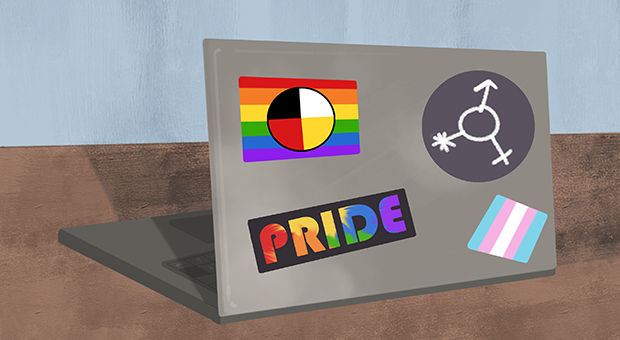
For years, rainbow logos and corporate sponsorships have been a staple throughout pride month in North America. Recently, many of these sponsors are nowhere to be seen, and Pride organizers are now asking the federal government to make up the difference.
Canada’s largest cities pride festivals; Pride Toronto, Vancouver Pride, and Fierte Montreal, are among the organizations now asking the federal government for $9 million over the next three years, separate from existing funding, to help support rising costs and reduced funding for Pride initiatives throughout Canada.
This request is coming as corporate sponsors are scaling back or withdrawing completely in recent years amid a broader evolving political climate in the United States, where the current federal administration has been actively pursuing policies that scale back diversity, equity, and inclusion (DEI) initiatives. Many of the multinational companies that fund Canadian Pride events have headquarters in the United States or operate heavily within U.S. markets, meaning political and economic shifts south of the border are felt north of it too.
Eddy Ng, professor of Equity and Inclusion at the Smith School of Business, says that this connection isn’t a coincidence. “A lot of Canadian DEI policies are actually crafted in American boardrooms,” Ng said in an interview with The Journal.
He pointed to multinationals, like Home Depot and Nissan, who withdrew their financial support for the Pride Toronto festival in 2025, as examples of companies trying to keep their messaging consistent across both countries. Nissan, he noted, is Japanese, not North American, but has been publicly promoting a plan to boost their U.S. investment and production to align with the Trump administration amid tariff threats.
“You might have heard, when the U.S. sneezes, Canada catches a cold,” Ng said.
Canadian public opinion on DEI has not shifted nearly as much as it has in the U.S. in recent years. Even so, Ng’s research suggests that Canadian subsidiaries of American multinationals will usually follow the overarching policies of their parent companies, regardless of domestic opinion, since maintaining a consistent stance and position throughout the whole organization is more important than addressing local views from a business perspective.
Despite Canadian’s being generally more supportive of DEI than the U.S. administration, Ng pointed out that these policy shifts are still happening in Canada as leaders are weighing the same competing pressures, regardless of where they operate. He explained that executives reduce these complex decisions down to a basic calculation: “Is this a threat or is this an opportunity to the firm? Everything else they filter out,” Ng said.
In his view, DEI was widely treated as an opportunity in the years following the social justice movements of 2020, when public support for initiatives surrounding DEI was high.
“Now, the entire discourse around DEI is a threat, because we know the present U.S. administration is less supportive of DEI,” Ng said.
Pride Toronto has recently announced that they are planning for this shift in the years to come. The organization has reported $700,000 of lost funding this year and is signaling that 2027 activities may need to be scaled back as a result.
Ontario Pride organizations made a request to the provincial government for a dedicated Pride support fund in April. However, the province states that $4 million has been directly allocated to pride events in Ontario since 2018, and that both Toronto and Ottawa have received the maximum amount available.
The federal government has announced $3 million over two years for Fierte Canada Pride. However, that money is dedicated to safety and security, rather than operational costs.
This distinction matters as government funding for pride has historically been framed around safety, security, and support, rather than day to day costs of running the entertainment and events. In a market economy, these operational costs have largely been treated as the private sectors responsibility to fill as they aim to support local communities through Corporate Social Responsibility.
When corporate sponsorships pull back, regardless of the initiative, there is no automatic public fund available to replace it.
That framing raises the deeper question about what the basis of corporate Pride support has actually been built on in recent years.
Whether that support was intended as a genuine commitment to corporate social responsibility or functioned primarily as a marketing strategy is not something that can easily be settled.
But what is clear is that sponsorships are disappearing once they become politically or financially inconvenient for the companies providing them, leaving local communities across Canada visibly impacted.
Ng’s advice was to treat this time as a setback, not the verdict.
“This is a temporary setback on a long journey towards a more equitable work environment,” he said. “Don’t let this discourage us.”
He encouraged students to look past signals in the media, such as whether companies sported a rainbow logo for June, and focus instead on how organizations are effectively supporting the communities who rely on their sponsorships for help and awareness.
For now, pride events across the country are left waiting to see whether the government intervenes to close the gap.
Tags
Corporate pride, Ontario Pride, Pride flags, Rainbow logos
All final editorial decisions are made by the Editor(s) in Chief and/or the Managing Editor. Authors should not be contacted, targeted, or harassed under any circumstances. If you have any grievances with this article, please direct your comments to eic@queensjournal.ca.