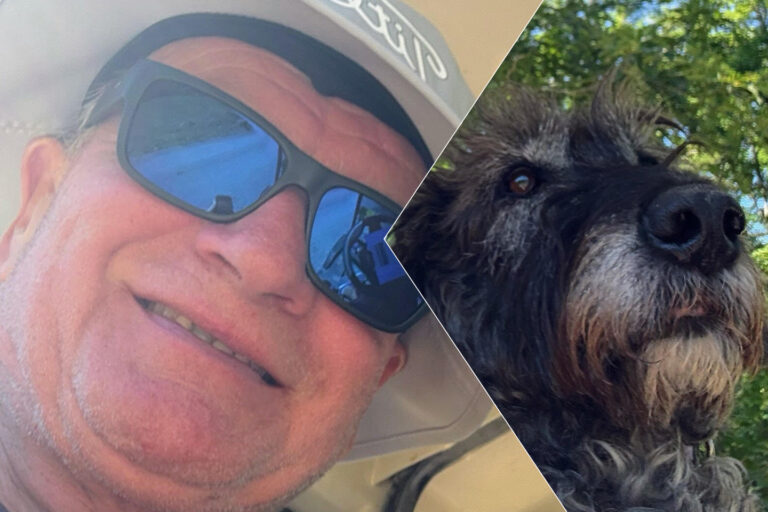
When Jim Butler met his service dog Sophie, his world opened up again.
With service dogs able to provide support to those struggling with a variety of challenges, such as narcolepsy, anxiety. Butler, a retired veteran and advocate for service dogs across Ontario, spoke to The Journal about his experiences with his service dog, Sophie. Sophie’s a poodle and Irish wolfhound mix and has been by Butler’s side since she was a puppy in late 2015.
Before his doctor recommended a service animal for Butler’s condition, the use of service dogs had “never crossed his mind,” he said. After he was diagnosed with Post-Traumatic Stress Syndrome (PTSS), Butler recalls not being able to overcome his anxiety, explaining couldn’t leave his house to even go to the corner store.
“When you suffer from PTSS, you feel like everyone looks at you like you’re broken; but there are no physical signs,” Butler said in an interview with The Journal.
The options at the time were to get a dog and train them himself, buy a service dog already trained from the United States for $30,000 USD, or wait two years for a trained dog from elsewhere in Canada.
Butler wanted a service dog that would fit his needs and didn’t want to wait two years, ultimately deciding to get Sophie and train her himself. The process can take anywhere from 1-3 years, and had multiple checkpoints that Butler and Sophie worked through (involving behavioural tests), and there was always a worry that she wouldn’t qualify as a certified service dog at the end of the training; but she did.
“Sophie changed my life. She gave me a sense of responsibility and was very instrumental in saving my life and my marriage. As a result of getting Sophie, I’m a better person today than I was before I had PTSS.”
One of Butler’s symptoms is recurring nightmares every night. Sophie’s specifically trained to wake him up right as they begin, to help alleviate the anxiety and sleep loss that used to come from this. She can recognize when the nightmare starts and wake Butler up almost immediately.
According to Butler, while Sophie has changed his life for the better, there are still fundamental issues with the service dog industry that he has experienced. Because the service animal industry lacks federal or provincial regulation, members of the public can purchase service animal vests online and claim their pet is a certified service animal.
“In some cases, businesses would err on the side of caution, allowing dogs that aren’t fully licensed or trained, since it looks bad on them if they turn them away”.
He explains that asking someone to prove their animal is certified, can blur the line between harassment and verification of information, which makes businesses hesitant to allow/refuse entry. While Butler’s permitted to take Sophie almost everywhere, except for sterile environments and food preparation areas, they still run into issues.
“Some restaurants and hotels aren’t familiar with the regulations. [this comes from] mostly ignorance of the law, which prevents people from accessing their service dogs”.
Since Butler has had Sophie, he has been speaking at different events such as Queen’s 4 PAWS; and is a big supporter of the service animal industry.
“I never miss an opportunity to talk about service dogs. She gave me confidence to go out into the world again.”
Tags
All final editorial decisions are made by the Editor(s) in Chief and/or the Managing Editor. Authors should not be contacted, targeted, or harassed under any circumstances. If you have any grievances with this article, please direct your comments to eic@queensjournal.ca.