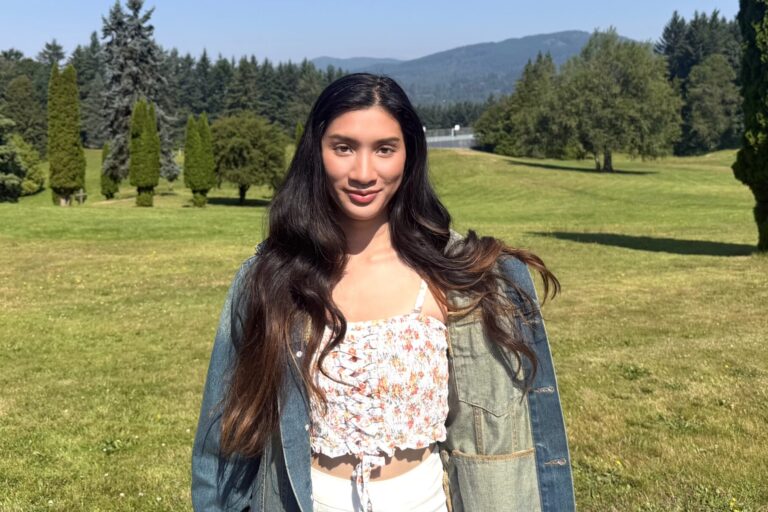
Travelling nearly 4,830 km across the country to Kingston was more than an out-of-province adventure that awarded me with a degree. It was a life-changing portal that transformed my understanding of belonging and myself.
Growing up, I often felt wired differently. I was naturally intense, passionate, and creatively inclined — traits that stuck out and isolated me when social dynamics got more complex during high school.
At Queen’s, I learned I was neurodivergent, and experienced the world differently — in almost high definition. I am highly attuned to aesthetics and sensory details: bright lights, textures, the emptiness or fullness of a space. My environment could profoundly impact my mood and energy. I am easily moved by music, film, visual art, and notice details and patterns others overlook.
Tenth grade marked a major rupture in my relationships at school and at home.
By the end of the year, instead of receiving the accommodations or support I needed to re-integrate into the student community, I was gradually pushed to the margins of school life. I would spend entire lunches alone in quiet corners, drift between groups without anyone asking if I was alright, and eventually be dismissed when I reached out for support again.
As a young adult, I tried to make sense of what I experienced as profound institutional failure from the school system — becoming isolated by school personnel and peers to the point where I no longer really had anyone to spend time with, and was missing out on teenage milestones reflected in movies, pop culture, and social media.
By 12th grade, I was increasingly eating alone and had become so socially disconnected that I was barely represented in group photos that seemed to document everyone else’s friendship — on social media, in the school yearbook, and in the grad dinner dance slideshow, which was largely made up of private party photos. To anyone looking back at the Class of 2019 yearbook, my absence might have been incidental. I knew otherwise. During the peak of my symptoms, my social circles had unraveled, and I was unable to re-integrate into the broader student network.
It took years, and moving out east, to see just how disconnected and depressed I had become during the years I was supposed to be making friends, going to parties, and experiencing the ordinary milestones of adolescence.
Even now, being near my high school can trigger intense somatic flashbacks. My body remembers the counsellor’s office, where private, philosophical messages I had written to peers were taken out of context, and the isolation that followed. I remember the quiet corners and bathrooms where I could disappear from the world around me.
Only later did I begin to understand why the world around me felt so overwhelming. I eventually learned that my brain did not filter sensory information the way I assumed everyone else’s did. Bright lights, packed lecture halls, loud house parties, and overlapping conversations left me overstimulated. In high school, I didn’t understand why I needed to retreat to the libraries or go home during lunch.
That followed me to Queen’s, even when I desperately wanted to participate in campus life. Gradually, through repeated exposure and finding safe people to go out with, I could now decode a social world that had once seemed to come intuitively to everyone else. I learned its rhythms and implicit rules. More importantly, I discovered that a social misstep did not have to mean losing people, compared to high school, where there was less understanding and education around me about neurodiversity.
At Queen’s, my natural traits thrived instead of being sources of social friction. My quirks and behaviours: writing long, philosophical text messages, having sudden bursts of inspiration, and approaching ideas from unconventional angles, were things that could make me memorable. For the first time, I did not feel I had to minimize myself to conform; I could fully be myself and still be accepted.
No one directly told me I was neurodivergent; it was a gradual accumulation of pieces. At Queen’s, conversations around mental health became more open, and I eventually researched the various conditions associated with neurodiversity.
The dots connected.
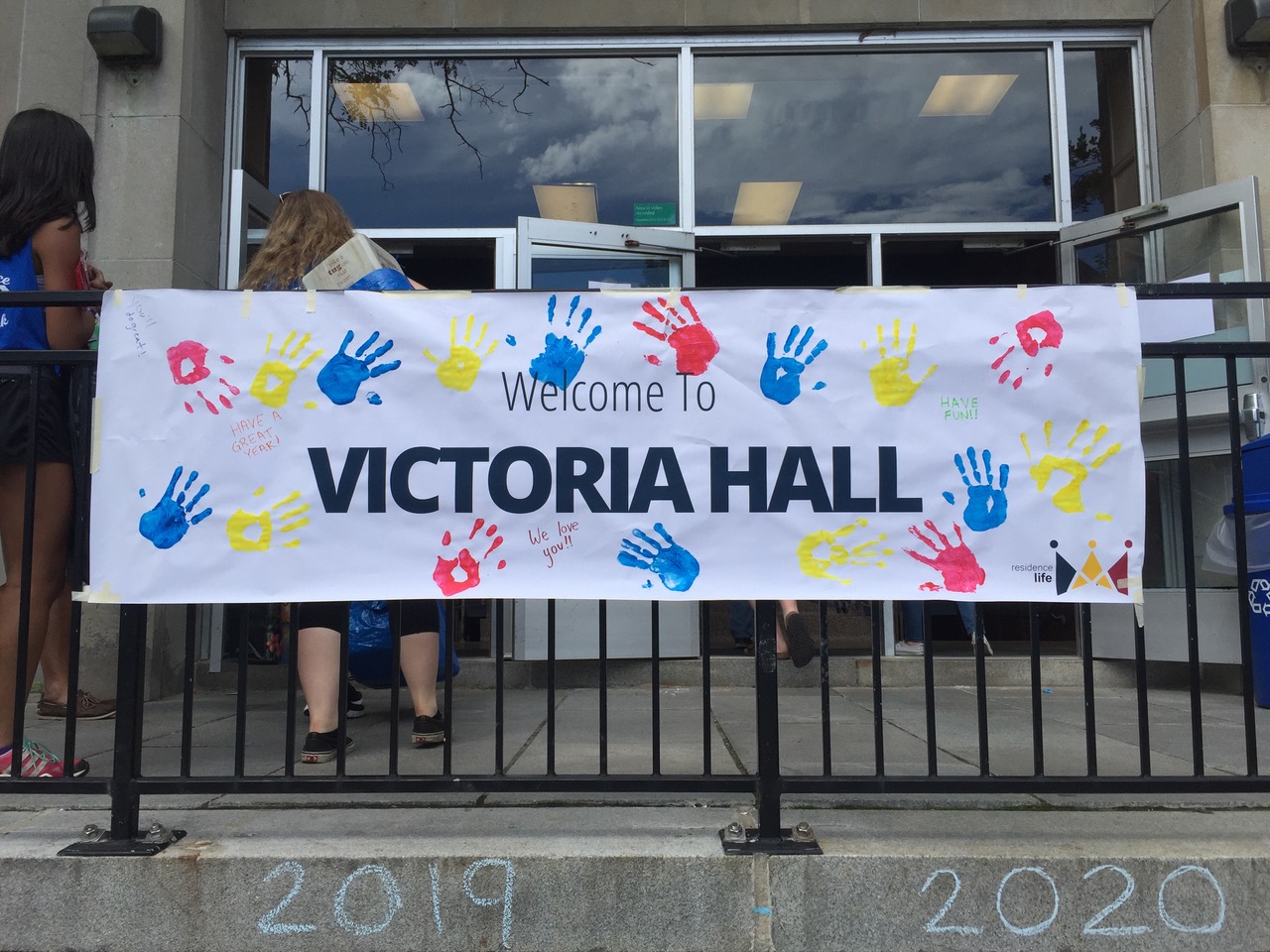
The journey of that late discovery was emotional, but brought me much relief and clarity. I think back to the move-in day of a banner outside my residence building saying “Welcome to Victoria Hall,” with chalk on the pavement that read “Your Life Starts Here.”
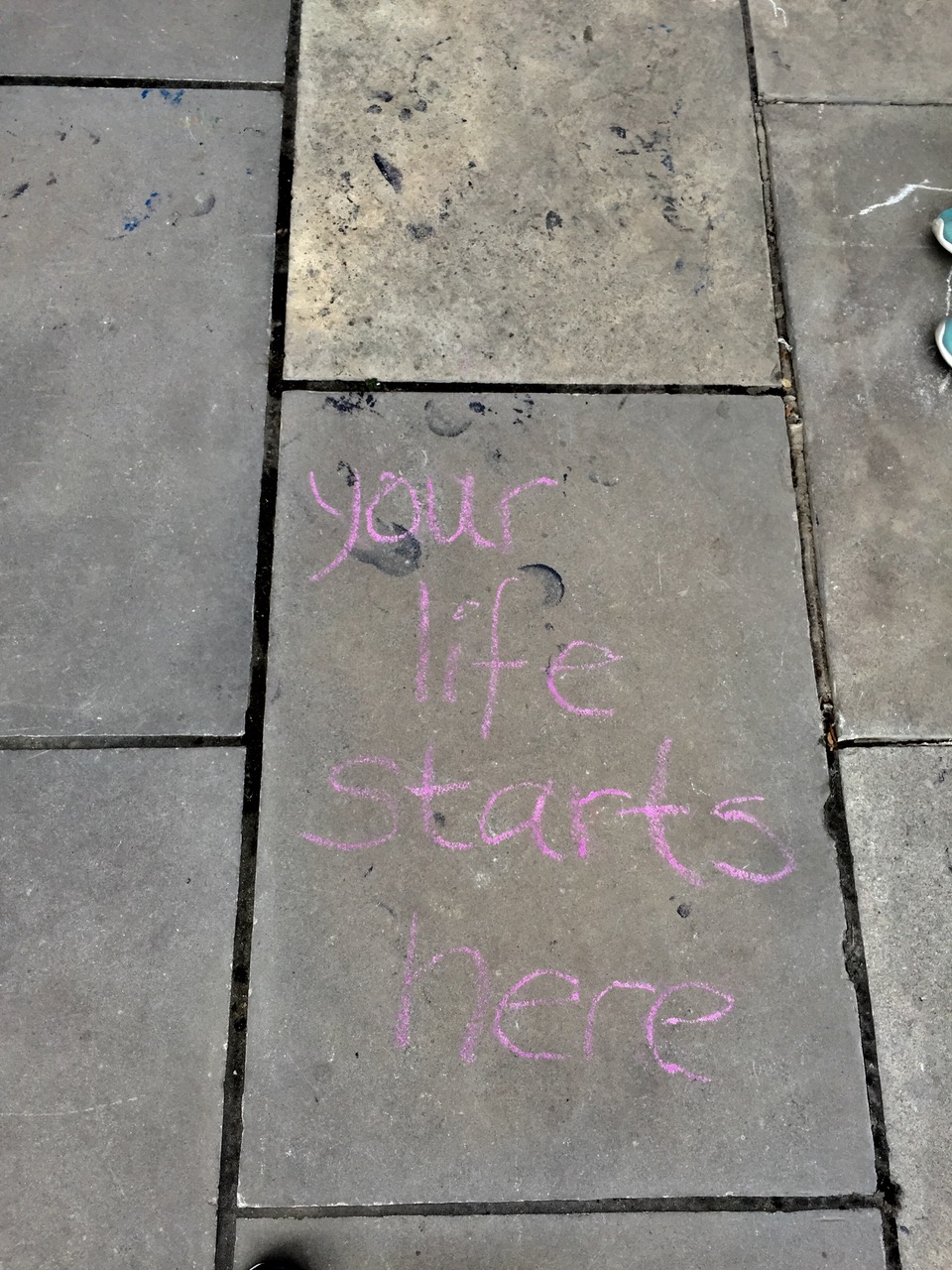
Little did I know, my life did in fact start there.
I remember my first week in September 2019.
The other first-years and I were running down Summer Hill as a mob of Orientation week leaders wrapped in white robes chased us down. We boarded a bus to a farm outside the village of Lyndhurst, wearing our painted coveralls. Then, someone in the crowd of hundreds in the darkened night sky, spoke.
A student shared that in high school she never felt she fit in, but only four days at Queen’s, she felt she belonged. Hundreds of students erupted into cheers and applause around the bonfire under the dark September sky.
Today I understand why that moment affected me so deeply. Our environment can expose how things we have been conditioned to see as flaws were actually mismatches between a person and the world around them.
Throughout high school, I did not have awareness of my neurodivergent traits. I just knew they made social situations and crowded hallways difficult. In moments of sensory overwhelm, I could withdraw, become facially flat, or visibly change colour. I became conscious of how little my outward expression reflected what was happening inside me and interpreted this mismatch as something being wrong with me.
Orientation Week gave me the chance to re-invent my social settings from a completely blank, fresh slate. As I became socially comfortable, my facial expressions over time became more spontaneous and expansive. I became increasingly expressive in ways I once struggled to.
Queen’s showed me that human levels of openness are not always the products of human nature, but can be shaped by the systems that govern them. The tight-knit student bubble showed me what it felt like to live in a world less constrained by grade, age,
and proximity.
Every act of inclusion rewrote something in me — an invitation for a meal, being asked what my plans were for the weekend, and if I wanted to tag along to Stages or a movie night.
Love does not have to come through grand gestures. Sometimes it simply looks like someone saving you a seat, remembering what you said weeks ago, or making you feel seen in a crowd at a dance party.
People often talk about “glow-ups” — new clothes, sense of style, a new confidence. My change went beyond those things. After 2019, what strikes me the most is how much more naturally I laugh now.
Some traces remain. I still struggle to access emotions outwardly, with lingering flatness in my facial expressions and vocal tone. For years, looking downwards and speaking without much tonal variation were byproducts of the isolation I endured every day.
With time and distance, I activated my emotional expressiveness again. Now, I remind myself that any flatness when I talk is an aftereffect of what I lived through — not who I am.
I did not only “glow-up” though. I became visible to others, and to myself. I regained access to laughter, emotional expression, body confidence, trust, intimacy, and a sense of being fully present. I felt more at home in my body. Physically, I felt warmer too, as if parts of me that had been frozen for years were thawing.
I wondered how I, who entered university carrying heavy neurodevelopmental trauma and a loss of hometown roots, could ever have continuity again. My lived experiences taught me an important distinction though: lost continuity does not mean you cannot create future continuity.
I cannot turn back time and steer myself in a different direction, or re-create the relationships I didn’t have. However, the people who met me in 2019 and afterwards can still have 10, 20, 40 years of shared history with me. Newer roots scattered across the globe are not any less real.
Today, my past and present no longer feel like separate lives. My past is the catalyst towards my motivation to seek out those who feel marginalized or as though they are living life on the outside, standing on the sidelines while the rest of the world moves forward without them.
I think back to that September night at White’s Farm exactly seven years ago now, when an incoming student told a crowd of strangers how after only four days, Queen’s felt like family.
Almost a decade later, I understand why the crowd listened so intently.
We were all searching for the same thing; a place in this next chapter where we could belong.
Sometimes, all it takes is one place, one community, to turn your life around and show you that you were never meant to face the world alone.
I found mine.
Queen’s gave me a place where I finally found the words for what I experienced and a community with whom I could begin writing what came next.
The foundations of my adolescence had been fractured, but my story did not end there.
It continued.
Tags
Belonging, Neurodivergent, orientation 2019
All final editorial decisions are made by the Editor(s) in Chief and/or the Managing Editor. Authors should not be contacted, targeted, or harassed under any circumstances. If you have any grievances with this article, please direct your comments to eic@queensjournal.ca.