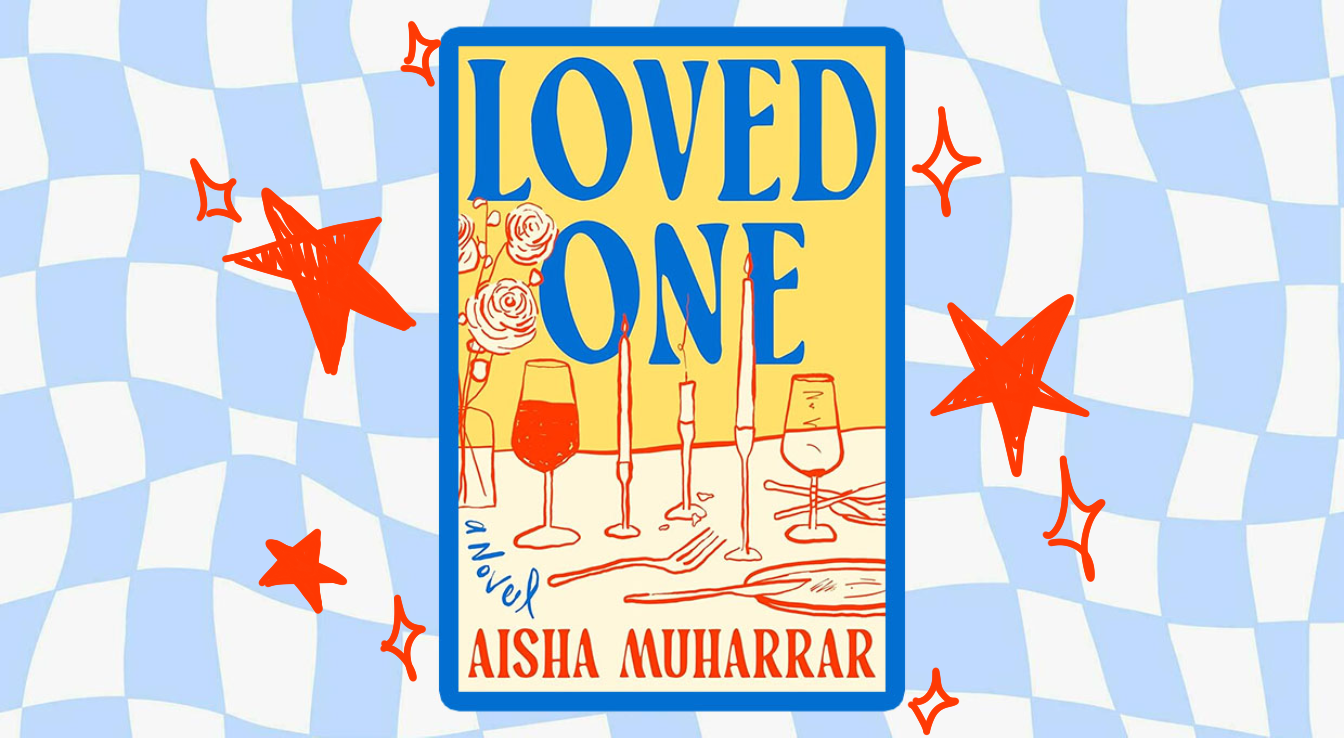
Grief, in Aisha Muharrar’debut novel Loved One, isn’t an ending; it’s an act of reconstruction.
The story follows 39-year-old Julia, who leaves Los Angeles to trace the remnants of Gabe, her first love, best friend, and now-dead indie musician, across Europe. Her journey across Europe, meant to recover the personal items Gabe left behind—a Mets cap, a guitar that once belonged to his mother, and a medical bracelet Julia had made for him—quickly becomes something larger: a confrontation with the limits of memory itself.
What distinguishes Loved One from other novels about loss is its emotional restraint. “There were memoirs about grief, but I wanted to write something about grief that, if you were going through a loss, you would read it and not feel further depressed, or it wouldn’t make you feel worse,” Muharrar explained in an interview with Vogue.
That intention, to explore grief without surrendering to sorrow, shapes every page. Julia’s journey feels less like mourning and more like caretaking; she isn’t clinging to Gabe’s memory so much as tending to what remains of him—for herself, for his mother, and for the women who loved him differently.
Among those women is Elizabeth, Gabe’s most recent partner, whose pregnancy complicates Julia’s sense of who Gabe was and what their connection meant. Their shared loss becomes a quiet contest of perspective, two versions of the same man colliding in the aftermath. Through them, Muharrar studies how love and grief turn us into unreliable narrators—each trying to preserve the story that hurts least.
The novel feels unmistakably modern. Loved One speaks to a cultural moment obsessed with documenting, archiving, and curating identity. The novel’s fragmented structure mirrors how we now assemble people through traces: playlists, texts, photos, shared posts, half-remembered conversations. In the same way that online mourning transforms the dead into a composite of everyone’s memories, Julia rebuilds Gabe from pieces others hold, hoping that if she arranges them carefully enough, she might glimpse something whole.
Yet Muharrar never lets the story spiral into despair. Julia’s grief, though complicated by guilt and uncertainty, leads her toward connection rather than collapse. As she and Elizabeth move from rivalry to reluctant solidarity, Loved One becomes less about Gabe’s absence than about the strange companionship that can grow in its shadow.
At its heart, the novel insists that love’s certainty doesn’t depend on definition. What we feel most deeply can’t always be named, and that ambiguity is its own form of truth. Muharrar’s quiet brilliance lies in how she transforms uncertainty into intimacy—a reminder that, in both love and loss, understanding someone completely was never the goal.
Loved One is for readers drawn to stories that blur the boundaries between affection and memory, and for anyone who’s ever realized that the people we lose never really vanish; they just return to us in fragments, refracted through everyone who loved them.
Tags
Aisa Muharrar, Book review, grief, Literature, love, Loved One, novel
All final editorial decisions are made by the Editor(s) in Chief and/or the Managing Editor. Authors should not be contacted, targeted, or harassed under any circumstances. If you have any grievances with this article, please direct your comments to eic@queensjournal.ca.