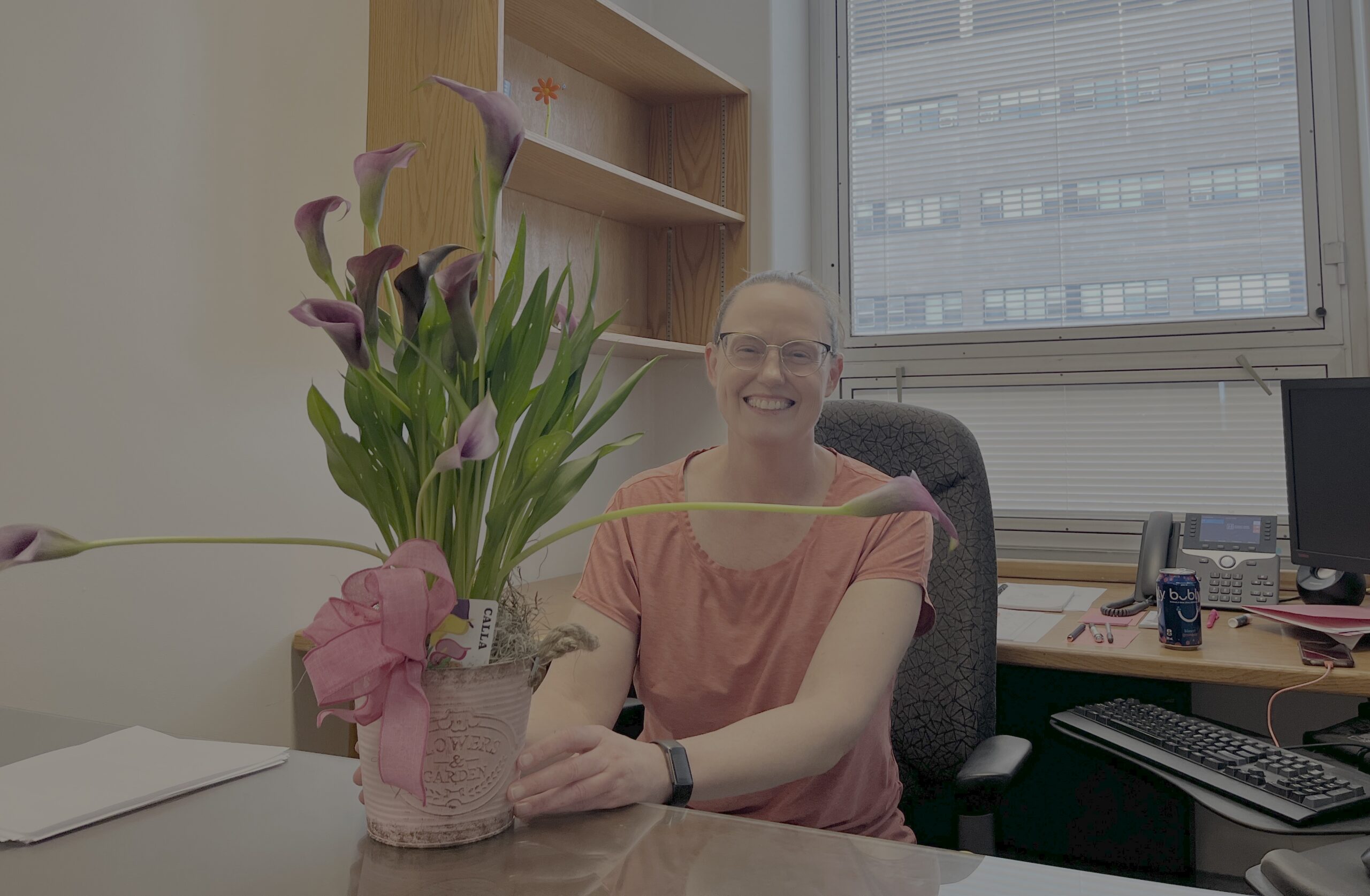
Dr. Ashley Waddington, MPA ’13, a Queen’s OB/GYN who helped open Kingston’s first Transgender Health Clinic, is retiring this month.
Waddington began offering gender-affirming care in 2017, operating a monthly transgender health clinic and connecting other physicians with resources to provide gender-affirming care within their own practices.
The clinic provided hormone-replacement therapy (HRT), approvals for surgery, and post-operative care. While the clinic will close after nine years in June, other services she helped establish remain.
Waddington, who has played a key role in efforts to expand access to gender-affirming care in Kingston, said the clinic’s closure will have a “relatively limited” impact on the community, in an interview with The Journal.
“I never set out to be a gender affirming care expert. It was more so that I started to see a need in my practice, [providing] contraceptive care,” Waddington said.
Gradually, she began seeing more patients referred to her for menstrual suppression related to gender dysphoria.
Around the same time, a colleague who had quietly been providing gender-affirming care to a small number of patients within his reproductive endocrinology practice was retiring and looking for someone to take over their care.
Waddington completed training through Rainbow Health Ontario, an organization that supports LGBTQIA+ health equity through health-care provider training, educational resources, research, and policy work.
Waddington opened Kingston’s first Transgender Health Clinic in 2017 alongside two colleagues.
A lot of the work was already familiar to Waddington due to her work as a gynecologist. “I prescribe tons of reproductive hormones for a variety of reasons, so for me it was just a different indication to prescribe hormones for,” she said.
The clinic ran once a month and quickly received an overwhelming number of referrals, with a year-long waitlist forming within a few months.
Waddington was part of a group called Trans Health Connectors, an informal group of local physicians and social workers that began discussing the possibility of a transgender health clinic at Kingston Community Health Centres (KCHC).
One of the group’s goals was to “normalize [gender-affirming care] being part of primary care” which made KCHC a “logical place” for the clinic, Waddington said.
“The more that people were coming to me as a specialist in the hospital, the more that was kind of making it seem like this care is too extra, […] like it’s not something that a family doctor or a nurse practitioner could do,” she explained.
The KCHC transgender health clinic opened in 2019 with a full-time nurse practitioner, social worker, and administrative staff member.
“As the community health centre started doing more of the hormone prescribing, my practice started to have a little bit more focus in surgical care,” Waddington said.
Patients primarily came to her for help navigating the process of accessing gender-affirming surgery and for post-operative care. However, patients still had to travel to Ottawa or Toronto for surgery.
“Throughout all of this time, in an effort to normalize this care and make it seem less daunting, a lot of our efforts were also going towards education, so I’ve done a lot of teaching,” Waddington added.
She taught residents in obstetrics and gynecology and family medicine, as well as primary care providers, about providing gender-affirming care, often referring them to Rainbow Health Ontario’s clinical guidelines and resources.
Her work educating physicians led to her appointment as assistant dean of professional development in the Queen’s Faculty of Health Sciences in 2024.
Despite these efforts, gaps in access to gender-affirming care remain.
Waddington said the biggest barriers for her patients include the primary care crisis and a shortage of primary care providers offering gender-affirming care, which can force patients to seek referrals to specialists.
In her experience, many providers’ reluctance to offer gender-affirming care comes down to a lack of training rather than transphobia.
She also pointed to long surgical wait times, the need to travel for care, and lack of OHIP coverage for medications and procedures such as chest contouring, which can be needed to achieve a patient’s desired result after top surgery.
Although the clinic’s closure will reduce access, the impact will be modest, Waddington said, as she has not been taking new referrals for some time and her current patients have either been referred to colleagues or have care plans in place.
She added that Kingston’s gender-diverse community is a major force behind improvements in local care.
“A lot of the credit for any improvements we’ve made goes to the community for advocating for themselves,” Waddington said. “We’re lucky because we live in a centre where we have a very active and engaged gender-diverse population, and that kind of drives the system forward.”
Tags
doctor, Health, Healthcare, Interview, Kingston, LGBTQ+, retirement
All final editorial decisions are made by the Editor(s) in Chief and/or the Managing Editor. Authors should not be contacted, targeted, or harassed under any circumstances. If you have any grievances with this article, please direct your comments to eic@queensjournal.ca.
Saskia Vandenberg
Good overview — thanks for covering this. Sad to hear the clinic closed after the physician retired. Do you know if there are any plans to reopen the service or if other local providers will expand trans health care in Kingston? Would be helpful to know where people can turn now.