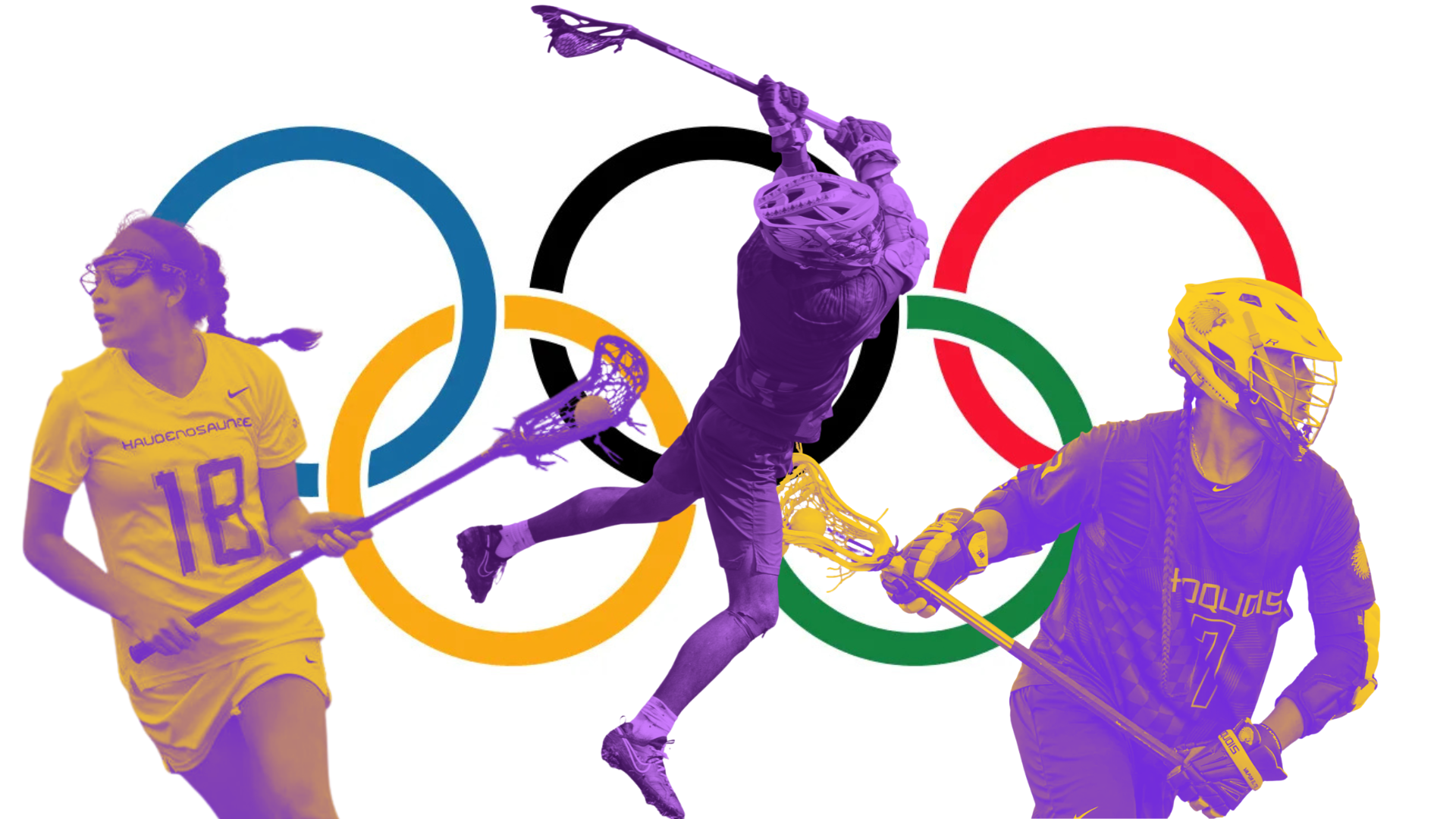
The landscape of lacrosse is changing, and the Olympics should take notice.
Lacrosse is one of five new sports that are set to appear at the 2028 Olympic Games, which are being held in Los Angeles, California. Specifically, the games are set to introduce sixes lacrosse for men’s and women’s teams, an adapted version of field and box lacrosse. As global lacrosse powerhouses from Canada and the United States continue to finalize their rosters and prepare for the Olympic Games, one notable organization’s still appealing to the International Olympic Committee (IOC) for the ability to compete under their own flag.
The Haudenosaunee Nationals officially represent the Six Nations Haudenosaunee Confederacy in women’s, men’s, and U20 competitions internationally. Currently, the organization’s looking to secure a team at the Olympic Games where they’ll compete representing their own flag.
Despite proving themselves time and time again as powerful competitors, consistently meddling in international competition, the Haudenosaunee Nationals are struggling to be recognized. In December of 2025, their men’s and women’s sixes teams swept gold at the Pan-American Lacrosse Association (PALA) cup in Puerto Rico. Even so, as lacrosse prepares for its most global moment at the 2028 Olympics, the absence of one of the sport’s top competitors and creators would be impossible to justify.
The Haudenosaunee Nationals’ participation in the 2028 Olympic Games would carry international significance, recognizing both lacrosse’s cultural origins within the Haudenosaunee Confederacy and the Confederacy’s enduring sovereignty. Composed of six Indigenous nations governed by their own democratic constitution, the Haudenosaunee remain a sovereign people with treaties with the United States, Great Britain, and France. However, their lack of recognition as a nation-state by the United Nations complicates Olympic participation under the Haudenosaunee flag.
To compete at the 2028 Los Angeles Olympics, the Haudenosaunee Nationals must be represented by a National Olympic Committee recognized by the International Olympic Committee. In June 2025, the IOC ruled that eligibility decisions would instead fall to the Canadian and U.S. Olympic committees, allowing Haudenosaunee players to try out for their national teams. In response, Haudenosaunee Nationals players Bean Minerd and Larson Sundown said they wouldn’t switch, citing the broader implications this move would have for the Confederacy’s ongoing struggle for sovereignty.
From a competitive standpoint, the IOC’s decision would disrupt roster development across World Lacrosse, as teams—including Canada and the United States’ men’s and women’s sixes programs—are using international tournaments to finalize lineups and refine playing styles. Because eligible Haudenosaunee National players continue to compete with their own national team, they would enter Olympic selection without the sustained, integrated playing time their Canadian and American counterparts have had, reducing their chances of making a 12-player roster.
As of Feb. 5, the Haudenosaunee Nationals’ ability to compete under its own flag at the 2028 Los Angeles Olympic Games remains uncertain. Changes in federal leadership in 2025, alongside the appointment of a new IOC president, mean the team must renew its Olympic appeal under a new political and administrative landscape.
No matter what happens, the decision is sure to impact the future of professional lacrosse.
Tags
2028 Olympic Games, Lacrosse, Pan-American Lacrosse Association, Six Nations Haudenosaunee Confederacy, The Haudenosaunee Nationals
All final editorial decisions are made by the Editor(s) in Chief and/or the Managing Editor. Authors should not be contacted, targeted, or harassed under any circumstances. If you have any grievances with this article, please direct your comments to eic@queensjournal.ca.