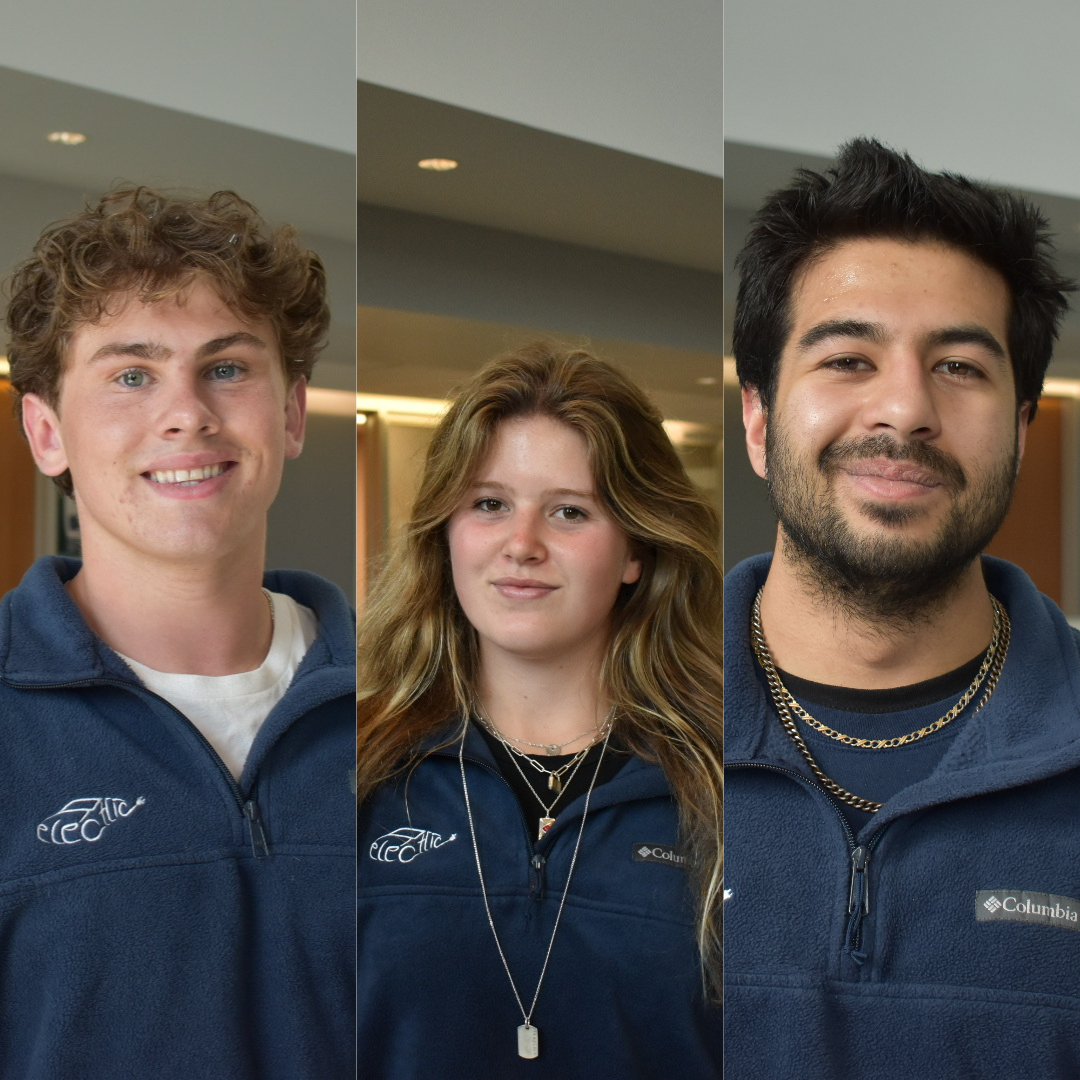
Queen’s Relectric Team is building on what they learned from the super-kart and Jeep TJ conversion to create a new EV race-kart built to compete.
Relectric, a student-run EngSoc design team founded in 2021, aims to promote sustainable EV conversions. They launched with the 1997 Jeep TJ conversion project, where the team guts, restores, and retrofits a gas-powered Jeep with an all-electric drivetrain.
This year, the team is changing their project by building a smaller-scale race kart that will compete in the Purdue evGrandPrix—a collegiate electric kart race held annually in April on Purdue campus’s Grand Prix track, located in Indiana.
To qualify, the team will need to build an electric race kart capable of withstanding 51 laps of the track, which is just over 400 meters long, alongside a formal design report, technical and performance evaluations, and an energy efficiency score.
This effort builds directly on their work from last year with an electric super kart—an in-house electric go-kart prototype. According to one of the Co-Captains of Relectric Victoria Knight, Sci ’27, the new race-kart builds directly on data collection and lessons from last year’s super cart.
“The one we did last year was a fantastic proof of concept to put us towards this competition. The specifications for what is needed for the race are slightly different, so we will be creating a new system, but we’ll be reusing many parts,” Knight said in an interview with The Journal.
This year’s design includes contributions from Relectric’s four technical teams: mechanical, electrical, interior, and assembly, as well as three business teams focused on finance, marketing, and logistics. Knight highlighted that the team is also responsible for compiling a three thousand to four thousand word design report, which accounts for 30 per cent of the team’s competition score.
The team’s decision to pivot this year was largely influenced by the success and lessons of the super kart project, which inspired them to enter the Purdue competition. As well, Khaled Rajan Sci ’27, another Relectric co-captain, pointed to practicality reasons.
“Working on such a large project takes not only a lot of time, but it’s also difficult with the transition of captains and executives every single year,” Rajan said in an interview with The Journal.
“Now that we’ve made many mistakes on previous projects, we’ve been taking note of everything that worked, that didn’t work, and then applied that into this year and into the new kart.”
With the new race kart, the team is aiming to complete all testing, documentation, and fabrication within eight months. Despite the shift to karting, third Co-captain Adam King, Sci ’27, added that the team
remains committed to electric vehicle conversions and hopes to return to full-size projects in the future.
“Once the next space allocation opens up with EngSoc, we’re hoping to apply for a larger space to store a new car. Then in the future, we’ll hopefully start another project,” King said in an interview with The Journal.
For now, though, the goal is to finish the kart, compete in the spring, and lay the groundwork for future student innovationin electric mobility.
Tags
design team, Jeep conversion, Kart, Relectric
All final editorial decisions are made by the Editor(s) in Chief and/or the Managing Editor. Authors should not be contacted, targeted, or harassed under any circumstances. If you have any grievances with this article, please direct your comments to eic@queensjournal.ca.