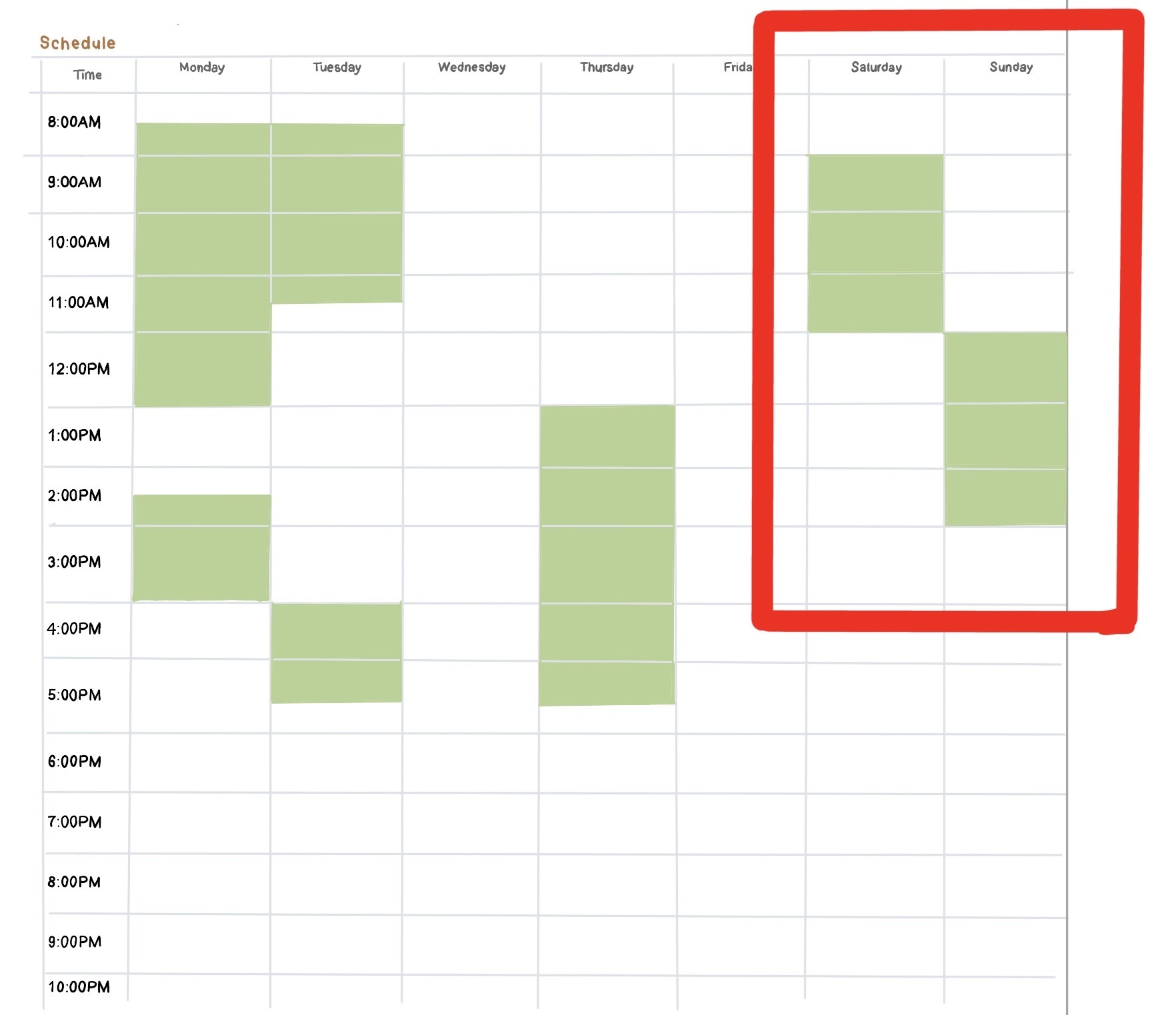
Extending class hours to evenings and weekends for larger classes risks impacting accessibility and proper balance necessary for academic success.
In late February, Queen’s sent out a survey to teaching faculty, assistants, and fellows, considering expanding class times to evenings and weekends. While it might make sense to consider alternative options due to high enrollment and pressure on classroom capacity, there are important accessibility concerns to take into account. Students shouldn’t have to choose between their religion, visiting home, working a part-time job, and taking a course.
University students already experience abnormally high rates of depression, mood disorders, and anxiety. Without a break between weeks, or the chance to unwind after class in the evenings, Queen’s risks exacerbating these concerns.
While it’s important for some students to spend time at home, for faculty members with children, it’s equally critical. Classes on evenings and weekends add the challenge of finding childcare and ultimately losing out on quality time spent with family.
Many students and faculty also observe religious traditions that fall on the weekend. Those who participate in Shabbat would be unable to attend class on Saturday, while Christian students and faculty may elect not to attend class on Sundays. It’s unfair to see these students excluded from certain classes because of religious commitments. In a statement to The Journal, the University explained how the changes would be primarily for large, centrally located classes. However, these classes are often prerequisites, effectively limiting students who have other obligations.
It would make more sense for non-prerequisite classes to take place on weekends. However, larger required classes shouldn’t be considered, so all students can take the classes they need for their degree.
University is so much more than just class time, as many students are engaged in extracurriculars or part-time jobs, and without common evenings and weekends, coordinating work and events will become challenging. However, it might have a reverse effect on students who work during the week.
Considering expanding classes to the evenings and weekends needs more than just a survey; it needs rigorous review to combat low engagement.
While some students, faculty and teaching fellows might be okay with smaller specialized electives on the weekend, large and required classes shouldn’t take place outside of usual teaching hours. There’s nothing wrong with gathering feedback on creative solutions; however, expanding classes to evenings and weekends might not be the most effective way to combat overcrowded classrooms on weekdays.
—Journal Editorial Board
Tags
All final editorial decisions are made by the Editor(s) in Chief and/or the Managing Editor. Authors should not be contacted, targeted, or harassed under any circumstances. If you have any grievances with this article, please direct your comments to eic@queensjournal.ca.