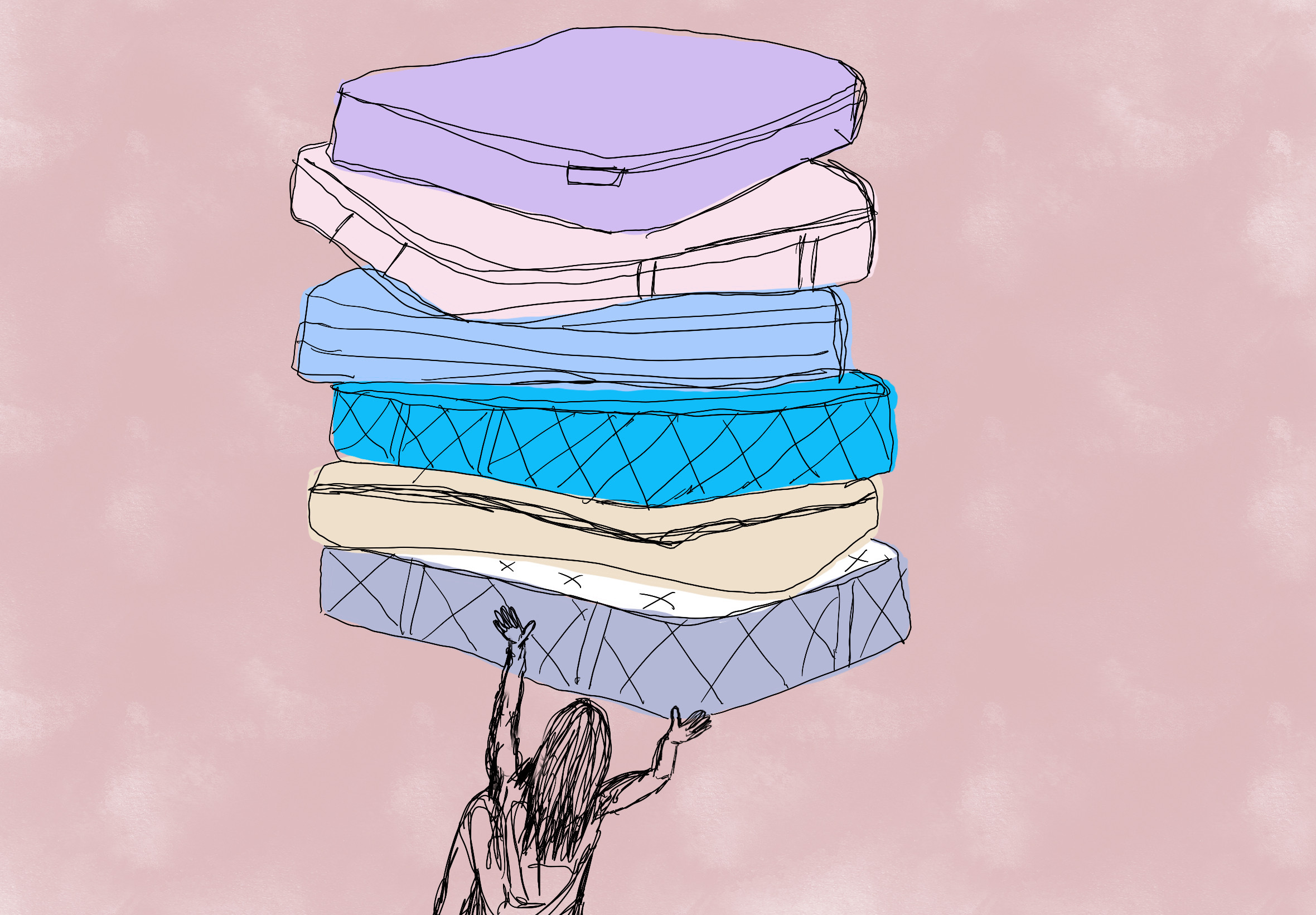
Some days, I will sleep for 48 hours straight.
Since the early bird gets the worm, sleeping in is culturally seen as lazy or unproductive. So, when I can’t wake up, I’m ashamed of myself for not seizing the day.
When I was around 17 years old, I was diagnosed with narcolepsy, a chronic neurological disorder that causes excessive daytime fatigue and sudden sleep attacks. Having a name for my constant exhaustion was an immense relief. I wasn’t simply lazy or depressed; I had a legitimate reason for why I slept so much.
But since I had gone most of my life undiagnosed, I told myself I wasn’t going to use this as an excuse. I didn’t want to be seen as that girl with a constant crutch.
For the rest of high school, I was able to function normally with the help of some medicine and support. The rigid routine of school from 8 a.m. to 3 p.m., combined with my mother forcing me out of bed each morning, made sure I was always present. Even if I fell asleep in most of my classes each day, I was still there, sitting in a seat.
But ever since coming to University, I can’t tell where the narcolepsy ends, and I begin. There’s no one forcing me awake, no rigid schedule to keep me upright, and without this structure, I’ve found myself slipping into something I can’t always control.
This past year might’ve been the most I’ve slept in my entire life. Weeks blur together, and I find myself going days without getting out of bed. My body goes into REM sleep within a minute, so falling asleep is immediate and unavoidable.
It’s like I’m balancing on the edge of a cliff, and if I slip, I must climb all the way back up again. My mind fights constantly to keep me asleep, and I wake up sweating from trying to get out of my dreams, disoriented, not sure how much time has passed.
The physical exhaustion is one thing; the guilt is another.
When I have these off weeks, the shame I feel is overwhelming. I don’t want to tell my friends that I can’t make our plans because I’ve been asleep the whole day and am still exhausted. My self-care falls out the window. It’s a never-ending cycle—I’m not eating because I’m asleep, but then I’m tired because I haven’t eaten, and on and on.
It’s exhausting—literally. Not only do I feel like I’m missing half my life being asleep, but I also feel like I’m failing at being a student and at life in general.
It’s a weird sensation to have guilt for something I know I can’t control. I know I’m different than the average person, but I only have my peers to compare to. Obviously, my roommates aren’t sleeping for days at a time, so I tend to isolate myself. I don’t want anyone to know I haven’t been awake the whole day, so I stay in my room.
My biggest fear was always annoying others with constantly talking about my narcolepsy or talking about how much I had missed because of my narcolepsy. Yet, that’s exactly why I was missing so much. I found it so hard to separate my genuine faults from the disorder.
Up until recently, I hadn’t sought out much academic consideration; I only had extra time and no morning exams. I didn’t know I could get further accommodations, and to be honest, I never thought about it.
The narcolepsy felt like such a big part of me that I didn’t blame it for causing issues; I just blamed myself. Sleeping didn’t feel like a valid reason to miss class or study time.
However, when I reached my midterms this year, I found myself at my breaking point. I had fallen asleep in each midterm I had taken thus far. One morning, I woke up an hour before a midterm I hadn’t studied for, not because I procrastinated, but because I had slept the entire day before. In a panic, I reached out for academic consideration, and that’s where I found a new perspective on my disorder.
I met with my disability counsellor for the first time since starting university, and her insight helped me rationalize why it’s okay to accept help. She didn’t question me on why I couldn’t get up or ask for any reasoning; she just understood I needed it.
She told me the University is set up systematically for the average “normal” student, who doesn’t have to navigate a disability. Accommodations aren’t advantages; they’re what levels the playing field.
For the first time, I stopped seeing my narcolepsy as a personal failure.
I am still figuring it out—I haven’t found a perfect routine or solution yet. Some days are still lost to sleep, but I’ve started to be a little more honest with myself and others. Instead of isolation I try to rely on my friends to help me get up, just like my mom used to.
It’s hard to learn that you don’t have to earn the right to support through struggle. That needing support doesn’t make me weak. The consistent fear that others will assume I’m just making excuses has shifted.
I still try to go through my everyday life without excessive help, but the reality is I need it from time to time, and I’m learning to be okay with that.
Tags
Invisible disability, Narcolepsy, Postscript, Student life
All final editorial decisions are made by the Editor(s) in Chief and/or the Managing Editor. Authors should not be contacted, targeted, or harassed under any circumstances. If you have any grievances with this article, please direct your comments to eic@queensjournal.ca.