No student should have to choose between their privacy and their identity.
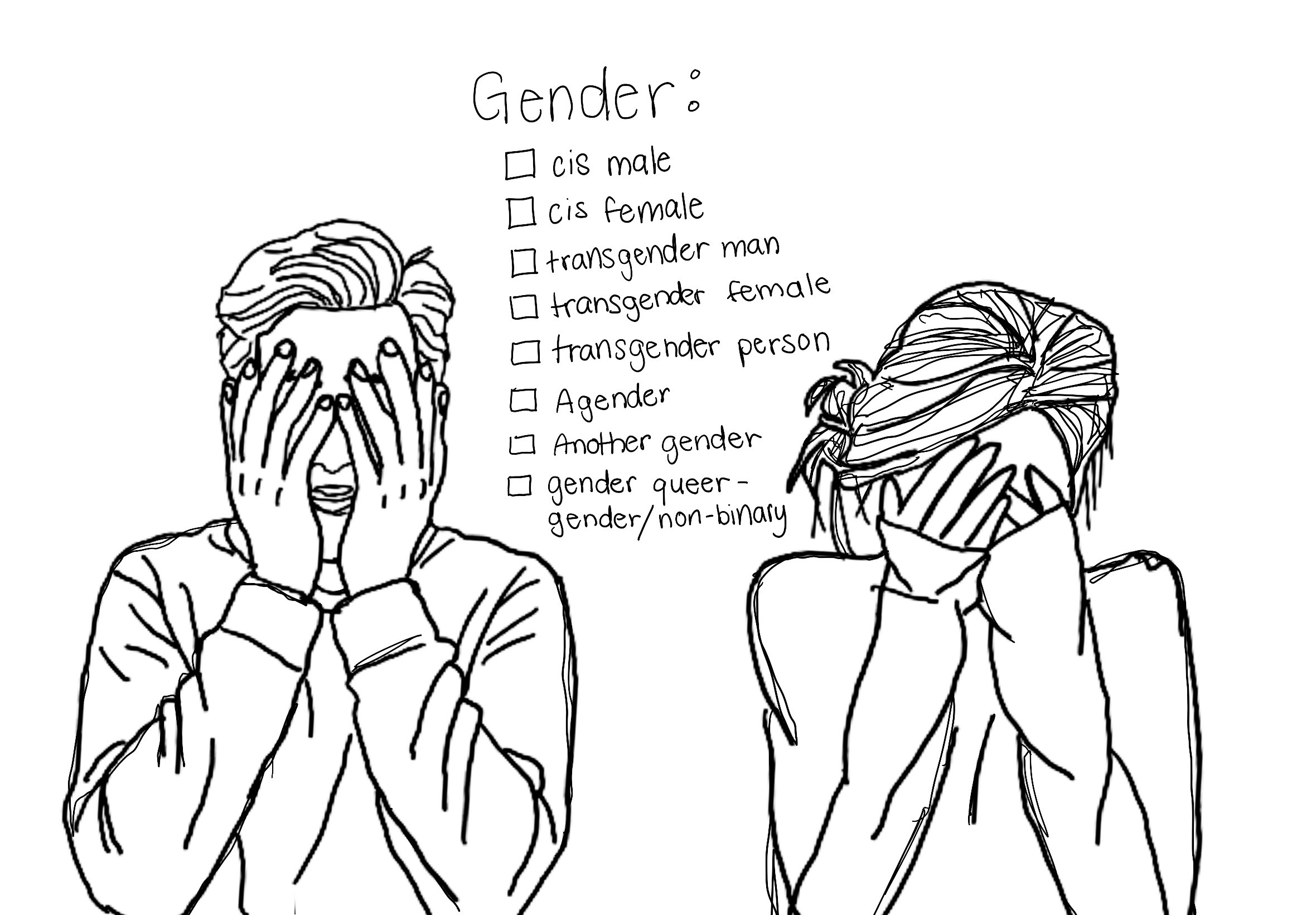
A Queen’s student recently raised concerns that her gender was changed to ‘other’ on SOLUS after applying to law school through Ontario Universities’ Application Centre (OUAC). Because the only gender options are Cisgender female, Cisgender male, Transgender man, Transgender woman, Transgender person, gender queer/gender non-binary, agender, another gender, and prefer not to say; applicants are essentially asked to disclose their transgender identities when applying. Forcing a choice between outing themselves and not being recorded as their true identity is unfair for transgender students and applicants.
When concerns were raised, Queen’s responded immediately, whereas OUAC told the student that any changes would have to go through a voting and committee process. This inattention is disappointing, particularly when pressing concerns regarding the expression of gender identity are raised. OUAC also declined The Journal’s request for comment.
The failure to address student needs is especially frustrating when the solution appears to be simple. The student suggested having separate fields for disclosing gender and for identifying themselves as transgender, with the option of preferring not to disclose. This way, one can select the gender they identify with, while also getting to decide how much information they disclose. The separate field would allow university systems to collect demographic data without forcing transgender applicants into a difficult decision about how they want to identify themselves.
If OUAC is truly committed to principles of equity, diversity, and inclusion, it must collect applicant information in a way that reflects those values by giving applicants the option to select their gender identity, then disclose if they’re transgender.
Surely a simple IT work request could have solved the problem. Instead, OUAC claimed to the student who raised concerns had to initiate an official committee process. This fails to centre transgender voices and effectively eliminates transgender students from discussions about how their demographic information is being collected and used.
Even with an official review process, OUAC should be able to fast-track pressing concerns. Having your gender changed to ‘other’ because you don’t want to disclose your transgender identity is unfair and dehumanizing.
Listening to students and implementing straightforward solutions aren’t complicated reforms, they’re minimum standards that applicants deserve.
It’s good that Queen’s was able to respond right away, entering a work order and reviewing how applicant data is received and processed. OUAC, on the other hand, has failed to address these concerns immediately and, as a result, is failing transgender applicants across Ontario.
Demographic information is important; it allows for an essential review of applicants, particularly regarding research and making equity assessments. However, data collection should be minimally invasive, and no student should be made to feel uncomfortable when filling out an application.
The lack of attention to student needs reflects a broader concern about how information is shared, processed, and reviewed. By failing to properly consider a request made by a student and instead defaulting to a committee process, the very act of applying to school no longer centers the applicant and their experience.
Applications should allow students to accurately represent themselves, not force them into a box that compromises their integrity or dignity. When students raise concerns, their experience should be considered, not devalued next to institutional bureaucracy.
—Journal Editorial Board
Tags
applications, Gender disclosure, OUAC
All final editorial decisions are made by the Editor(s) in Chief and/or the Managing Editor. Authors should not be contacted, targeted, or harassed under any circumstances. If you have any grievances with this article, please direct your comments to eic@queensjournal.ca.