This article discusses racism and homophobia, which may be distressing for some readers.
The concept of colour-blind casting becomes problematic when producers don’t stand up for cast members against racist audiences.
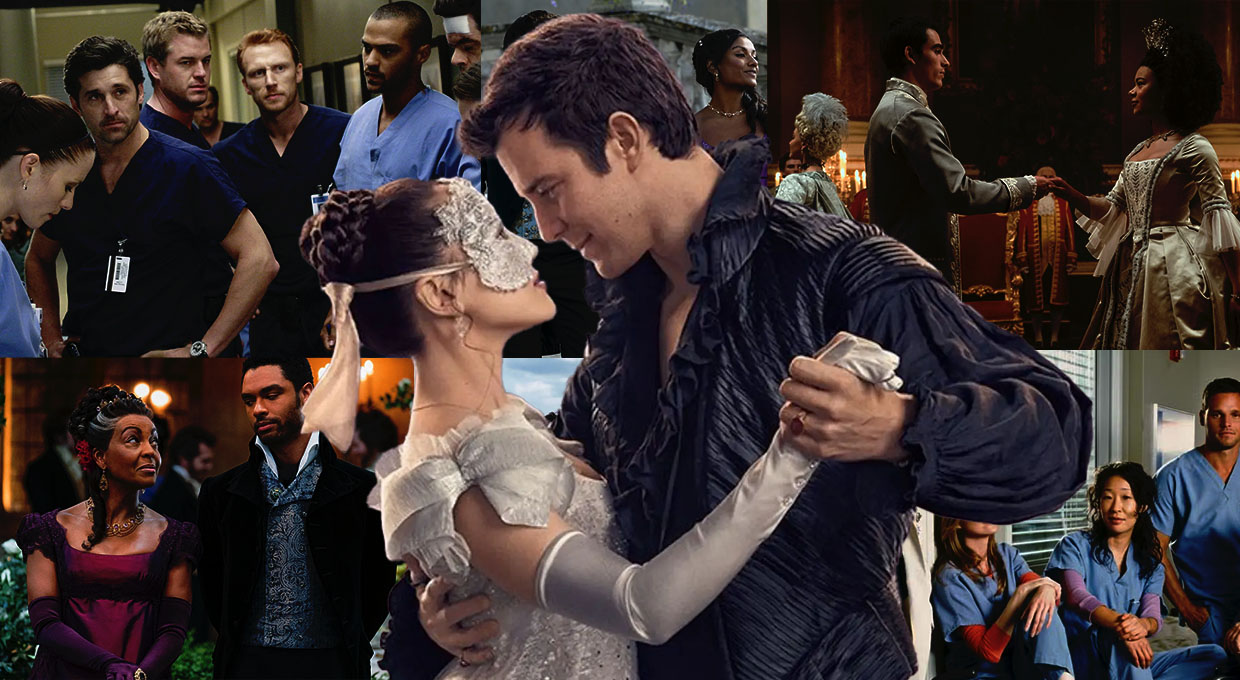
In one period drama, this anchors an ongoing problem of performative diversity. Created by Chris Van Dusen and produced by Shonda Rhimes for Netflix, Bridgerton (2020) is a period drama centred around the siblings of the Bridgerton family in regency-era England. Each season ascended to the top of Netflix’s Top 10 streamed shows upon release. The show was adapted from a series of novels by Julia Quinn, drawing in the books’ passionate fan base.
Unlike its source material, the series has challenged conventional norms of the historical-drama genre; the episodes feature string-quartet covers of popular songs—shout out Kate and Anthony dancing to a string-quartet rendition of Robyn’s “Dancing On My Own”—empowered female characters, and a cast that may be considered “unconventional” for a period drama.
Bridgerton diverges from other period dramas by being set in a fictional world where King George III’s marriage to Queen Charlotte, where the real Queen Charlotte’s African ancestry has been rumoured for decades, led to racial equality in British society during the regency era. This allows the show to employ a diverse cast of actors to reflect its diverse audience.
The first season’s explanation for Bridgerton society’s racial diversity was fairly criticized by Vox for ‘handwaving racism’, and the second season received criticism for overlooking the harsh reality of Britain’s colonization and exploitation of India, and putting vastly different cultures from India into a monolith.
While a lot of that criticism’s valid and hasn’t fully been addressed by the show’s creators, fans of the novels found themselves disappointed in the show’s diversity, some fans are unapologetically racist, upset the casting didn’t mimic the novels’ portrayals of these characters being white. The hashtag #NotMyDuke trended when Regé-Jean Page was initially cast as Simon Bassett, the fictional Duke of Hastings for being a Black man playing a character initially written as white.
However, Jean-Page’s strong performance seemed to win over most of the books’ fanbase. Many later claimed he was ‘the only reason they watched the show’ after he departed following the first season, once his character’s significance to the plot reduced.
After leaving the show, Page expressed support for the cast of Rings Of Power when they spoke out against hate received by their cast members of colour. “I can’t believe we went through an entire era where production were happy to stand by, tell us it was our own problem and refuse to stand up to racist abuse because it was coming from ‘fans’,” Jean-Page shared on an Instagram story, with fans interpreting the statement as a dig at Bridgerton’s production team.
Problems with unfair treatment of cast members of colour didn’t stop after the first season. Simone Ashley, the show’s first female lead of colour, continues to portray Kate Bridgerton on the show. Recently, her and lead actress of the fourth season Yerin Ha, have been at the centre of fan discourse about the show’s production team sidelining both characters in promotional images.
Creators finally did address criticism about casting choices when author Julia Quinn took a stand through a Facebook post on June 24, 2024 against the fandom’s criticism of the show genderbending one of the future love interests of one of the Bridgerton siblings, implying a future season focused on a queer relationship.
The character, Michaela—Michael in the books—Stirling is introduced in the third season. She’s played by Masali Badusa, a Black woman who’s received hate similar to Jean-Page, with the #NotMyMichael replacing #NotMyDuke. While Quinn’s Facebook post focused more on homophobic than racist comments, her expression of support was a step in the right direction because fans stopped scapegoating their homophobic and racist criticism behind the excuse that “the tv adaptation is going against what Quinn wanted for the characters”.
This ties into a greater issue where corporations are ready to embrace diversity to enlarge their consumer base but not stand by it when it stops working in their favour. When it comes to Bridgerton’s cast members of colour, the show’s production team only expresses care for them when they’re paired against the show’s white leads but doesn’t stand by them when they’re receiving criticism for playing those roles.
Hopefully future shows employing colour-conscious casting recognize that representation’s a responsibility and defend their actors against racist backlash.
Tags
Bridgerton, color-conscious casting, Netflix, Television
All final editorial decisions are made by the Editor(s) in Chief and/or the Managing Editor. Authors should not be contacted, targeted, or harassed under any circumstances. If you have any grievances with this article, please direct your comments to eic@queensjournal.ca.