This article discusses residential schools and intergenerational trauma, which may be distressing for some readers.
Beautiful Scars tugged at heartstrings I didn’t even know I had.
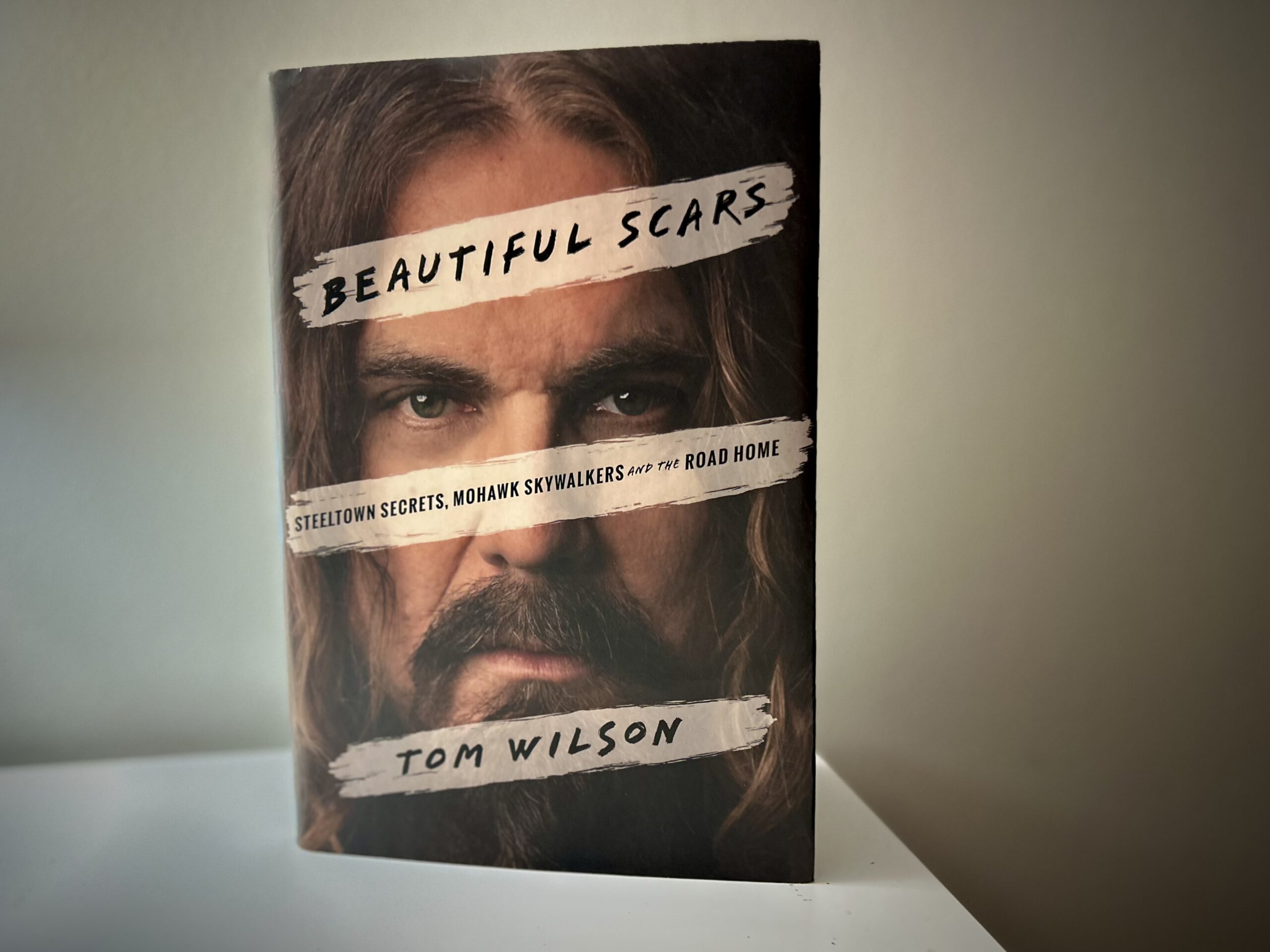
Published in 2017, Beautiful Scars: Steeltown Secrets, Mohawk Skywalkers and the Road Home is Tom Wilson’s deeply personal memoir about navigating life before, during, and after discovering his Indigenous identity. Far from my usual rotation of fiction and fantasy, the book pulled me into a reality both intimate and unsettling, forcing me to confront the long-lasting harm of Canada’s Residential School system and the ways those wounds continue to echo across generations. By 2022, Beautiful Scars had also been adapted into musical production, where Wilson blends music and storytelling to bring his journey to life in an even more visceral form.
Gifted to me by Gordon E. Smith, director of the Isabel Bader Centre for the Performing Arts, after I viewed Wilson’s installation last fall, this book was described as essential to understanding Wilson’s work, and so compelling that I would fly through it. Now, after finally sitting with it and absorbing its depth, I realize it deserves not to be rushed, but carefully read, considered, and returned to again and again.
From the opening pages, Wilson invites readers into a raw, unfiltered portrait of his upbringing in Hamilton’s East Mountain with George and Bunny Wilson, whom he memorably describes as “a blind war vet and a French-Canadian she-warrior.” He doesn’t soften the hard edges of his story. The painful details aren’t omitted for the reader’s comfort, and that honesty makes the book all the more powerful. Reading it, I was forced to recognize how gently—even blurred to a fault—Indigenous histories and realities were presented to me throughout my education, compared to the lived truth Wilson lays bare.
Yet Beautiful Scars isn’t a book that drowns in sorrow. Wilson writes with warmth, humour, and sharp self-awareness, often poking gentle fun at the people and moments that shaped him. His storytelling reveals him as a resilient, witty, and deeply human narrator: someone who refuses to let pain define him entirely, even while refusing to ignore it.
Even before Wilson uncovers the truth about his origins, there’s a lingering sense that something’s missing. That quiet tension follows the reader like a shadow. When Wilson finally learns, he was born to a young Mohawk woman from the Kahnawà:ke nation, the revelation shatters his understanding of himself. He describes his life as feeling like “a living, breathing lie,” and the book transforms into a search—not only for family, but for belonging, history, and identity.
What makes Beautiful Scars so compelling is that it never pretends this journey has a neat ending. Wilson’s return to his roots is ongoing, complicated, and deeply emotional. The memoir reminds readers that identity isn’t a single discovery, but a process; one shaped by loss, resilience, and the courage to ask uncomfortable questions.
By the final page, Beautiful Scars left me changed. It’s not just a memoir; it’s an invitation to listen, to feel, and to reckon with stories that Canada too often asks Indigenous people to carry alone. Wilson’s story is painful, funny, tender, and necessary—and it’s one that lingers long after the book is closed.
If you’re looking for a book to challenge and move you in equal measure, I’d highly recommend Beautiful Scars. Above all, I think it’s time we value Indigenous storytelling for the truth, resilience, and humanity it carries, especially when the narratives taught in our education system too often leave parts of the story untold.
Tags
Beautiful Scars, Book review, Indigenous literature, Literature, Literature review, Tom Wilson
All final editorial decisions are made by the Editor(s) in Chief and/or the Managing Editor. Authors should not be contacted, targeted, or harassed under any circumstances. If you have any grievances with this article, please direct your comments to eic@queensjournal.ca.